
Home › People › Revolutionary War People › John Hancock
Revolutionary War · Boston, Massachusetts · 1737–1793
John Hancock: President of Congress and the First Signer of the Declaration
John Hancock was one of the richest merchants in Boston and one of the leaders of the American Revolution. He was president of the Continental Congress when it declared independence, and his large, bold signature on the Declaration of Independence is so famous that “John Hancock” now means a signature. He went on to become the first governor of the state of Massachusetts.

John Hancock, painted by John Singleton Copley in 1765.
Quick facts
John Hancock at a glance
- Born: January 23, 1737, in Braintree (now Quincy), Massachusetts
- Childhood: His father died when he was 7; a rich uncle in Boston raised him
- Education: Harvard College, 1754
- Business: Took over his uncle’s shipping company in 1764
- President of Congress: May 1775 to October 1777
- Famous for: The large signature at the top of the Declaration signers
- Governor: First governor of the state of Massachusetts, elected in 1780
- Died: October 8, 1793, in Boston, aged 56, while still governor
The big picture in 30 seconds
Why John Hancock matters
- He used his wealth and fame to support the patriot cause.
- He led the Congress that declared independence.
- His signature became a symbol of the Declaration.
- His support helped Massachusetts approve the Constitution.
1st
to sign the Declaration
About 2½ years
as president of Congress
About 11 years
as governor of Massachusetts
56
years he lived
Early life
From a minister’s son to Boston’s richest young man
John Hancock was born in 1737 in Braintree, Massachusetts, where his father was a minister. When his father died in 1744, John went to live with his uncle Thomas Hancock, one of the wealthiest merchants in Boston, and his aunt Lydia. He studied at Harvard and then learned the shipping business.
When his uncle died in 1764, 27-year-old John inherited the business and a fine stone house on Beacon Hill. He became famous for his fancy clothes, his coach and his generosity, giving money to churches, the poor and the town of Boston.
Joining the patriots
British taxes hurt his trade. In 1768 customs officers seized his ship Liberty, saying he had smuggled wine without paying the tax, and an angry crowd rioted. John Adams defended him in court and the charges were later dropped. Samuel Adams brought him into the patriot leadership.

The Liberty affair
The seizure of Hancock’s ship in 1768 was one reason Britain sent soldiers to Boston, which led to the Boston Massacre two years later.
The map
From Boston to Philadelphia
In April 1775 Hancock and Samuel Adams were staying in Lexington when Paul Revere rode in to warn them that British troops were coming. They escaped just before the first shots of the war. Hancock then traveled to Philadelphia for the Second Continental Congress, where he was elected its president in May.
In 1778, as a general of the Massachusetts militia, he led troops in the campaign to take Newport, Rhode Island, back from the British. It failed, and he returned to politics in Boston.
Simplified map. Red dots mark places in his story.
His life
John Hancock’s life, step by step
Hancock risked one of the largest fortunes in America on the Revolution.
1764: A merchant prince
He inherits his uncle’s business and becomes one of the richest men in the colonies.
1768: The Liberty riot
Customs officers seize his ship, and Boston crowds attack the officials.
1774: The Massacre speech
He gives the yearly speech remembering the Boston Massacre and is elected president of the Massachusetts Provincial Congress.
1775–1777: President of Congress
He leads the Continental Congress as it creates an army and declares independence.
1778: Rhode Island
He commands Massachusetts militia in the failed campaign to retake Newport.
1780–1793: Governor
He is elected the first governor of Massachusetts and serves most of the rest of his life.
July–August 1776
The most famous signature in America
Congress voted for independence on July 2, 1776, and approved the Declaration of Independence on July 4. As president of Congress, Hancock signed it first. The first printed copies sent around the country carried only his name, with that of the secretary, Charles Thomson.
On August 2 most of the members signed a handwritten copy on parchment. Hancock’s signature sits large and clear in the middle, above all the others.
The story about the king
A famous story says Hancock wrote large so that King George III could read it without his glasses. It is a legend: Hancock always signed his name boldly. But signing was dangerous, since every signer could be hanged for treason if America lost.

“Put your John Hancock here”
Americans still ask for your “John Hancock” when they want your signature, more than 240 years later.
Key people
Hancock’s partners and enemies

Samuel Adams
1722–1803
Patriot leader
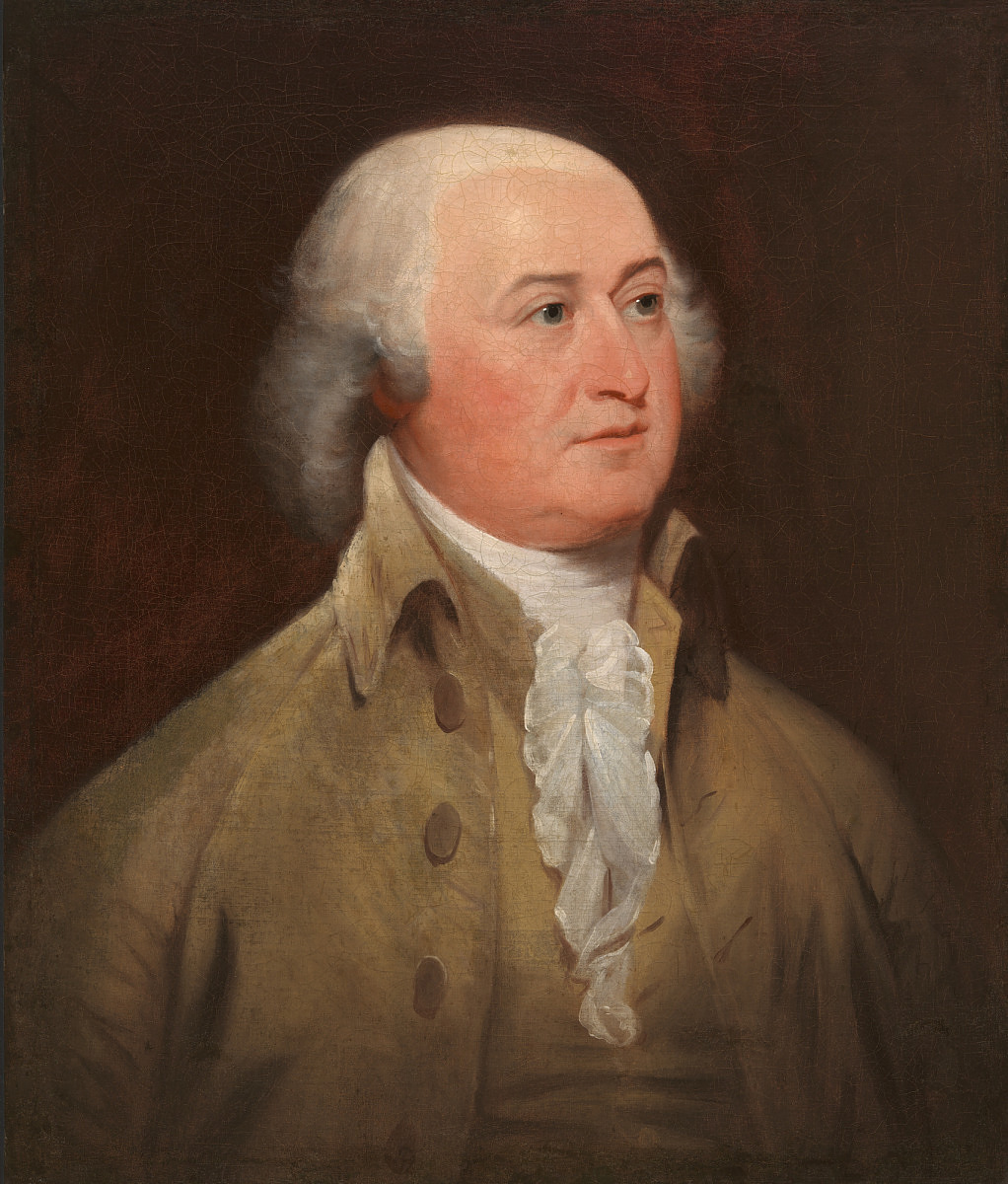
Brought Hancock into the cause and fled Lexington with him.

George Washington
1732–1799
Commander in chief
Chosen by Congress to lead the army, a job Hancock had hoped for.

Thomas Gage
1719–1787
British commander in Boston
Offered pardons to every rebel except Hancock and Samuel Adams.
Legacy
Governor and symbol
As governor of Massachusetts Hancock was very popular. In 1788 he presided over the state convention that debated the new U.S. Constitution. His speech supporting it, with a promise of amendments later added as the Bill of Rights, helped win a close vote.
Hancock died in office in 1793 and was buried in the Granary Burying Ground in Boston, near Samuel Adams and Paul Revere. Today his name lives on in towns, ships, a skyscraper and the everyday word for a signature.
1775
president of Congress
1776
signs the Declaration
1780
first state governor
1788
helps pass the Constitution
Timeline
The life of John Hancock, 1737–1793
- January 23, 1737 John Hancock is born in Braintree, Massachusetts.
- 1744 His father dies, and his uncle Thomas Hancock takes him in.
- 1754 He graduates from Harvard College.
- 1764 He inherits his uncle’s business.
- June 1768 His ship Liberty is seized, causing a riot.
- March 5, 1774 He gives the Boston Massacre speech.
- April 18–19, 1775 Warned by Paul Revere, he escapes from Lexington.
- May 24, 1775 He is elected president of the Continental Congress.
- August 28, 1775 He marries Dorothy Quincy.
- July 4, 1776 The Declaration is approved and printed over his name.
- October 1777 He leaves Congress and returns to Boston.
- 1780 He is elected the first governor of Massachusetts.
- February 1788 Massachusetts approves the U.S. Constitution.
- October 8, 1793 John Hancock dies while still governor.
“Some boast of being friends to government; I am a friend to righteous government, to a government founded upon the principles of reason and justice; but I glory in publicly avowing my eternal enmity to tyranny.”
John Hancock, Boston Massacre speech
March 5, 1774
The bigger story
Key People of the Revolutionary War
Meet the leaders, soldiers, spies and enemies who decided the war for American independence, all on one page.
Go deeper
Sources and further reading
- John Hancock: Merchant King and American Patriot, by Harlow Giles Unger (2000)
- The Baron of Beacon Hill: A Biography of John Hancock, by William M. Fowler Jr. (1980)
- Revolutionary Summer: The Birth of American Independence, by Joseph J. Ellis (2013)
- More recommended books
Keep exploring
More people of Colonial America and the Revolution
Use the Earlier and Later buttons to read these biographies in order, from the first Virginia colonists to the generals of the Revolutionary War.