
Home › People › Revolutionary War People › King George III
Revolutionary War · Great Britain · 1738–1820
King George III: The British King Who Lost the American Colonies
King George III ruled Great Britain from 1760 to 1820, one of the longest reigns in British history. To the American patriots he was the tyrant named in the Declaration of Independence. To many of his own people he was a hard-working, devoted king. He refused to let the colonies go until the defeat at Yorktown, and late in life he suffered long periods of serious illness.

King George III in his coronation robes, painted by Allan Ramsay in the early 1760s.
Quick facts
King George III at a glance
- Born: June 4, 1738, in London, England
- Became king: October 25, 1760, aged 22
- Family: Married Princess Charlotte in 1761; they had 15 children
- Prime minister in the war: Lord North, 1770–1782
- Called a tyrant: The Declaration of Independence lists 27 complaints against him
- Nickname: “Farmer George,” for his love of farming and simple life
- Illness: Serious attacks of illness; his son ruled for him from 1811
- Died: January 29, 1820, at Windsor Castle, aged 81
The big picture in 30 seconds
Why King George III matters
- The colonists’ quarrel with Parliament became a fight with him.
- He insisted on keeping the colonies by force.
- The Declaration of Independence was written as a case against him.
- He reigned for almost 60 years, through the loss of America and the wars with Napoleon.
Almost 60 years
on the throne
15
children
27
complaints in the Declaration
22
his age when he became king
Early life
The first king of his family born in Britain
George was born in London in 1738, the grandson of King George II. His family came from Hanover in Germany, but George was the first of them born in Britain and to speak English as his first language. His father died when he was 12, and he became king at 22, in 1760.
He was serious, religious and hard-working. In 1761 he married Princess Charlotte of Mecklenburg-Strelitz. They had 15 children and, unlike many royal couples, a happy marriage. He loved farming, science and books, and his huge library is now part of the British Library.
The king and Parliament
George did not rule alone. Parliament made the laws and passed the taxes, such as the Stamp Act, that angered the colonists. But the king chose his ministers and strongly supported their hard line against the colonies, especially Lord North, his prime minister from 1770 to 1782.

Too far to rule?
News between London and the colonies took six weeks or more by ship. By the time the king’s orders arrived, events in America had often moved on.
The map
Ruling America from London
The thirteen colonies were part of a worldwide British Empire run from London. After the French and Indian War, Britain was deep in debt and decided the colonists should help pay for their defense. The new taxes and laws led to protests, above all in Boston.
In 1774 the king said, “The die is now cast; the colonies must either submit or triumph.” War came the next year. It ended in effect when a British army surrendered at Yorktown, Virginia, in October 1781.
Simplified map with today’s coastline. Red dots mark places in the story. Land outlines from Natural Earth.
His life
King George III’s life, step by step
The king who lost America reigned for another 38 years.
1760: King at 22
He succeeds his grandfather, King George II.
1765–1774: Quarrels over taxes
His governments pass the Stamp Act, the Townshend Acts and the Intolerable Acts.
1775: Rebellion
He declares the colonies to be in open rebellion and sends more troops.
1776: Independence
The Declaration of Independence blames him for the break.
1782–1783: Peace
After Yorktown he accepts, unhappily, that the colonies are gone.
1788–1820: Illness
Repeated attacks of illness end with his son ruling as Prince Regent from 1811.
July 1776
The king becomes the enemy
For years most colonists blamed Parliament and the king’s ministers, not the king himself. That changed in 1775 and 1776. The king refused to read Congress’s last peace offer, the Olive Branch Petition, and declared the colonies in rebellion. Thomas Paine’s Common Sense called him a “royal brute.”
The Declaration of Independence, approved on July 4, 1776, listed 27 complaints against the king and called him “a Tyrant” unfit to rule a free people.
Pulling down the statue
On July 9, 1776, after the Declaration was read in New York, a crowd pulled down the gilded lead statue of George III on horseback at Bowling Green. Much of the lead was melted into musket balls for the Continental Army.

Meeting John Adams
In 1785 the king met John Adams, the first American minister to Britain, and said he would be the first to welcome the friendship of the United States.
Key people
The king’s minister and his enemies

Lord North
1732–1792
Prime minister, 1770–1782
Ran the government through the war; resigned after Yorktown.

George Washington
1732–1799
Commander in chief
Led the army that defeated the king’s forces.

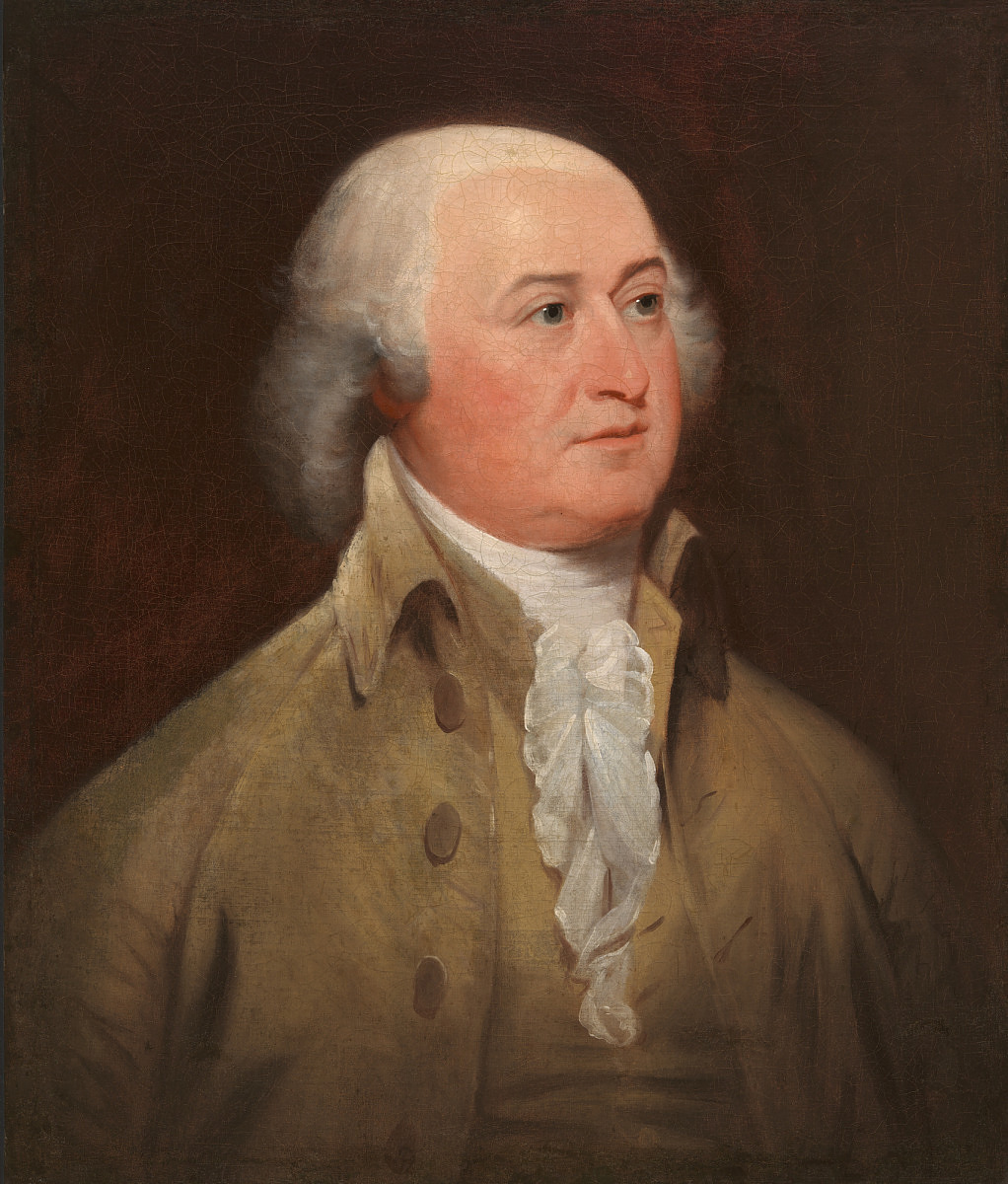
John Adams
1735–1826
First U.S. minister to Britain
Met the king face to face in 1785.
Legacy
The long reign
Losing America was a bitter blow, but George III reigned for nearly four more decades, through the French Revolution and the long wars with Napoleon. He became popular with ordinary Britons, who liked his plain habits and devotion to his family.
From 1788 he suffered attacks of a serious illness that affected his mind. Doctors today still debate what it was. From 1811 his eldest son ruled as Prince Regent, and the old king spent his last years blind and unwell at Windsor Castle, where he died in 1820.
1760
becomes king
1776
the Declaration
1783
Treaty of Paris
1811
the Regency begins
Timeline
The life of King George III, 1738–1820
- June 4, 1738 George is born in London.
- 1751 His father, Frederick, Prince of Wales, dies.
- October 25, 1760 He becomes king.
- September 8, 1761 He marries Princess Charlotte.
- 1765 Parliament passes the Stamp Act.
- 1770 Lord North becomes prime minister.
- August 23, 1775 He proclaims the colonies to be in rebellion.
- July 4, 1776 The Declaration of Independence is approved.
- October 19, 1781 Cornwallis surrenders at Yorktown.
- September 3, 1783 The Treaty of Paris ends the war.
- June 1, 1785 He meets John Adams.
- 1788 His first long attack of illness.
- 1811 His son becomes Prince Regent.
- January 29, 1820 King George III dies at Windsor Castle.
“I was the last to consent to the separation; but the separation having been made, and having become inevitable, I have always said, as I say now, that I would be the first to meet the friendship of the United States as an independent power.”
King George III to John Adams, as Adams reported it
June 1785
The bigger story
Key People of the Revolutionary War
Meet the leaders, soldiers, spies and enemies who decided the war for American independence, all on one page.
Go deeper
Sources and further reading
- The Last King of America: The Misunderstood Reign of George III, by Andrew Roberts (2021)
- The Men Who Lost America, by Andrew Jackson O’Shaughnessy (2013)
- King George III, by John Brooke (1972)
- More recommended books
Keep exploring
More people of Colonial America and the Revolution
Use the Earlier and Later buttons to read these biographies in order, from the first Virginia colonists to the generals of the Revolutionary War.