
Home › People › Revolutionary War People › Samuel Adams
Revolutionary War · Boston, Massachusetts · 1722–1803
Samuel Adams: The Boston Patriot Who Organized the American Revolution
Samuel Adams was a Boston politician and writer who did more than almost anyone to turn anger at British taxes into a revolution. He led protests against the Stamp Act, organized the Committees of Correspondence and ran the meeting that came just before the Boston Tea Party. He later signed the Declaration of Independence and became governor of Massachusetts.

Samuel Adams, painted by John Singleton Copley about 1772. He points to the Massachusetts charter.
Quick facts
Samuel Adams at a glance
- Born: September 27, 1722, in Boston, Massachusetts
- Education: Harvard College, 1740
- Early jobs: Malt business and Boston tax collector; he was poor at both
- Family: Second cousin of John Adams, the second president
- Known for: Leading Boston’s protests and writing hundreds of newspaper essays
- Signed: The Declaration of Independence and the Articles of Confederation
- Governor: Governor of Massachusetts, 1794–1797
- Died: October 2, 1803, in Boston, aged 81
The big picture in 30 seconds
Why Samuel Adams matters
- He turned Boston’s anger into an organized movement.
- His Committees of Correspondence linked the colonies together.
- He ran the meeting just before the Boston Tea Party.
- The British saw him as one of the most dangerous rebels of all.
1772
Boston Committee of Correspondence
342
chests of tea dumped in the harbor
1776
signs the Declaration
81
years he lived
Early life
A failed businessman with a gift for politics
Samuel Adams was born in Boston in 1722. His father was a well-off maltster, a maker of malt for brewing beer, and a leader in town politics. Samuel went to Harvard, and in 1743 he argued in his master’s degree that it was lawful to resist the government if the people could not otherwise be saved.
He was not good with money. He lost much of the family business, and as one of Boston’s tax collectors he fell thousands of pounds behind. But he knew everyone in town, from dock workers to merchants, and he loved politics.
The pen and the town meeting
Adams wrote hundreds of essays for the Boston Gazette under many different names. In 1765 he was elected to the Massachusetts House of Representatives, where he served as clerk and led the fight against the Stamp Act and later the Townshend Acts.

Committees of Correspondence
In 1772 Adams set up a Boston committee to write to other towns about British actions. Soon every colony had such committees, the first network linking the colonies.
The map
Boston, the town Adams organized
Most of Adams’s revolution happened within a few streets. Town meetings filled Faneuil Hall and, when the crowds grew too big, the Old South Meeting House. On King Street in 1770 British soldiers fired into a crowd in the Boston Massacre, and Adams led the demand that the troops leave town.
On December 16, 1773, thousands met at the Old South Meeting House about the tea ships. When the meeting ended, men disguised as Mohawk Indians went down to Griffin’s Wharf and threw the tea into the harbor.
Simplified map; shorelines of the 1770s, when Boston was almost an island. Red dots mark places in his story.
His life
Samuel Adams’s life, step by step
Adams spent ten years building the movement that became the Revolution.
1765: The Stamp Act
Adams helps lead Boston’s protests and is elected to the Massachusetts House.
1768–1770: Soldiers in Boston
He fights to remove British troops, and after the Boston Massacre Governor Hutchinson agrees to move them out of town.
1772: Committees of Correspondence
His Boston committee starts a network of letters between towns and colonies.
1773: The Boston Tea Party
He leads the meetings against the tea tax that end with 342 chests in the harbor.
1774–1781: Continental Congress
He serves in Congress, votes for independence and signs the Declaration.
1789–1797: Leading Massachusetts
He serves as lieutenant governor under John Hancock, then as governor.
December 16, 1773
The meeting before the Boston Tea Party
Three ships full of East India Company tea sat at Griffin’s Wharf. Under the law the tea tax had to be paid by December 17, and the governor would not let the ships leave. On the afternoon of December 16 about 5,000 people crowded into and around the Old South Meeting House, with Samuel Adams helping to lead the meeting.
When word came that the ships still could not leave, Adams is reported to have said, “This meeting can do nothing more to save the country.” Soon after, men dressed as Mohawks headed for the wharf and dumped 342 chests of tea into the harbor.
Was it a signal?
Many stories say Adams’s words were a planned signal. Historians are not sure. What is clear is that Adams strongly defended the Tea Party afterward, and Britain answered with the harsh Intolerable Acts.

No pardon for Adams
In June 1775 General Thomas Gage offered a pardon to every rebel who laid down his arms, except Samuel Adams and John Hancock.
Key people
Adams’s fellow patriots and his enemy

John Hancock
1737–1793
Merchant and patriot leader
His rich partner in the cause, who fled Lexington with him.
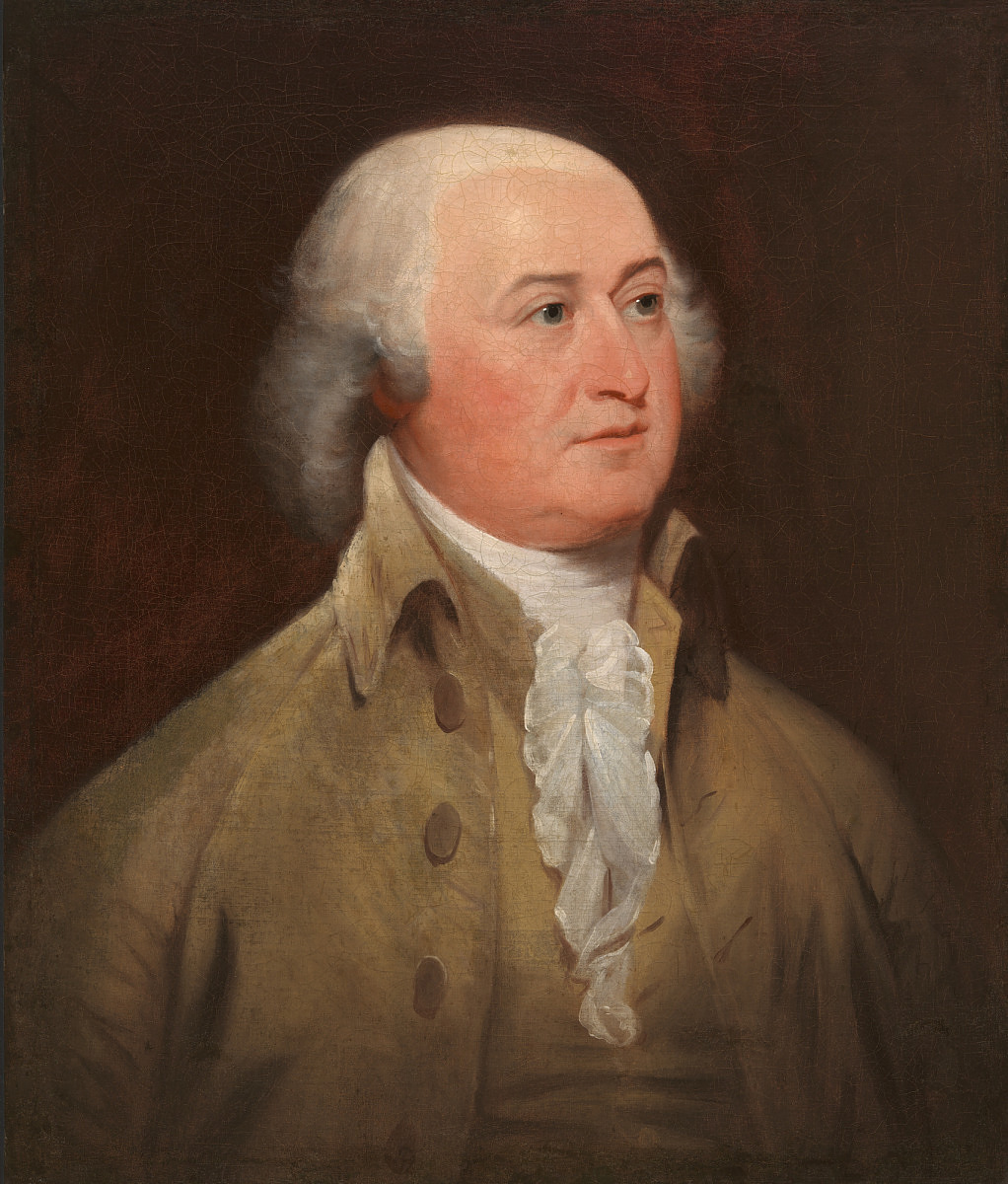
John Adams
1735–1826
His second cousin
Lawyer, diplomat and later the second president.

Paul Revere
1735–1818
Silversmith and messenger
Rode to Lexington in 1775 to warn Adams and Hancock.

Thomas Gage
1719–1787
British commander in Boston
Tried to capture Adams and Hancock, and refused them a pardon.
Legacy
The organizer of the Revolution
Samuel Adams was not a soldier or a great speaker in Congress. His gift was organizing ordinary people, through town meetings, newspapers and letters, so that they acted together. Thomas Jefferson called him “truly the Man of the Revolution.”
After the war Adams helped write the Massachusetts constitution of 1780 and, at first unsure about the new U.S. Constitution, he supported it in 1788 once amendments were promised. He died in 1803 and is buried in Boston’s Granary Burying Ground, near John Hancock and Paul Revere.
1765
Stamp Act protests
1772
Committees of Correspondence
1773
the Tea Party
1794
governor of Massachusetts
Timeline
The life of Samuel Adams, 1722–1803
- September 27, 1722 Samuel Adams is born in Boston.
- 1740 He graduates from Harvard College.
- 1756 He becomes one of Boston’s tax collectors.
- 1765 He is elected to the Massachusetts House and fights the Stamp Act.
- March 5, 1770 The Boston Massacre.
- November 1772 He starts the Boston Committee of Correspondence.
- December 16, 1773 The Boston Tea Party.
- September 1774 He goes to the First Continental Congress.
- April 19, 1775 He escapes from Lexington with John Hancock as the war begins.
- August 2, 1776 He signs the Declaration of Independence.
- 1780 He helps write the Massachusetts constitution.
- 1789 He becomes lieutenant governor of Massachusetts.
- 1794 He is elected governor of Massachusetts.
- October 2, 1803 Samuel Adams dies in Boston.
“The liberties of our country, the freedom of our civil constitution, are worth defending at all hazards; and it is our duty to defend them against all attacks.”
Samuel Adams, writing as “Candidus” in the Boston Gazette
1771
The bigger story
Key People of the Revolutionary War
Meet the leaders, soldiers, spies and enemies who decided the war for American independence, all on one page.
Go deeper
Sources and further reading
- The Revolutionary: Samuel Adams, by Stacy Schiff (2022)
- Samuel Adams: A Life, by Ira Stoll (2008)
- Samuel Adams: Father of the American Revolution, by Mark Puls (2006)
- More recommended books
Keep exploring
More people of Colonial America and the Revolution
Use the Earlier and Later buttons to read these biographies in order, from the first Virginia colonists to the generals of the Revolutionary War.