
Home › US History › America in World War II
US History · 1941–1945
America in World War II
On December 7, 1941, Japanese planes struck Pearl Harbor and pulled the United States into a war it would fight across two oceans. Sixteen million Americans put on a uniform, and the people at home built the ships, planes and tanks that won it. This page tells the American side of the story. For the whole global war, see our World War II hub.

Raising the Flag on Iwo Jima, February 23, 1945. Photo by Joe Rosenthal (AP)
Quick facts
America’s war at a glance
| When | December 7, 1941 (Pearl Harbor) to September 2, 1945 (Japan’s formal surrender) | |
| Allies | Britain, the Soviet Union, China and many others; together they called themselves the United Nations | |
| Enemies | Japan, Germany and Italy (the Axis); Italy surrendered in September 1943 | |
| Where | The Pacific and Asia, North Africa, Italy, Western Europe, the Atlantic and the skies over Germany and Japan | |
| Presidents | Franklin D. Roosevelt, then Harry S. Truman after FDR’s death on April 12, 1945 | |
| Served | About 16.1 million Americans in the armed forces, including about 350,000 women | |
| Died | About 405,000 American service members | |
| Victory | V-E Day, May 8, 1945 (Europe); V-J Day, August 15, 1945, signed September 2 (Japan) |
The big picture in 30 seconds
Why it matters
- It ended the Great Depression and made the U.S. the world’s leading economic and military power.
- American factories out-produced every other nation and supplied the Allies through Lend-Lease.
- Women and Black Americans took on new roles that helped spark later movements for equal rights.
- It opened the atomic age and led straight into the Cold War.
16 million
Americans served in the armed forces
405,000
American military dead
300,000
military aircraft built from 1940 to 1945
2,710
Liberty ships launched to carry supplies
1939 to 1941
The road to war
When war broke out in Europe in September 1939, most Americans wanted no part of it. Congress had passed Neutrality Acts in the 1930s to keep the country out of foreign wars, and a large “America First” movement opposed getting involved. But after France fell to Germany in June 1940, leaving Britain to fight alone, opinion began to shift.
President Roosevelt moved the country step by step toward the Allies. In September 1940 he traded 50 old destroyers to Britain for naval bases, and Congress passed the first peacetime draft in American history. In December he called on the nation to become “the great arsenal of democracy.” The Lend-Lease Act of March 1941 let the U.S. send weapons and supplies to Britain, and later the Soviet Union and China, without cash payment. By the fall of 1941 American destroyers were escorting convoys in the Atlantic and trading shots with German U-boats.
In the Pacific, Japan was at war with China and pushing into Southeast Asia. The U.S. cut off oil sales to Japan in the summer of 1941. Japan’s leaders decided to strike first.
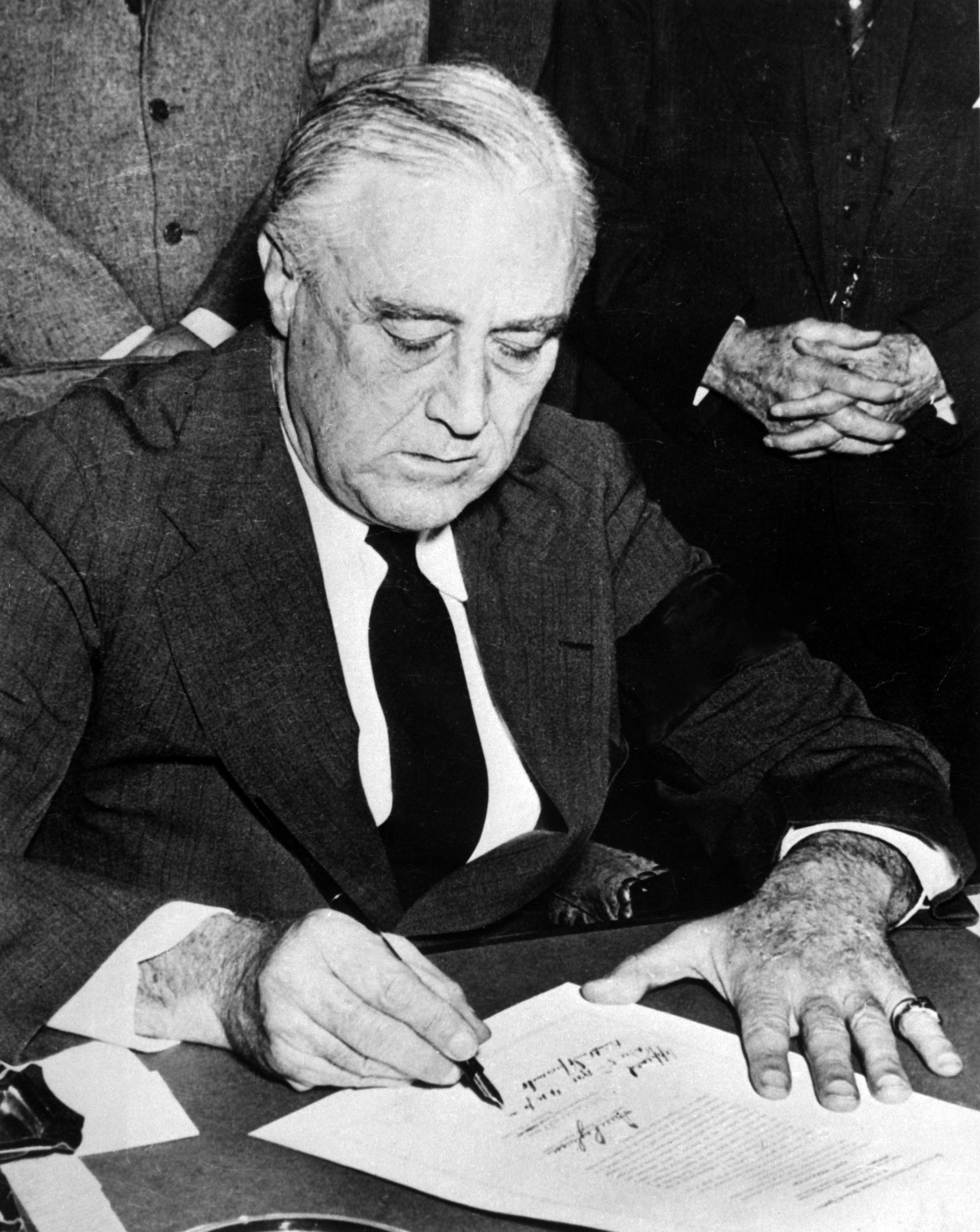
The arsenal of democracy
The home front
The war turned the American economy around almost overnight. Car plants switched to tanks and bombers; Ford’s Willow Run plant turned out a B-24 bomber about every hour. Shipyards built a Liberty cargo ship in as little as a few days. Unemployment, still above 14 percent in 1940, fell to about 1 percent by 1944. The Great Depression was over.
Everyone was asked to do their part. Families used ration books for sugar, coffee, meat, gasoline and tires, planted “victory gardens,” collected scrap metal and bought war bonds. Millions moved to new jobs in war plants on the West Coast and in the industrial North.
Women at work
Rosie the Riveter
More than six million women took war jobs, many as welders and riveters. Read the full story →
Rationing
Ration books and victory gardens
Rationing shared out scarce food, gas and rubber. By 1943 some 20 million victory gardens grew about 40 percent of the nation’s vegetables.
Paying for it
War bonds
Americans bought about $185 billion in war bonds. Movie stars sold them at rallies, and children bought savings stamps for a dime.
Double V
Victory at home and abroad
Black Americans fought for “Double Victory,” over fascism overseas and racism at home. The Tuskegee Airmen proved themselves in combat.
A dark chapter
Japanese American incarceration
Under Executive Order 9066 (1942), about 120,000 people of Japanese ancestry, most of them U.S. citizens, were forced into camps. Congress apologized in 1988.
Volunteers
Everyone in uniform
About 350,000 women served as WACs, WAVES, nurses and pilots, and the Navajo Code Talkers sent messages the Japanese never broke.
The war in the Pacific
From Pearl Harbor to Midway
In six months after Pearl Harbor, Japan seized the Philippines, Guam, Wake Island and much of Southeast Asia. Then the U.S. Navy struck back. Each card opens a full page on this site.

A surprise Japanese air attack on the Pacific Fleet brought the United States into the war.

Army bombers flew off a carrier to hit Tokyo, a huge boost to American morale.
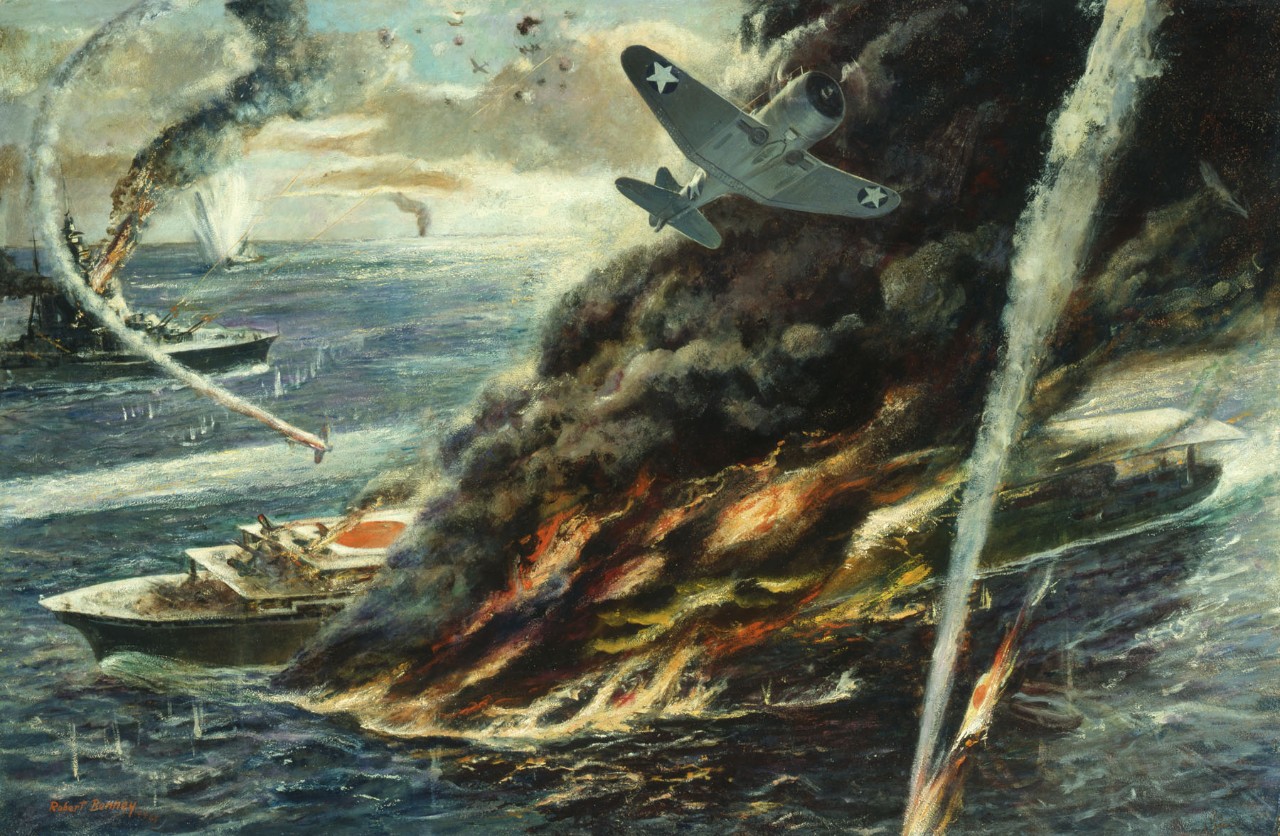
The first naval battle in which the fleets never saw each other. It stopped Japan’s move on Port Moresby.

Codebreakers gave Admiral Nimitz the edge. American dive bombers sank four Japanese carriers in a single day.
Europe and North Africa
Germany first
Roosevelt and Churchill agreed to defeat Germany first. American soldiers went into battle in North Africa in November 1942, then fought up through Sicily and Italy and finally landed in France. Each card opens a full page.

America’s first big offensive against Germany and Italy, and its first hard lessons at Kasserine Pass.

The Allied landing in Sicily knocked Mussolini from power and opened the road to Italy.

The largest seaborne invasion in history opened the Western Front and led to the liberation of France.
“Yesterday, December 7, 1941, a date which will live in infamy, the United States of America was suddenly and deliberately attacked.”
Franklin D. Roosevelt
Asking Congress to declare war on Japan, December 8, 1941
Key people
The leaders who won the war
Two presidents and the generals and admirals who ran America’s war. Meet more on our US Command page.

Led the nation from Pearl Harbor until his death three weeks before victory in Europe.

Became president in April 1945 and made the decision to use the atomic bomb.

Built the Army from 190,000 to over 8 million men. Churchill called him the “organizer of victory.”

Commanded Torch, Sicily and the D-Day invasion, and led the Allied armies into Germany.

Promised “I shall return” when he left the Philippines, and did in 1944.

Took over after Pearl Harbor and won at Midway. Signed Japan’s surrender for the U.S.

A hard-driving tank general who raced across France and relieved Bastogne in the Bulge.

Ran the U.S. Navy’s global war and pushed for an early offensive in the Pacific.
The American arsenal
Ships, planes, tanks and guns
Our arsenal pages cover the weapons American forces carried into battle, with photos and key specifications.

The carriers that won Midway and the battleships that ended the war.

From the Wildcat and Dauntless to the B-29 Superfortress.
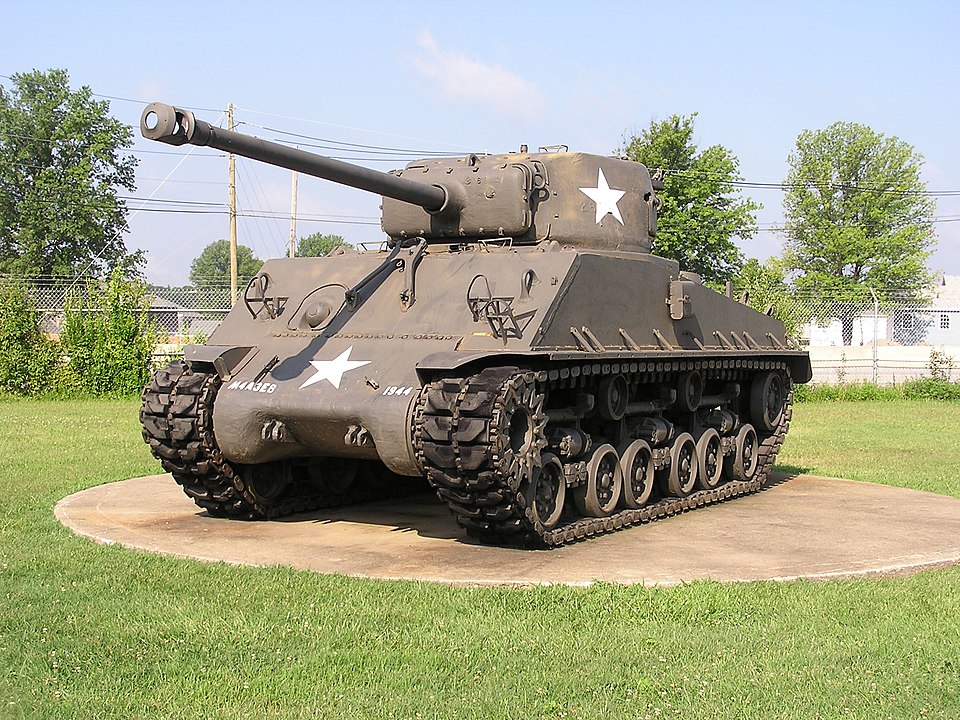
The Sherman and the light tanks that fought from North Africa to Germany.

The rifles and machine guns carried by American infantrymen.
Year by year
America at war: timeline
Victory and after
Coming home
Japan’s leaders signed the formal surrender on the deck of the battleship USS Missouri in Tokyo Bay on September 2, 1945, with General MacArthur presiding and Admiral Nimitz signing for the United States. About 405,000 Americans had died in the war, and some 670,000 had been wounded.
The returning veterans came home to a changed country. The GI Bill of 1944 paid for millions of them to go to college or trade school and helped them buy homes, building a new middle class. The United States came out of the war as the richest and most powerful nation on earth, and it took the lead in founding the United Nations. But a new rivalry with the Soviet Union, the Cold War, was already beginning.

The whole era
Depression and World War II, 1920–1945
Our era overview ties together the Twenties, the Depression and the war years, with links to every page on the period.
Go deeper
Books and sources
- Freedom from Fear, by David M. Kennedy (1999)
- No Ordinary Time, by Doris Kearns Goodwin (1994)
- An Army at Dawn, by Rick Atkinson (2002)
- With the Old Breed, by E. B. Sledge (1981)
- More recommended books