

Home › People › US Presidents › John Adams
2nd President · 1797–1801 · Federalist
John Adams: Voice of Independence
A farmer’s son from Massachusetts who argued America into independence, helped win the peace in Europe, served as the first vice president, and as the second president kept the young nation out of a full-scale war with France, even though it cost him a second term.
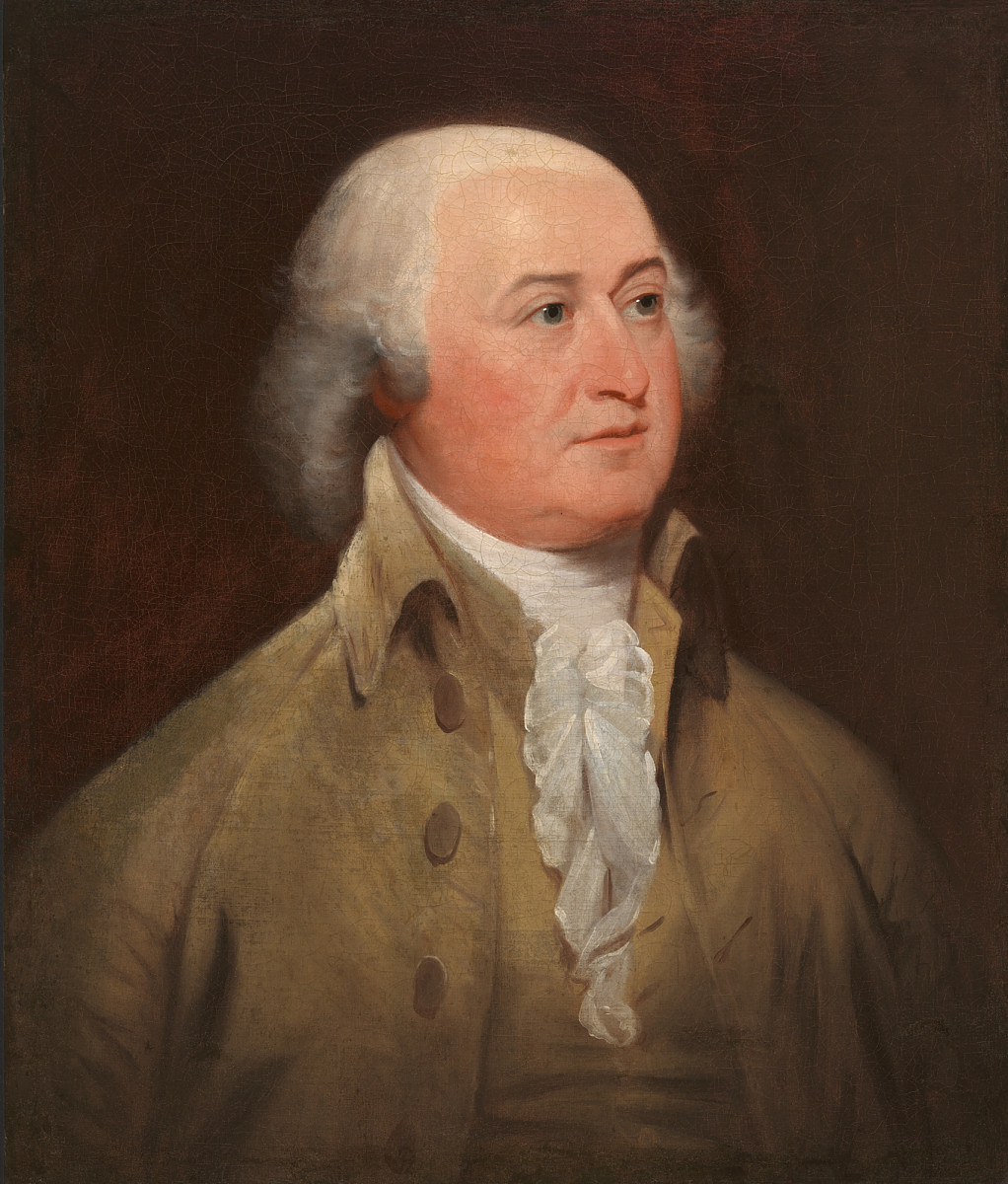
John Adams, painted by John Trumbull, 1793
Quick facts
John Adams at a glance
| Born | October 30, 1735, in Braintree (now Quincy), Massachusetts | |
| Died | July 4, 1826, in Quincy, aged 90, the same day as Thomas Jefferson | |
| President | 2nd, from March 4, 1797, to March 4, 1801 (one term) | |
| Vice president | 1st, under George Washington, 1789–1797 | |
| His vice president | Thomas Jefferson | |
| Party | Federalist | |
| Education | Harvard College, class of 1755 | |
| Profession | Lawyer | |
| Wife | Abigail Smith, married October 25, 1764 | |
| Children | Abigail (“Nabby”), John Quincy, Susanna (died as a baby), Charles and Thomas Boylston; a sixth child, Elizabeth, was stillborn | |
| Elections | Won in 1796 (71 to 68 electoral votes over Jefferson); lost in 1800 | |
| Buried | United First Parish Church, Quincy, beside Abigail |
The big picture in 30 seconds
Why he matters
- Led the fight in Congress for the Declaration of Independence. Jefferson later called him "the colossus of independence."
- Defended the British soldiers after the Boston Massacre, because he believed everyone deserved a fair trial.
- Wrote the Massachusetts Constitution of 1780, the oldest written constitution still in use anywhere in the world.
- Helped negotiate the Treaty of Paris (1783) that ended the Revolutionary War.
- As president he avoided all-out war with France, founded the Department of the Navy, and was the first president to live in the White House.
- When he lost in 1800, he handed power peacefully to his rival, the first time power passed from one party to another.
2nd
President of the United States, and the 1st vice president
90 years
his lifespan, a presidential record until Ronald Reagan passed it in 2001
1,160+
letters between John and Abigail Adams that survive today
4 crossings
of the Atlantic for his country, three of them in wartime
Early years
A farmer's son from Braintree
John Adams was born on October 30, 1735, on the family farm in Braintree, Massachusetts, the eldest of three sons of Deacon John Adams and Susanna Boylston Adams. His father was a farmer and shoemaker, a church deacon and a town selectman, and the family traced its roots back to the first generation of Puritan settlers in New England.
His father hoped he would become a minister, and sent him to Harvard College, where he graduated in 1755. Adams spent the next three years teaching school in Worcester while he studied law at night. In 1758 he returned to Braintree and was admitted to the bar, and he soon built a busy practice riding the court circuit and working in nearby Boston.
Abigail
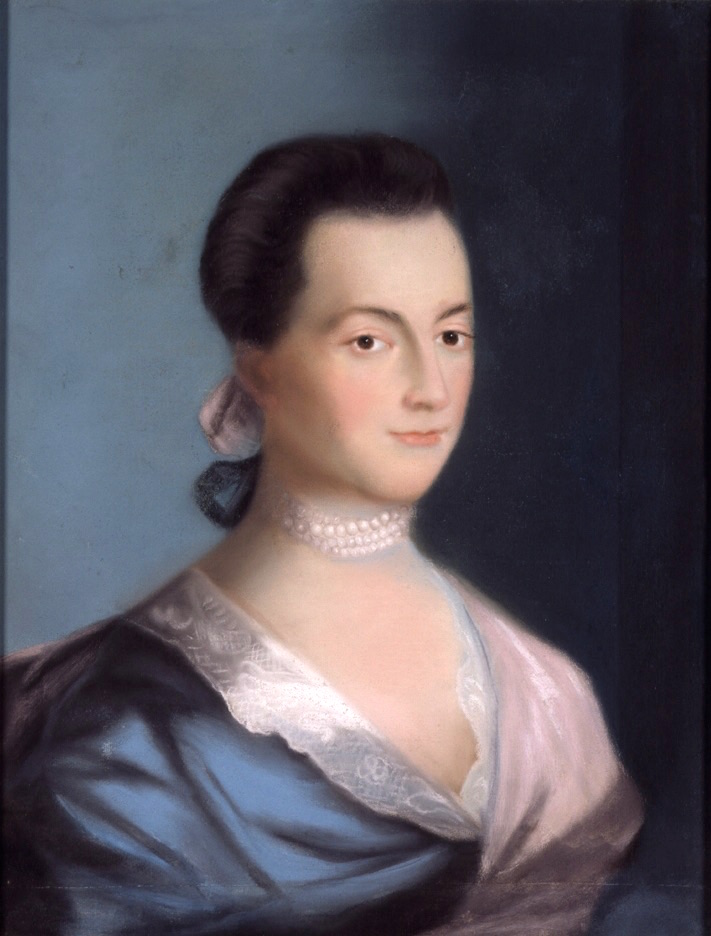
In 1764 he married Abigail Smith, a minister’s daughter from nearby Weymouth. She had no formal schooling but read widely, and she became his closest adviser. Over the next half century they wrote each other more than 1,100 letters, one of the richest records we have of the American Revolution.
The road to revolution
A lawyer against the Crown
Adams rose to prominence opposing British taxes. In 1765 he wrote resolutions for Braintree protesting the Stamp Act, arguing that Parliament had no right to tax colonists who had no vote in it. His cousin Samuel Adams was a leader of the Boston protests, but John preferred to fight with the law and the pen.
The Boston Massacre trial
After British soldiers shot and killed five colonists on March 5, 1770, no lawyer would defend them. Adams took the case, knowing it could ruin him. He won the acquittal of Captain Thomas Preston and of six of the eight soldiers; the other two were convicted only of manslaughter. Adams later called it one of the most disinterested actions of his life. Boston voters elected him to the Massachusetts legislature that same year.
Congress and independence
Adams was sent to the First Continental Congress in 1774 and the Second in 1775. He urged Congress to make George Washington commander of the army, served on the Committee of Five that drafted the Declaration of Independence, and persuaded the committee to let Thomas Jefferson write it. On July 1, 1776, he gave the decisive speech for independence, and fellow delegates called him the “Atlas of Independence.”
Diplomat abroad, 1778–1788
Ten years in Europe
In February 1778, Adams sailed for France aboard the frigate Boston with his 10-year-old son John Quincy, dodging British warships and a lightning strike on the way. He would spend most of the next decade in Europe, winning loans and recognition for the new nation and helping to make the peace.
Sails to France to join Benjamin Franklin as an envoy to the French court.
Returns home and writes the Massachusetts Constitution, adopted in 1780.
Sails again. His leaking ship puts in at Ferrol, Spain, and he crosses the mountains to Paris in winter.
In the Netherlands, wins Dutch recognition of the United States (April 1782) and a vital loan.
Back in Paris with Franklin and John Jay to negotiate the Treaty of Paris, signed September 3, 1783.
Becomes the first American minister to Great Britain and meets King George III face to face.
Returns home to Massachusetts, in time to be elected the first vice president.
Vice president, 1789–1797
"The most insignificant office"
Adams finished second to George Washington in the first presidential election, which under the original Constitution made him vice president. He presided over the Senate and cast 29 tie-breaking votes, usually in support of Washington’s policies. But he found the job frustrating, writing to Abigail that it was “the most insignificant office that ever the invention of man contrived or his imagination conceived.”
When Washington retired in 1796, Adams ran as the Federalist candidate against Thomas Jefferson, the leader of the new Democratic-Republican Party. Adams won by just three electoral votes. Because the runner-up became vice president, his political rival Jefferson became his vice president.
Election of 1796
Adams wins a close race
Electoral votes: 138 electors, each casting two votes; 70 needed to win
Election of 1800
Adams loses to Jefferson
Electoral votes: 138 electors, each casting two votes; 70 needed to win
The presidency, 1797–1801
Four years on the edge of war
Adams took the oath of office in Congress Hall in Philadelphia on March 4, 1797. He kept Washington’s cabinet, a decision he came to regret, because several members took their orders from Alexander Hamilton instead of him. His single term was dominated by one problem: France.
1797–1798
The XYZ Affair
Adams sent three envoys to Paris to settle French attacks on American shipping. French agents, later code-named X, Y and Z, demanded a bribe before talks could even begin. When Adams released the papers, the public was outraged.
1798–1800
The Quasi-War
An undeclared naval war with France followed in the Caribbean and along the coast. Adams built up the fleet and in 1798 created the Department of the Navy, which is why he is often called a father of the US Navy.
1798
The Alien and Sedition Acts
The Federalist Congress passed laws making it harder to become a citizen and making it a crime to publish “false, scandalous and malicious” writing against the government. Adams signed them, and they remain the biggest stain on his record.
1799–1800
Peace with France
Against the wishes of Hamilton and his own party, Adams sent a new peace mission to France. The Convention of 1800 ended the Quasi-War. He considered it the proudest achievement of his life, though it split the Federalists.
November 1, 1800
First family in the White House
Adams moved into the unfinished President’s House in the new capital of Washington. On his second night he wrote a prayer, later carved into the State Dining Room mantel: “May none but honest and wise men ever rule under this roof.”
1800–1801
Lasting appointments
Adams signed the law creating the Library of Congress in April 1800. Before leaving office he named John Marshall Chief Justice. Marshall served 34 years and made the Supreme Court a true equal branch of government.
“I pray Heaven to bestow the best of Blessings on this House and all that shall hereafter inhabit it. May none but honest and wise Men ever rule under this roof.”
John Adams, letter to Abigail Adams
November 2, 1800, his second night in the President’s House
Defeat and retirement
Peacefield and a famous friendship
The bitter election of 1800 split Adams’s own party, and Jefferson won. Before dawn on March 4, 1801, Adams left Washington by stagecoach and did not attend his successor’s inauguration. Even so, he handed over power without a fight, setting an example for every peaceful transfer since.
He spent the last 25 years of his life at Peacefield, his farm in Quincy, reading, writing and arguing in print. Abigail died there in 1818. In 1812, with help from their friend Dr. Benjamin Rush, Adams and Jefferson ended their long feud and began a correspondence of more than 150 letters on politics, religion and the Revolution.
July 4, 1826
Adams lived to see his son John Quincy become president in 1825. He died on July 4, 1826, the 50th anniversary of the Declaration of Independence. His last words are reported as “Thomas Jefferson survives.” He did not know that Jefferson had died at Monticello a few hours earlier.
His life at a glance
Life timeline
People
Who's who in Adams's story
Abigail Adams
Wife and closest adviser
Ran the family farm and finances through the war years. Her letters are a treasure of early American history.
John Quincy Adams
Son, 6th president
Traveled to Europe with his father at age 10 and became a diplomat, secretary of state and president (1825–1829).
Thomas Jefferson
Friend, rival, successor
Partner in 1776, opponent in 1796 and 1800, and pen pal in old age. They died on the same day.
George Washington
1st president
Adams pushed for his appointment as commander in 1775 and served eight years as his vice president.
Alexander Hamilton
Federalist rival
Secretly steered Adams’s cabinet and attacked him in print in 1800, helping split the Federalist Party.
John Marshall
Chief Justice
Adams’s envoy in the XYZ Affair, later his secretary of state. His appointment as Chief Justice was one of Adams’s proudest acts.
Visit
Adams National Historical Park
In Quincy, Massachusetts, you can tour the two saltbox houses where John and John Quincy Adams were born, the family home at Peacefield, and the Stone Library that holds thousands of the family’s books. John, Abigail, John Quincy and Louisa Catherine Adams are buried nearby in the United First Parish Church.

