Home  ›  US History  ›  Revolutionary War  ›  Key people

Revolutionary War · People

Key People of the Revolutionary War

A Virginia planter who held an army together for eight years. A bookseller who became a general of artillery. A teenage French nobleman, a Prussian drillmaster, a Scottish sea captain and a woman at a cannon. Meet the people on both sides who fought the war that made the United States.

George Washington

George Washington, commander in chief of the Continental Army, 1775–1783

Quick facts

The people at a glance

CommanderGeorge Washington led the Continental Army from June 15, 1775, to December 23, 1783
Top generalsNathanael Greene, Henry Knox, Daniel Morgan, Horatio Gates and (until 1780) Benedict Arnold
Foreign helpLafayette and Rochambeau (France), Steuben (Prussia), Kościuszko and Pulaski (Poland), de Kalb
WomenCamp followers, nurses and spies; Mary Hays (“Molly Pitcher”) and Deborah Sampson, who enlisted disguised as a man
British leadersKing George III; commanders in chief Thomas Gage, William Howe, Henry Clinton and Guy Carleton
YoungestLafayette was made a major general at 19; Hamilton joined Washington’s staff in his early twenties
TraitorBenedict Arnold, who switched sides in September 1780
The big picture in 30 seconds

Why these people matter

8 years

Washington in command

About 230,000

served in the Continental Army

About 12,000

French soldiers and marines in America

19

Lafayette’s age when made a general

The commander in chief

George Washington, the indispensable man

When the Second Continental Congress chose George Washington to command its new army on June 15, 1775, he was 43, a wealthy Virginia planter who had fought in the French and Indian War. He had never led a large army, and he lost more battles than he won. But he understood something his British opponents did not: as long as his army survived, so did the Revolution.

Washington kept the army together through the retreat of 1776, the winter at Valley Forge, mutinies over unpaid wages and years of short supplies. He picked talented officers, worked with the French, ran a spy network, and struck hard when he saw a chance, at Trenton, Princeton and Yorktown. In March 1783 he talked angry officers at Newburgh out of a threatened revolt against Congress. Then, in December, he resigned his commission and went home, an act that astonished the world.

George Washington
George Washington. He refused any salary as commander, asking only that Congress pay his expenses.
Read more on this site
George Washington, first President
His life before and after the war, and his two terms as President. George Washington →
Washington’s officers

The generals and staff

Many of the army’s best officers had no military training at all before 1775.

Portrait of Nathanael Greene
Nathanael Greene
1742–1786
Major general

A Rhode Island ironworks owner who taught himself war from books. Washington’s favorite general; his southern campaign of 1781 lost battles but won the South back.

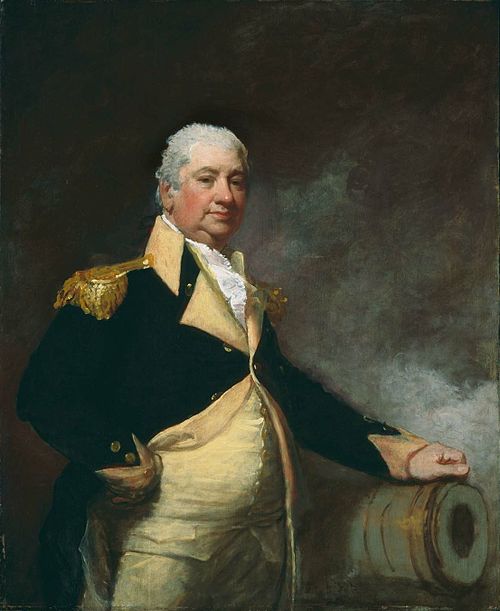
Portrait of Henry Knox
Henry Knox
1750–1806
Chief of artillery

A 300-pound Boston bookseller who hauled 59 cannon from Fort Ticonderoga to Boston in winter. Later the first Secretary of War.

Portrait of Alexander Hamilton
Alexander Hamilton
1755 or 1757–1804
Aide-de-camp

Washington’s right-hand man for four years, then a combat leader at Yorktown. Later the first Treasury Secretary.

Read more →
Portrait of Daniel Morgan
Daniel Morgan
1736–1802
Brigadier general

A former wagoner who led riflemen at Quebec and Saratoga and won a brilliant victory over Tarleton at Cowpens in 1781.

Portrait of Horatio Gates
Horatio Gates
1727–1806
Major general

Accepted Burgoyne’s surrender at Saratoga, then was routed at Camden in 1780 and fled the field.

Portrait of Benedict Arnold
Benedict Arnold
1741–1801
Major general, then traitor

Brave and brilliant at Quebec, Valcour Island and Saratoga. Bitter and in debt, he sold out West Point in 1780 and fought for Britain.

Portrait of Israel Putnam
Israel Putnam
1718–1790
Major general

“Old Put,” a Connecticut farmer and frontier fighter, was a hero of Bunker Hill. A stroke ended his service in 1779.

Molly Pitcher at the Battle of Monmouth, Currier and Ives print
“Molly Pitcher”
Battle of Monmouth, 1778
Legendary heroine

Women carried water to soldiers in battle. Stories say Mary Hays took her husband’s place at a cannon at Monmouth when he fell.

Friends from Europe

Allies and volunteers

Foreign officers brought training and experience, and France brought armies, fleets and money.

Portrait of Marquis de Lafayette
Marquis de Lafayette
1757–1834
Major general

A rich French orphan who sailed to America at 19 against his king’s orders. Wounded at Brandywine; trapped Cornwallis in Virginia.

Portrait of Baron von Steuben
Baron von Steuben
1730–1794
Inspector general

A former Prussian army captain who turned the ragged army at Valley Forge into trained soldiers. Wrote the army’s drill manual.

Portrait of Comte de Rochambeau
Comte de Rochambeau
1725–1807
French army commander

Led about 5,500 French soldiers to America in 1780 and served loyally under Washington at Yorktown.

Portrait of Comte de Grasse
Comte de Grasse
1722–1788
French admiral

His fleet won the Battle of the Capes in September 1781 and sealed Cornwallis’s fate.

Also from Europe
More volunteers
Tadeusz Kościuszko, a Polish engineer, fortified Saratoga and West Point. Casimir Pulaski, another Pole, is called the “father of the American cavalry” and was killed at Savannah in 1779. Johann de Kalb, a German in French service, died at Camden.
Heroes of the cause

Patriots, riders and sailors

Portrait of Paul Revere
Paul Revere
1735–1818
Express rider

Boston silversmith and engraver who rode to warn of the British march on April 18, 1775.

Read more →
Portrait of Dr. Joseph Warren
Dr. Joseph Warren
1741–1775
Patriot leader

Doctor and Sons of Liberty leader who sent out the midnight riders and died fighting at Bunker Hill.

Read more →
Portrait of John Paul Jones
John Paul Jones
1747–1792
Continental Navy captain

A Scottish-born captain who raided the British coast and captured HMS Serapis in 1779.

Read more →
Statesmen and diplomats

The Founders at war

Not every Founder carried a musket. These men won the war in Congress and in the courts of Europe.

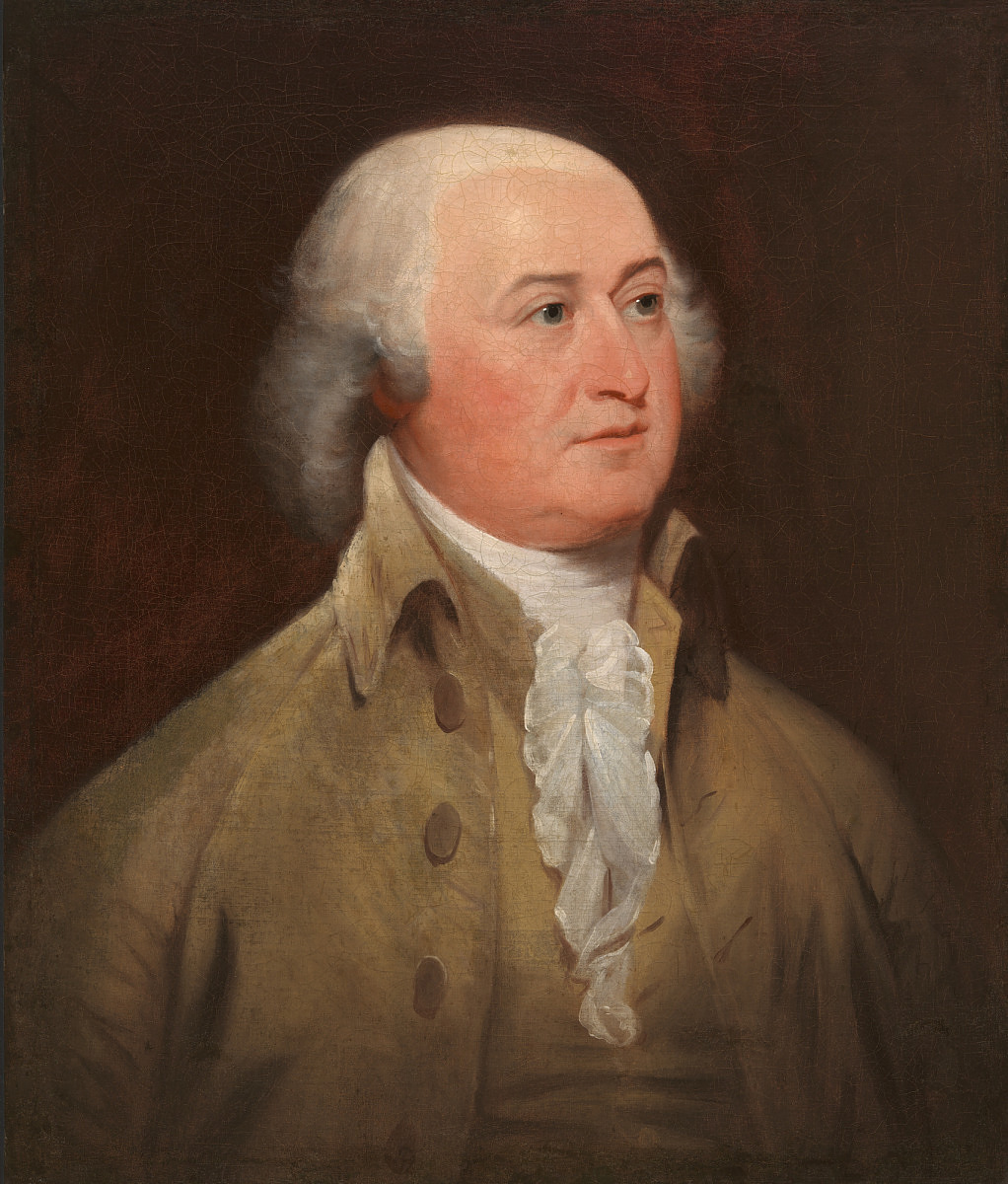
Portrait of John Adams
John Adams
1735–1826
Congress and diplomat

Nominated Washington to command, pushed for independence and helped negotiate the peace.

Read more →
Portrait of Benjamin Franklin
Benjamin Franklin
1706–1790
Minister to France

America’s most famous man in Europe. Won the French alliance of 1778 and the loans that paid for the war.

Read more →
Portrait of Thomas Jefferson
Thomas Jefferson
1743–1826
Author of the Declaration

Wrote the Declaration of Independence and served as wartime governor of Virginia.

Read more →
Portrait of John Jay
John Jay
1745–1829
President of Congress and diplomat

Led Congress in 1778–79, then helped win generous terms at the Treaty of Paris.

Read more →
The other side

King George and his generals

Britain had the stronger army and navy, but its generals were fighting 3,000 miles from home, with orders that took months to arrive.

Portrait of King George III
King George III
1738–1820
King of Great Britain

Believed giving in to the colonies would break up the empire. He kept the war going until Parliament forced peace in 1782.

Portrait of Thomas Gage
Thomas Gage
1719–1787
Commander in chief, 1763–1775

Married to an American and long based in New York. Sent the troops to Concord and was replaced after Bunker Hill.

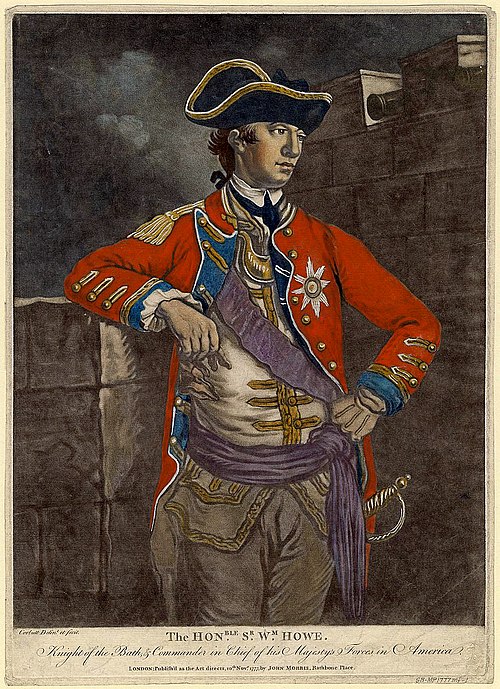
Portrait of William Howe
William Howe
1729–1814
Commander in chief, 1775–1778

Won at Long Island, New York and Brandywine, and took Philadelphia, but never destroyed Washington’s army.

Portrait of John Burgoyne
John Burgoyne
1722–1792
General

“Gentleman Johnny” invaded from Canada in 1777 and surrendered his army at Saratoga.

Read more →
Portrait of Lord Cornwallis
Lord Cornwallis
1738–1805
General

Britain’s best field general in America. Took Charleston, won at Camden, and surrendered at Yorktown.

Read more →
Portrait of Banastre Tarleton
Banastre Tarleton
1754–1833
Cavalry commander

The fast-riding leader of the British Legion, hated by Patriots in the South. Beaten by Morgan at Cowpens.

“I have not yet begun to fight!”

John Paul Jones
Reply to a British demand to surrender, Battle of Flamborough Head, September 23, 1779 (as remembered later)

The bigger story

Revolution and Founding, 1770–1819

Our U.S. History era page puts the war in context: the road to independence, the Constitution and the first presidents.

Go deeper

Books and sources