
Home › People › Revolutionary War People › Thomas Gage
Revolutionary War · British commander in Boston · 1719–1787
Thomas Gage: The British General Who Started the Revolutionary War
General Thomas Gage was the commander of all British forces in North America and the last royal governor of Massachusetts. In April 1775 he sent soldiers to seize the patriots’ weapons at Concord, starting the Revolutionary War at Lexington. After the costly victory at Bunker Hill he was called home and replaced.

Thomas Gage, painted by John Singleton Copley about 1768.
Quick facts
Thomas Gage at a glance
- Born: About 1719 at Firle, Sussex, England
- Family: Son of a viscount; married Margaret Kemble of New Jersey in 1758
- French and Indian War: Fought beside young George Washington at the Monongahela in 1755
- New idea: Raised the British Army’s first light infantry regiment in 1758
- Top job: Commander in chief in North America, 1763–1775
- Governor: Last royal governor of Massachusetts, 1774–1775
- Called home: October 1775, after Bunker Hill
- Died: April 2, 1787, in London, aged about 68
The big picture in 30 seconds
Why Thomas Gage matters
- He knew America better than almost any British general.
- He had to enforce the Intolerable Acts in Boston.
- His march to Concord started the war.
- His warnings about the rebels’ strength were ignored in London.
12 years
as British commander in North America
About 700
soldiers sent to Concord
11
children with Margaret Kemble
Early life
A British officer at home in America
Thomas Gage was born around 1719 into a noble English family and joined the army as a young man. He came to America in 1755 and fought in General Braddock’s disastrous march at the Monongahela, alongside a young Virginia officer named George Washington.
In 1758 he married Margaret Kemble, from a wealthy New Jersey family. After the French and Indian War he became commander in chief of all British forces in North America, living mostly in New York for more than ten years. He was fair, honest and well liked by many colonists.
Governor of Massachusetts
After the Boston Tea Party, Britain closed Boston’s port and made Gage governor of Massachusetts in May 1774. His job was to enforce the Intolerable Acts. Instead the colony formed its own government and began training militia and storing weapons.

A leak from the general’s house?
Some historians believe Margaret Gage may have warned the patriots about the march to Concord. No one has ever proved it.
The map
Boston, Concord and Bunker Hill
On the night of April 18, 1775, Gage sent about 700 soldiers across the Charles River and out toward Concord, where the colonists had hidden cannon and gunpowder. Riders such as Paul Revere spread the alarm, and the first shots of the war were fired at Lexington at dawn.
On the way back, thousands of militiamen fired on the column from behind walls and trees. Gage was soon besieged in Boston. In June his troops drove the Americans from Breed’s Hill in Charlestown, but at a terrible cost.
Simplified map; Boston was then almost an island. Red dots mark places in his story.
His life
Thomas Gage’s life, step by step
Gage spent almost 20 years in America before the war he started.
1755: The Monongahela
He is wounded in Braddock’s defeat in the French and Indian War.
1758: Light infantry
He raises a regiment of lightly armed soldiers trained for forest fighting.
1763–1774: Commander in chief
From New York he commands British troops across North America.
1774: Governor
He arrives in Boston to enforce the Intolerable Acts.
April 1775: Lexington and Concord
His march to Concord starts the Revolutionary War.
June 1775: Bunker Hill
A costly victory leads London to recall him.
April 18–19, 1775
The march to Concord
London ordered Gage to act firmly and to arrest the patriot leaders. Gage decided instead to seize the weapons stored at Concord, hoping a quick surprise march would avoid bloodshed. He kept the plan secret, but Boston’s patriots watched every move.
At Lexington, militia and British soldiers exchanged fire and eight Americans were killed. At Concord’s North Bridge the militia fired back. By the time the troops staggered back to Charlestown, about 270 British soldiers had been killed, wounded or captured.
No pardon for Adams and Hancock
On June 12, 1775, Gage declared martial law and offered a pardon to all rebels who laid down their arms, except Samuel Adams and John Hancock. Five days later came Bunker Hill.

An honest warning
Gage told London he needed 20,000 men to control New England. The government thought he was being too cautious.
Key people
Gage’s enemies and his successor

Samuel Adams
1722–1803
Patriot leader
Organized Boston’s resistance and was refused a pardon.


Joseph Warren
1741–1775
Patriot doctor
Sent out the riders who warned of Gage’s march.
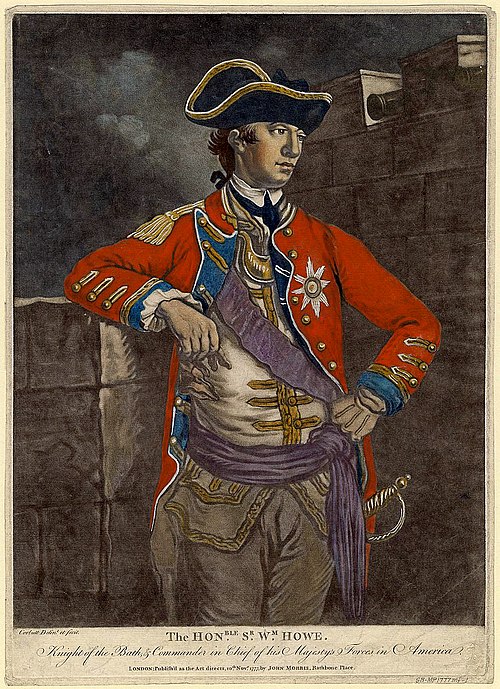
William Howe
1729–1814
British general
Led the attack at Bunker Hill and replaced Gage.
Legacy
Blamed for the war
After Bunker Hill, where more than 1,000 British soldiers were killed or wounded, the government called Gage home. He left Boston in October 1775 and never held a field command again, although he was later promoted to full general. He died in London in 1787.
Historians now see Gage as a careful, decent officer handed an impossible task. He was one of the few British leaders who warned that the Americans would fight hard and that a war would be long and costly.
1763
commander in chief
1774
governor of Massachusetts
1775
Lexington and Concord
1775
recalled to Britain
Timeline
The life of Thomas Gage, about 1719–1787
- About 1719 Thomas Gage is born in Sussex, England.
- 1741 He becomes an army officer.
- July 9, 1755 He is wounded at the Battle of the Monongahela.
- 1758 He raises a light infantry regiment and marries Margaret Kemble.
- 1760 He becomes military governor of Montreal.
- 1763 He becomes commander in chief in North America.
- May 1774 He arrives in Boston as governor of Massachusetts.
- September 1774 His troops seize gunpowder near Boston, causing the “Powder Alarm.”
- April 19, 1775 The battles of Lexington and Concord.
- June 12, 1775 He declares martial law and offers pardons.
- June 17, 1775 The Battle of Bunker Hill.
- October 1775 He leaves Boston for England.
- 1782 He is promoted to full general.
- April 2, 1787 Thomas Gage dies in London.
“The rebels are not the despicable rabble too many have supposed them to be.”
General Thomas Gage, in a letter to London after Bunker Hill
June 1775
The bigger story
Key People of the Revolutionary War
Meet the leaders, soldiers, spies and enemies who decided the war for American independence, all on one page.
Go deeper
Sources and further reading
- Paul Revere’s Ride, by David Hackett Fischer (1994)
- Bunker Hill: A City, a Siege, a Revolution, by Nathaniel Philbrick (2013)
- The Men Who Lost America, by Andrew Jackson O’Shaughnessy (2013)
- More recommended books
Keep exploring
More people of Colonial America and the Revolution
Use the Earlier and Later buttons to read these biographies in order, from the first Virginia colonists to the generals of the Revolutionary War.