
Home › US History › Revolutionary War › Declaration of Independence
Revolutionary War · Philadelphia · July 4, 1776
The Declaration of Independence
Fifteen months into the war, the Second Continental Congress took the step that could not be undone. It cut every tie to King George III and announced to the world that thirteen colonies were now free and independent states. The document Thomas Jefferson drafted to explain why holds the most famous words in American history: “all men are created equal.”

Writing the Declaration of Independence, 1776: Franklin, Adams and Jefferson, by Jean Leon Gerome Ferris, 1900 (Library of Congress)
Quick facts
The Declaration at a glance
| Adopted | July 4, 1776 (independence itself was voted on July 2) | |
| Where | The Pennsylvania State House, now Independence Hall, in Philadelphia | |
| Main author | Thomas Jefferson of Virginia, age 33 | |
| Committee of Five | Jefferson, John Adams, Benjamin Franklin, Roger Sherman and Robert R. Livingston | |
| Signed | Most of the 56 signers put their names on the parchment copy on August 2, 1776; a few signed later | |
| First signer | John Hancock, president of Congress, in large, bold letters | |
| Length | About 1,320 words, including 27 grievances against the king | |
| Where it is now | The National Archives Rotunda in Washington, D.C., on display since 1952 |
The big picture in 30 seconds
Why the Declaration matters
- It turned a fight for colonists’ rights into a war for independence.
- It made it possible for France and other nations to ally with the United States.
- Its ideas of equality and natural rights became the founding creed of the nation.
- Abolitionists, women’s rights leaders and civil rights activists used its words to demand that America live up to them.
July 2
Congress votes for independence
July 4
the Declaration is adopted
56
signers
27
grievances against the king
The road to July
From rebels to a new nation
When the war began at Lexington in April 1775, most Americans still saw themselves as loyal British subjects fighting for their rights, not for independence. In July 1775 Congress even sent the king the Olive Branch Petition asking for peace. George III refused to read it and declared the colonies in open rebellion. Parliament closed American trade, and Britain hired German soldiers to put the rebellion down.
Then, in January 1776, Thomas Paine published Common Sense. In plain, angry language, he argued that it was absurd for an island to rule a continent, and that kings were a bad idea in the first place. The pamphlet sold well over 100,000 copies in a few months. By spring, colony after colony was telling its delegates in Congress that they could vote for independence.
The Lee Resolution
On June 7, 1776, Richard Henry Lee of Virginia stood up in Congress and moved “that these United Colonies are, and of right ought to be, free and independent States.” Some colonies were not yet ready, so Congress put off the vote for three weeks. In the meantime, on June 11, it named a committee of five to write a declaration explaining the decision to the world.

Where it happened
Read aloud in every town
The night of July 4, printer John Dunlap ran off about 200 copies of the Declaration as a large single sheet, a “broadside.” Express riders carried them to the states and to the army. On July 8 Colonel John Nixon read it to a crowd outside the State House in Philadelphia while the bell rang. On July 9 Washington had it read to his troops in New York, and that night a crowd pulled down the gilded lead statue of George III on Bowling Green. Its lead was melted into more than 42,000 musket balls.
Simplified map. Adopted in Philadelphia on July 4 and first read in public there on July 8. Other dates are the first public readings; news took about a month to reach Georgia.
From resolution to signing
Four weeks that made a nation
The Declaration was written, debated and approved in less than a month.
The committee asks Jefferson to write it. Working at a portable desk in rented rooms at Seventh and Market Streets, he finishes in about 17 days. Adams and Franklin make small changes.
Congress approves Lee’s resolution for independence, 12 colonies to none. New York’s delegates, still without instructions, do not vote. They join on July 9.
Congress debates Jefferson’s draft line by line and cuts about a quarter of it, including his attack on the slave trade. On July 4 it approves the final text.
A clean copy, handwritten on parchment, is ready. Hancock signs first and most delegates sign that day. The names are kept secret until January 1777.
Inside the document
What the Declaration says
The Declaration is really a legal argument with five parts. Most of it is a list of complaints. But its second paragraph, the preamble, put into a few sentences the ideas that the colonists had been reading in English and European writers such as John Locke: that people have natural rights that no government can take away, and that when a government destroys those rights, the people may change it or abolish it.
“All men are created equal”
In 1776 these words did not apply to everyone. Jefferson himself, and about 40 other signers, owned enslaved people, and women could not vote. The contradiction was clear even then. But the words took on a life of their own. Frederick Douglass, the women at Seneca Falls in 1848, Abraham Lincoln at Gettysburg and Martin Luther King Jr. all used them to call on the nation to keep its promise.


Authors and signers
The men behind the Declaration

A quiet Virginia lawyer known for his elegant writing. He wrote the first draft, and later asked to be remembered for it above his presidency.
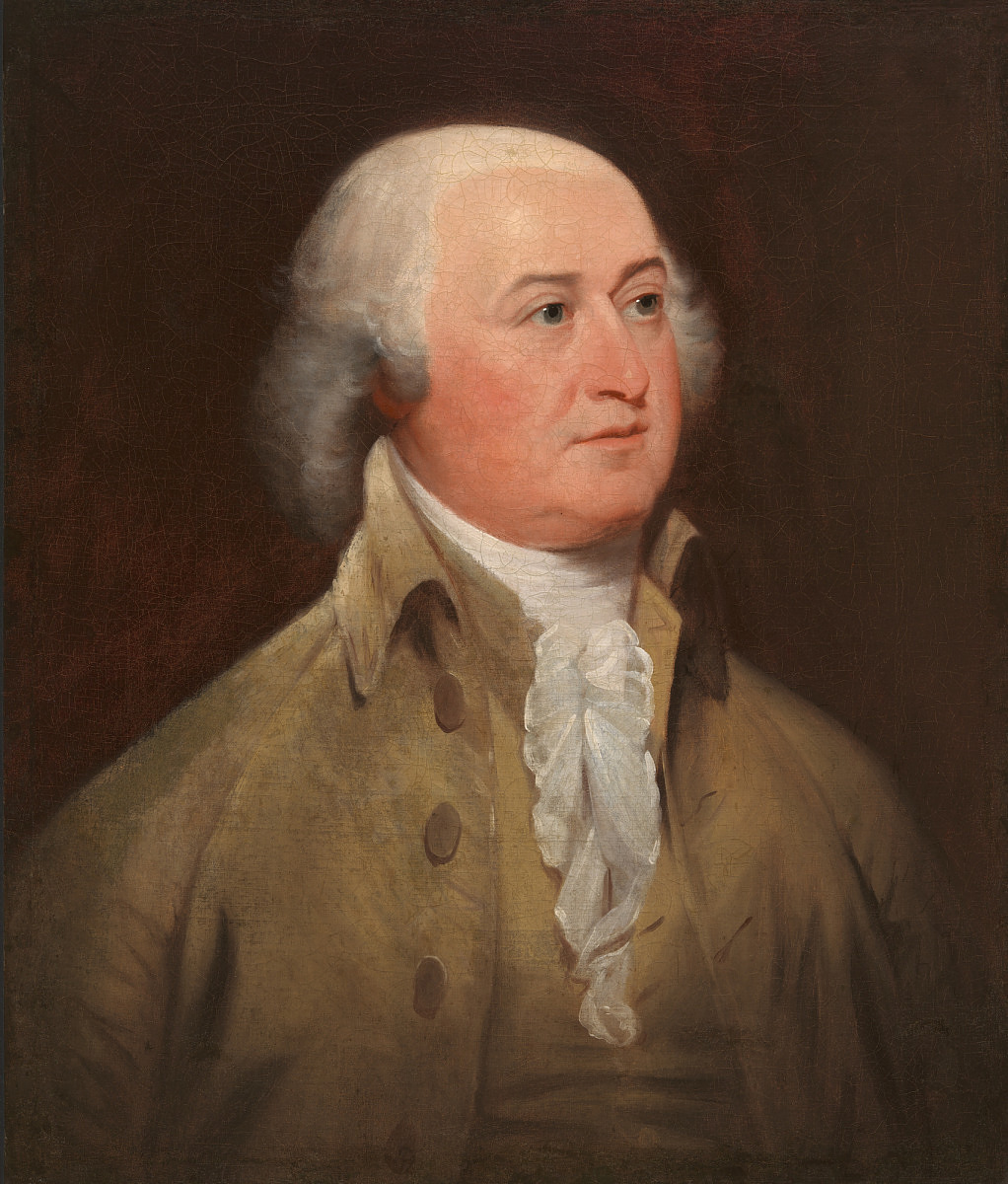
Led the fight for independence on the floor of Congress. Jefferson called him “the pillar of its support.”

At 70, the oldest signer. He helped edit Jefferson’s draft; he is often credited with changing “sacred and undeniable” truths to “self-evident.”

Signed first, so large and bold that “John Hancock” became another word for a signature.

The Virginian whose resolution of June 7, 1776, put independence to a vote.

A self-taught Connecticut shoemaker turned lawyer. The only man to sign the Declaration, the Articles and the Constitution.
Why it mattered
A promise to the world
The Declaration did not win independence. That took seven more years of war. But it changed what the war was about. Americans were no longer rebels asking the king to treat them fairly; they were citizens of a new country defending it. That made a foreign alliance possible, and France signed one in 1778.
The Declaration also became a model. Dozens of nations, from Venezuela in 1811 to Vietnam in 1945, have issued declarations of independence that echo its words. Jefferson and Adams, rivals and friends, both died on the same day, July 4, 1826, exactly fifty years after it was adopted.
The signers
Who signed it
The 56 signers were mostly lawyers, merchants and planters, with a few doctors, a printer and a shoemaker-turned-judge. The youngest was Edward Rutledge of South Carolina, 26. The oldest was Franklin, 70. Charles Carroll of Maryland, the only Catholic signer, outlived all the others and died in 1832.
Signing was dangerous. To the British, it was treason, punishable by death. Several signers had their homes burned or were captured during the war, and Richard Stockton of New Jersey was imprisoned and treated harshly. None was hanged.
Day by day
Declaration timeline
“We hold these truths to be self-evident, that all men are created equal, that they are endowed by their Creator with certain unalienable Rights, that among these are Life, Liberty and the pursuit of Happiness.”
The Declaration of Independence
Second paragraph, July 4, 1776
The bigger story
Revolution and Founding, 1770–1819
Our U.S. History era page puts the war in context: the road to independence, the Constitution and the first presidents.
Go deeper
Books and sources
- American Scripture: Making the Declaration of Independence, by Pauline Maier (1997)
- Our Declaration, by Danielle Allen (2014)
- John Adams, by David McCullough (2001)
- More recommended books