

Home › World History › World War II › US Navy Ships
The fleet that won the war at sea · Arsenal
US Navy Ships of World War II
On December 7, 1941, the US Navy lost much of its battleship force in a single morning. By the end of the war it was the largest navy the world had ever seen, with more than 6,700 ships, from giant aircraft carriers and battleships to destroyers, submarines and landing craft. Here are the ships that carried America’s war across two oceans.
Quick facts
The wartime Navy at a glance
| Size, December 1941 | About 790 ships of all kinds, including 17 battleships, 7 fleet carriers and 112 submarines | |
| Size, August 1945 | 6,768 ships, including some 99 aircraft carriers of all types, 23 battleships and more than 370 destroyers | |
| Sailors | About 340,000 in December 1941; more than 3.4 million by 1945 | |
| Backbone of the fleet | The aircraft carrier replaced the battleship as the Navy's most important ship | |
| Shipbuilding | American yards turned out warships, cargo ships and landing craft at a pace no other country could match | |
| Major losses | 4 fleet carriers, 1 light carrier, 6 escort carriers, 2 battleships, 10 cruisers, 71 destroyers and 52 submarines |
The big picture in 30 seconds
Why it matters
- Sea power carried every American soldier, tank and bullet overseas. Without control of the oceans there could be no D-Day and no island-hopping.
- Carrier task forces won the great battles of the Pacific, from Midway to Leyte Gulf.
- Destroyers and escort carriers beat the German U-boats in the Battle of the Atlantic.
- US submarines sank most of Japan's merchant fleet, strangling its war economy.
6,768
ships in the Navy on V-J Day
3.4 million
sailors by 1945
17
big Essex-class carriers commissioned during the war
175
Fletcher-class destroyers built
Growth
From a peacetime fleet to the world's largest navy
Selected ship types in active service, December 1941 and August 1945.
Ship types
Sizing up the fleet
The Navy’s main warships, drawn to the same scale. A battleship or carrier was more than twice the length of a destroyer or submarine.
Aircraft carriers
The new queens of the sea
Carriers launched bombers, torpedo planes and fighters that could strike enemy fleets more than 200 miles away. The big Essex class carried about 90 aircraft; small escort carriers hunted U-boats and supported landings.
Battleships
Big guns
No longer the center of the fleet, battleships still mattered. Their huge guns pounded enemy beaches before landings, and their many anti-aircraft guns helped protect the carriers. The four Iowa-class ships were the fastest ever built.
Cruisers and destroyers
The workhorses
Cruisers guarded carriers and bombarded shores. Destroyers, nicknamed “tin cans” because of their thin armor, screened the fleet, hunted submarines, escorted convoys and fought fierce night battles in the Solomons.
Submarines
The silent service
Only about 2 percent of the Navy’s sailors served on submarines, but they sank about 1,100 Japanese merchant ships and some 200 warships. It was the most dangerous duty in the Navy: 52 US submarines and some 3,500 submariners were lost.
Landing ships
Bringing the army ashore
LSTs, nicknamed “large slow targets” by their crews, could run onto a beach and open their bow doors to unload tanks and trucks. More than 1,000 were built, along with tens of thousands of smaller landing craft.
PT boats
Small, fast and deadly
Plywood motor torpedo boats raced through the dark to attack enemy shipping. One of their skippers was Lt. John F. Kennedy, whose PT-109 was cut in half by a Japanese destroyer in 1943.
Famous ships
Five ships that made history
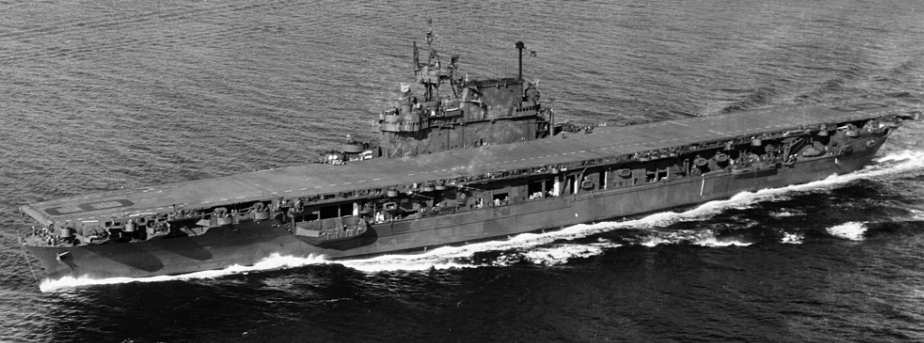
Aircraft carrier
USS Enterprise (CV-6)
The “Big E” fought in almost every major carrier battle of the Pacific War, from the Doolittle Raid and Midway to Leyte Gulf and Okinawa. Japan claimed to have sunk her several times. She earned 20 battle stars, more than any other American ship in World War II.
| Class | Yorktown class |
| Launched | October 3, 1936 |
| Length | 824 ft 9 in |
| Displacement | 19,800 tons standard |
| Speed | 32.5 knots |
| Aircraft | About 90 |
| Crew | About 2,200 |
| Fate | Scrapped 1958–60 |
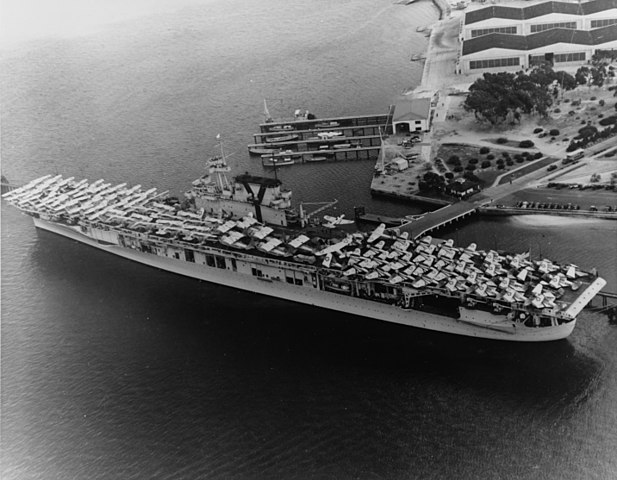
Aircraft carrier
USS Yorktown (CV-5)
Damaged at the Coral Sea in May 1942, Yorktown was patched up at Pearl Harbor in about three days and sent to Midway, where her planes helped sink Japanese carriers. Hit by bombs and torpedoes, she was finally sunk by a Japanese submarine on June 7, 1942. Her wreck was found three miles down in 1998.
| Class | Yorktown class |
| Launched | April 4, 1936 |
| Length | 824 ft 9 in |
| Displacement | 19,800 tons standard |
| Speed | 32.5 knots |
| Aircraft | About 90 |
| Fate | Sunk at Midway, June 7, 1942 |
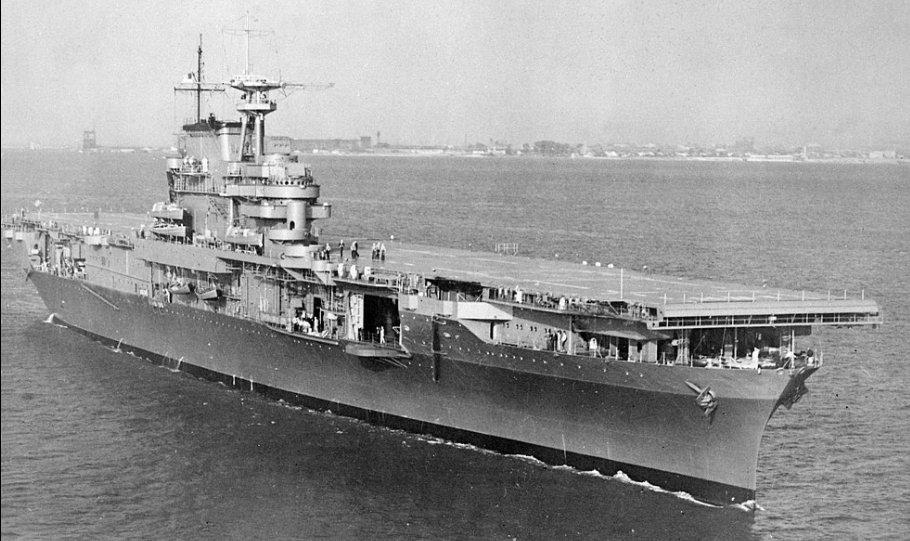
Aircraft carrier
USS Hornet (CV-8)
Barely six months in service, Hornet carried Jimmy Doolittle’s 16 Army bombers to within range of Tokyo in April 1942, then fought at Midway. She was sunk at the Battle of the Santa Cruz Islands in October 1942, only a year after she was commissioned.
| Class | Yorktown class |
| Launched | December 14, 1940 |
| Length | 824 ft 9 in |
| Displacement | 20,000 tons standard |
| Speed | 32.5 knots |
| Aircraft | About 90 |
| Fate | Sunk at Santa Cruz, Oct. 27, 1942 |
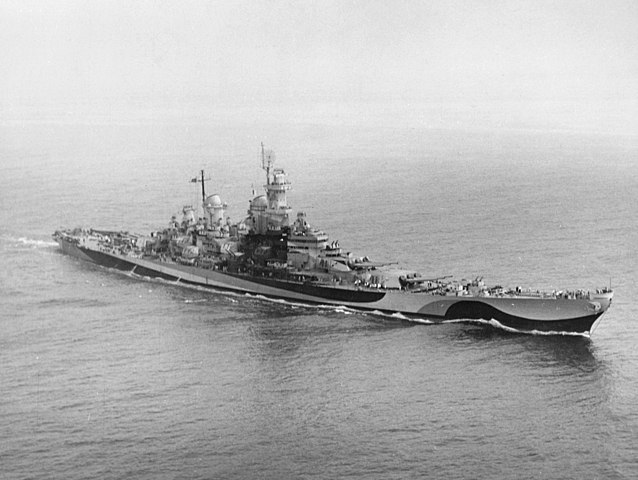
Battleship
USS Missouri (BB-63)
The “Mighty Mo” was the last battleship the United States ever finished. She bombarded Iwo Jima and Okinawa, and on September 2, 1945, Japan’s surrender was signed on her deck in Tokyo Bay. Recalled for Korea and the 1991 Gulf War, she is now a museum at Pearl Harbor, near the sunken Arizona.
| Class | Iowa class |
| Launched | January 29, 1944 |
| Builder | New York (Brooklyn) Navy Yard |
| Length | 887 ft 3 in |
| Displacement | 45,000 tons standard; 57,500 full load |
| Speed | 33 knots |
| Main guns | Nine 16-inch guns |
| Crew | About 2,700 in wartime |
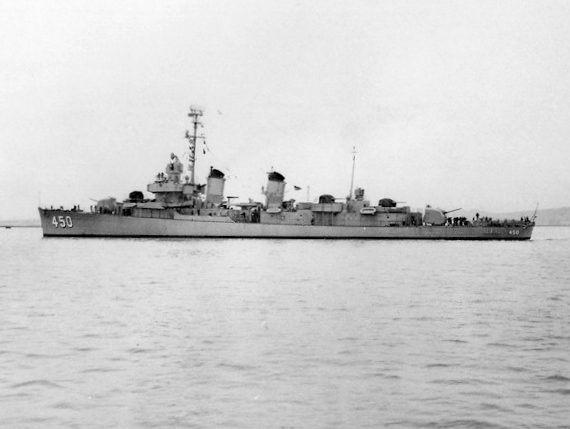
Destroyer
USS O'Bannon (DD-450)
One of the first Fletcher-class destroyers, O’Bannon fought through the brutal night battles off Guadalcanal and the long advance to the Philippines, earning 17 battle stars. Navy legend says her crew once fought off a surfaced Japanese submarine by throwing potatoes at it.
| Class | Fletcher class |
| Launched | March 14, 1942 |
| Builder | Bath Iron Works, Maine |
| Length | 376 ft 6 in |
| Displacement | 2,050 tons standard |
| Speed | 36 knots |
| Armament | Five 5-inch guns, ten torpedo tubes |
| Crew | About 330 |
At war
The fleet's war in brief
See them today
Museum ships you can visit
Several World War II warships are preserved as museums. Here are some of the best known.
Remembering the fleet
The Navy Memorial
The US Navy Memorial in Washington, D.C., honors everyone who has served in the Navy, and its Navy Log lets families look up and add the service records of their sailors. The Naval History and Heritage Command keeps the official history of every American warship.
Go deeper
Sources and further reading
- The Big E, by Edward P. Stafford (1962)
- The Last Stand of the Tin Can Sailors, by James D. Hornfischer (2004)
- Neptune's Inferno, by James D. Hornfischer (2011)
- Battleship Missouri, by Paul Stillwell (1996)
Did you know?
In 1943 and 1944, Henry Kaiser’s shipyard in Vancouver, Washington, launched a new escort carrier almost every week, and American yards together finished more than one destroyer or destroyer escort a day.