
Home › World History › World War II › US Tanks
Armor of the US Army and Marines · Arsenal
US Tanks of World War II
When war broke out in Europe in 1939, the US Army had only a few hundred light tanks. By 1945 American factories had built more than 88,000, and the M4 Sherman had become one of the most famous fighting vehicles in history. Here are the tanks that carried American soldiers from North Africa to Berlin and across the islands of the Pacific.
Quick facts
American armor at a glance
| Production | 88,410 tanks built from 1940 to 1945, more than Germany and Japan combined | |
| Most-built tank | The M4 Sherman: 49,234, second only to the Soviet T-34 among the tanks of the war | |
| Armored divisions | 16 US Army armored divisions, plus dozens of separate tank battalions supporting the infantry | |
| Lend-Lease | Thousands of American tanks went to Britain, the Soviet Union, China and the Free French | |
| Builders | Car and locomotive makers such as Chrysler, Ford, General Motors, ALCO and Baldwin turned their plants over to tanks | |
| Where they fought | North Africa, Sicily, Italy, northwest Europe and the islands of the Pacific |
The big picture in 30 seconds
Why it matters
- American tanks were rarely the most powerful on the battlefield, but they were reliable, easy to repair and available in huge numbers.
- The Sherman's mechanical toughness let Allied armies race across France in the summer of 1944.
- In the Pacific, Marine and Army tanks, including flamethrower tanks, were vital for destroying Japanese bunkers.
- American production also kept British and Soviet armies supplied with tanks when they needed them most.
88,410
US tanks built in the war
49,234
M4 Shermans built
16
US armored divisions
22,744
M3 and M5 Stuart light tanks built
Production
Tanks off the line
US tank production by year. Chrysler’s Detroit Tank Arsenal alone built more than 22,000 tanks.
Size comparison
Light, medium and heavy
Six American tanks drawn to the same scale, from the airborne M22 Locust to the M26 Pershing.
Light tanks
Fast and light
Light tanks scouted ahead of the army, screened its flanks and exploited breakthroughs.
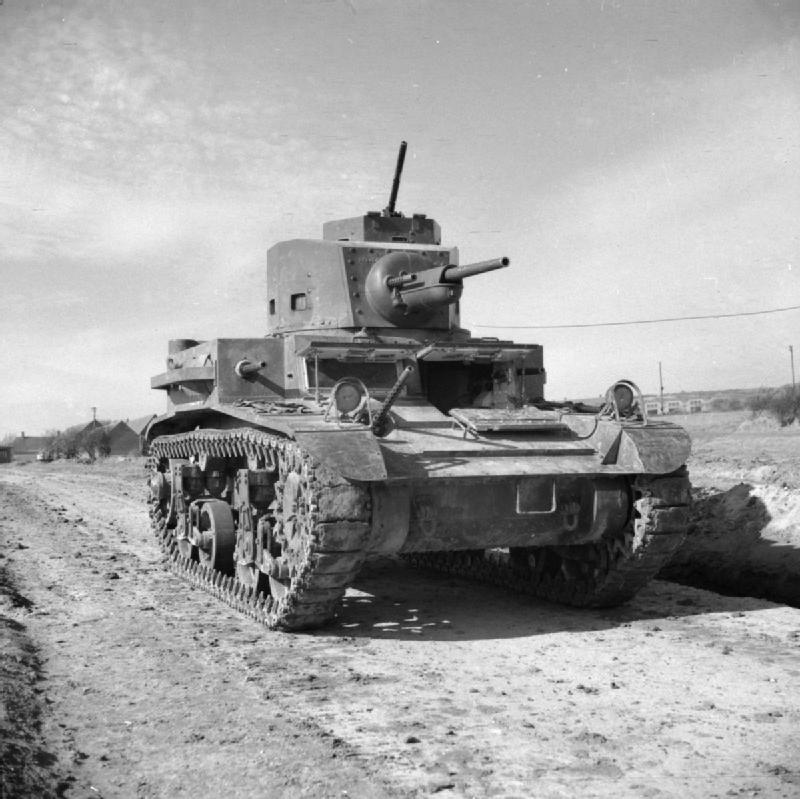
1935–1942
M2 Light Tank
The Army’s main tank of the 1930s, it was already outdated by 1941. A few Marine M2A4s fought on Guadalcanal, but most served for training while better tanks were built.
| Built | 696 |
| Weight | About 11.6 tons |
| Main gun | 37 mm |
| Crew | 4 |
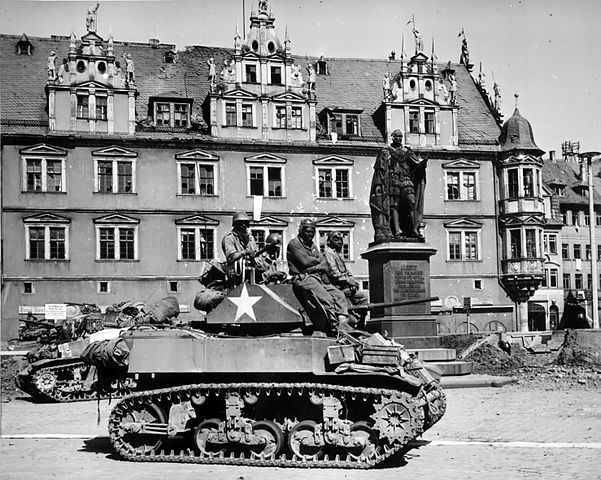
1941–1944
M3 and M5 Stuart
Fast and reliable, the Stuart was nicknamed “Honey” by British crews in North Africa. Its small gun was weak against German tanks by 1943, but it stayed useful for scouting and in the jungles of the Pacific.
| Built | 22,744 (M3 and M5) |
| Weight | 14.7 to 16.5 tons |
| Main gun | 37 mm |
| Crew | 4 |
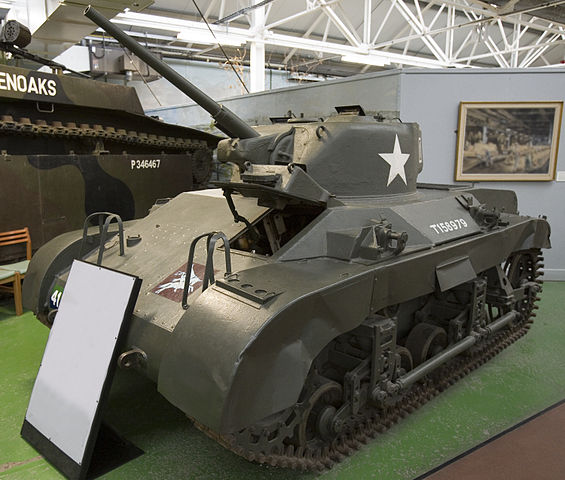
1942–1944
M22 Locust
Built to be flown into battle inside a glider. The British used a few during the Rhine crossing in March 1945, but the Locust was too lightly armed and armored to be much use.
| Built | 830 |
| Weight | About 8 tons |
| Main gun | 37 mm |
| Crew | 3 |
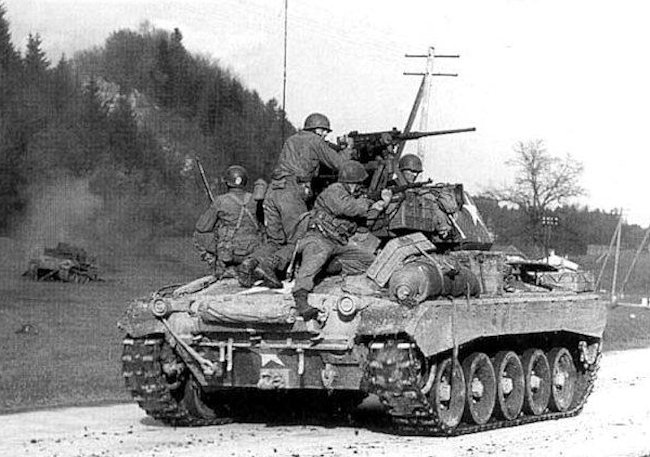
1944–1945
M24 Chaffee
The best American light tank of the war, with a 75 mm gun and a top speed of about 35 mph. The first ones reached the front in December 1944, during the Battle of the Bulge.
| Built | About 4,700 |
| Weight | About 20 tons |
| Main gun | 75 mm |
| Crew | 4 or 5 |
Medium tanks
The main battle tanks
Medium tanks did most of the fighting, supporting the infantry and taking on enemy armor.
1941–1942
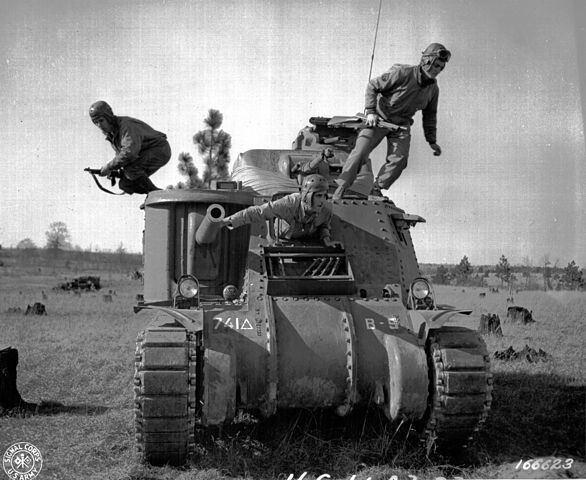
M3 Lee and Grant
A stopgap rushed into production while the Sherman was designed, the tall M3 carried a 75 mm gun in its hull and a 37 mm gun in a small turret on top. In British hands, as the “Grant,” it gave Rommel’s tanks a nasty shock at Gazala and El Alamein in 1942. American crews used it in Tunisia.
| Built | 6,258 |
| Weight | About 30 tons |
| Guns | 75 mm in the hull, 37 mm in the turret |
| Crew | 6 or 7 |
| Top speed | About 26 mph |
1942–1945
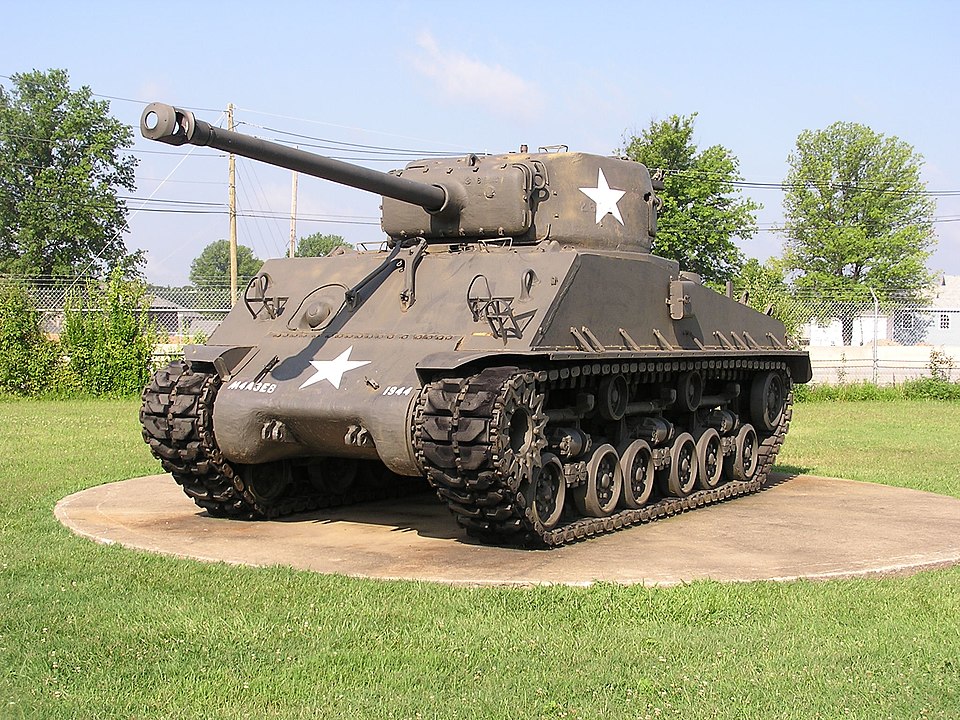
M4 Sherman
The Sherman was the workhorse of the Allied armies. It was outgunned by the German Panther and Tiger, but it was reliable, easy to fix in the field and built in enormous numbers. Later versions added a more powerful 76 mm gun, a 105 mm howitzer and wider tracks, and special versions cleared mines, swam ashore on D-Day and shot flames.
| Built | 49,234 |
| Weight | 33 to 42 tons |
| Guns | 75 mm, 76 mm or 105 mm |
| Crew | 5 |
| Top speed | About 25 to 30 mph |
1945
M26 Pershing
America’s first heavy tank to see combat, with a 90 mm gun that could defeat the Panther. The first 20 reached Europe in February 1945, just in time to help capture the Rhine bridge at Remagen.
1942–1945
Tank destroyers
Lightly armored but hard-hitting, the M10, the M36 with its 90 mm gun and the M18 Hellcat, the fastest tracked combat vehicle of the war at about 55 mph, were built to hunt enemy tanks.
Pacific
Amtracs
Tracked landing vehicles called LVTs, or amtracs, could swim from ships to shore and climb over coral reefs. They carried Marines across the reef at Tarawa and onto beaches across the Pacific.
1944–1945
The Black Panthers
The 761st Tank Battalion, one of the Army’s first Black tank units, fought for 183 days straight in France, Belgium and Germany. In 1978, the unit received the Presidential Unit Citation.
Normandy
Busting the hedgerows
Normandy’s thick, earth-banked hedgerows trapped tanks. Sgt. Curtis Culin designed steel prongs, cut from German beach obstacles, that let a Sherman plow right through. Hundreds of tanks were fitted with these “Rhino” devices.
Losses
The price of armor
Tank crews paid heavily. Some American armored divisions lost more than their entire starting number of tanks during the campaign in Europe, and depended on a steady stream of replacements from home.
See them today
Where to see these tanks
World War II tanks are on display at museums across the country.
Remembering the tankers
Patton's armored legacy
The General George Patton Museum at Fort Knox, Kentucky, long the home of the Armor School, tells the story of American tank crews and the commanders who led them. Many tankers rest in the American cemeteries in Normandy, Luxembourg and Belgium.
Go deeper
Sources and further reading
- Death Traps, by Belton Y. Cooper (1998)
- Spearhead, by Adam Makos (2019)
- Sherman: A History of the American Medium Tank, by R. P. Hunnicutt (1978)
- Armored Thunderbolt, by Steven J. Zaloga (2008)
Did you know?
The Sherman was named by the British, who called their American tanks after Civil War generals: Stuart, Lee, Grant and Sherman. The names stuck.