
Home › World History › World War II › Invasion of Sicily
July 10 – August 17, 1943 · Operation Husky
The Invasion of Sicily
Before dawn on July 10, 1943, American, British and Canadian troops stormed ashore on the southern coast of Sicily. Thirty-eight days later the island was in Allied hands, Mussolini had fallen from power, and Italy was on the verge of quitting the war. It was the first time the Allies had set foot on Axis home soil in Europe.
Quick facts
Sicily at a glance
| Date | July 10 – August 17, 1943 (airborne drops began the night of July 9) | |
| Location | Sicily, the large island off the southern tip of Italy | |
| Allied commanders | Gen. Dwight D. Eisenhower (supreme); Gen. Harold Alexander (ground forces); Lt. Gen. George S. Patton (US Seventh Army); Gen. Bernard Montgomery (British Eighth Army) | |
| Axis commanders | Gen. Alfredo Guzzoni (Italian Sixth Army); Field Marshal Albert Kesselring; Gen. Hans-Valentin Hube (German forces on the island) | |
| Allied strength | About 160,000 troops in the first landings, rising to some 467,000; about 2,590 ships and 4,000 aircraft | |
| Axis strength | Roughly 200,000 Italian and 40,000 to 60,000 German troops | |
| Allied losses | About 5,700 killed (2,811 American; 2,938 British and Canadian) and some 15,700 wounded | |
| Axis losses | About 9,000 killed and some 127,000 captured or missing, most of them Italian | |
| Result | Allied victory. Mussolini was overthrown on July 25, and Italy surrendered in September |
The big picture in 30 seconds
Why it matters
- Sicily was the first piece of the Axis homeland in Europe to fall to the Allies.
- The invasion brought down Mussolini within two weeks and pushed Italy to surrender.
- Hitler cited the landings when he called off his great offensive at Kursk in Russia and rushed troops to Italy.
- Lessons learned in Sicily about landings, paratroopers and naval gunfire were put to use at Normandy eleven months later.
2,590
ships in the invasion fleet
160,000
troops in the first landings
38
days to take the island
1st
Allied foothold on Axis soil in Europe
Background
Where next after Africa?
With victory in North Africa in sight, Roosevelt, Churchill and their generals met at Casablanca in January 1943 to decide the next move. General George Marshall still wanted to invade France as soon as possible. The British argued that the Allies were not ready, and that Sicily was the logical next step: taking it would open the Mediterranean to Allied shipping and might knock Italy out of the war. The British won the argument, and the Americans won a promise that the cross-Channel invasion would follow in 1944.
The man who never was
To hide the target, British intelligence dressed a dead man as a Royal Marines officer, chained a briefcase of fake secret letters to him and let him wash ashore in Spain. The letters suggested the Allies would land in Greece and Sardinia. The trick, called Operation Mincemeat, worked: Hitler sent troops to Greece and Sardinia instead of Sicily.
The biggest landing yet
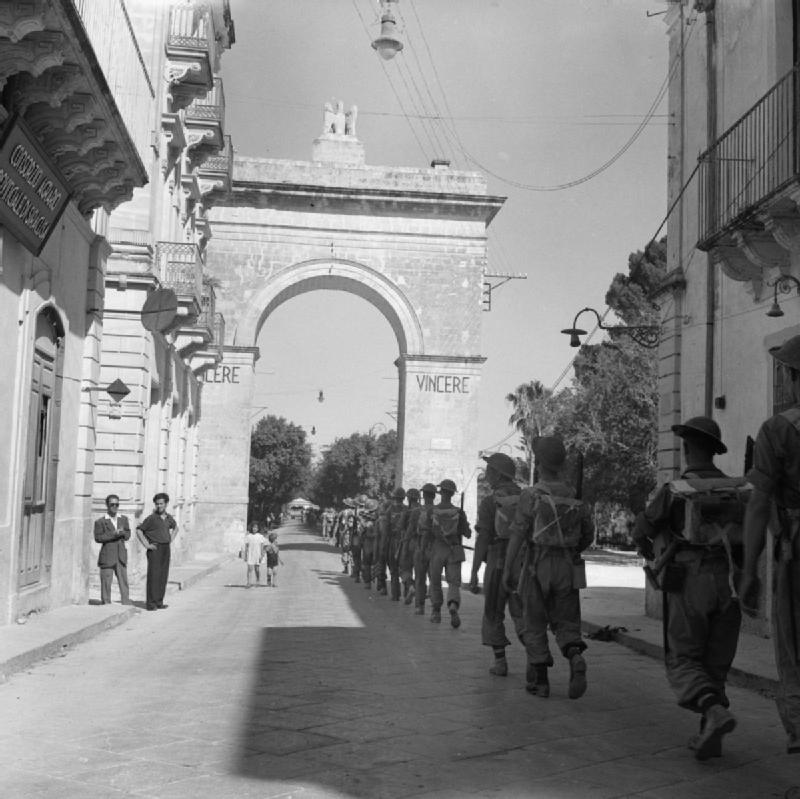
The invasion fleet of about 2,590 ships was larger than the one that would land at Normandy. New landing ships and amphibious DUKW trucks, nicknamed “ducks,” got their first big test, carrying men, tanks and supplies straight onto open beaches.
The campaign
From the beaches to Messina
Montgomery’s Eighth Army landed in the southeast and drove north toward Messina along the east coast, until German defenses at Catania and around Mount Etna stopped it. Patton’s Seventh Army, given the supporting role, swept west to Palermo and then raced along the north coast to reach Messina first.
July 9–10
Paratroopers lost in the wind
Gale-force winds scattered the American paratroopers of the 82nd Airborne across 60 miles of Sicily. Many British gliders were released too early and fell into the sea, drowning about 250 men. Two nights later, nervous Allied gunners shot down 23 of their own transport planes carrying reinforcements.
July 11, Gela
Tanks against the beachhead
German tanks of the Hermann Göring Division and Italian troops counterattacked the American beaches at Gela, coming within a few hundred yards of the sea. Naval gunfire, artillery firing from the sand and the infantry of the 1st Division drove them back.
July 22
Patton's race to Palermo
Frustrated with his supporting role, Patton sent his army sweeping across western Sicily. His troops covered about 100 miles in four days and entered Palermo, the island’s capital, on July 22, where crowds of Sicilians welcomed them.
Aug. 11–17
The escape across the Strait
The Germans held a series of lines around Mount Etna while they ferried about 40,000 German and 60,000 Italian troops, with nearly 10,000 vehicles, across the two-mile Strait of Messina to the mainland. They would fight the Allies again in Italy.
The human cost
Losses on both sides
Allied losses were heavy, but the Axis lost far more, and well over 100,000 Italian soldiers simply surrendered.
Day by day
Timeline of the campaign
In pictures
On the island
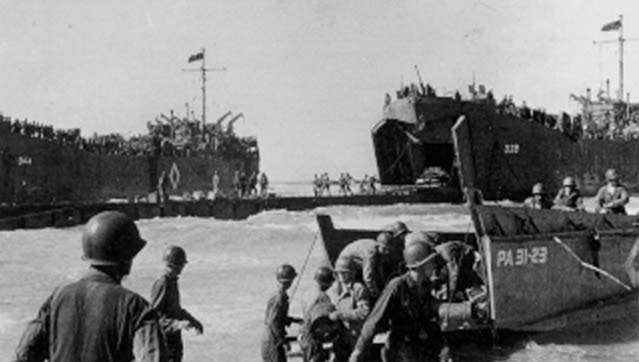
Over the beaches
With no harbor to use at first, everything came ashore across open beaches. Landing ships ran right up on the sand to unload tanks and trucks.
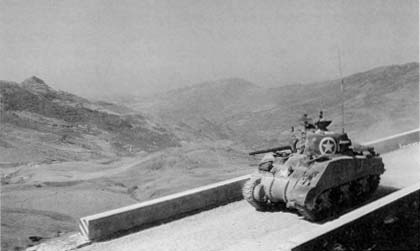
Mountains and mules
Inland, Sicily is steep and rocky, with narrow roads easily blocked by mines and blown bridges. American troops often relied on mules to carry supplies up the hills.
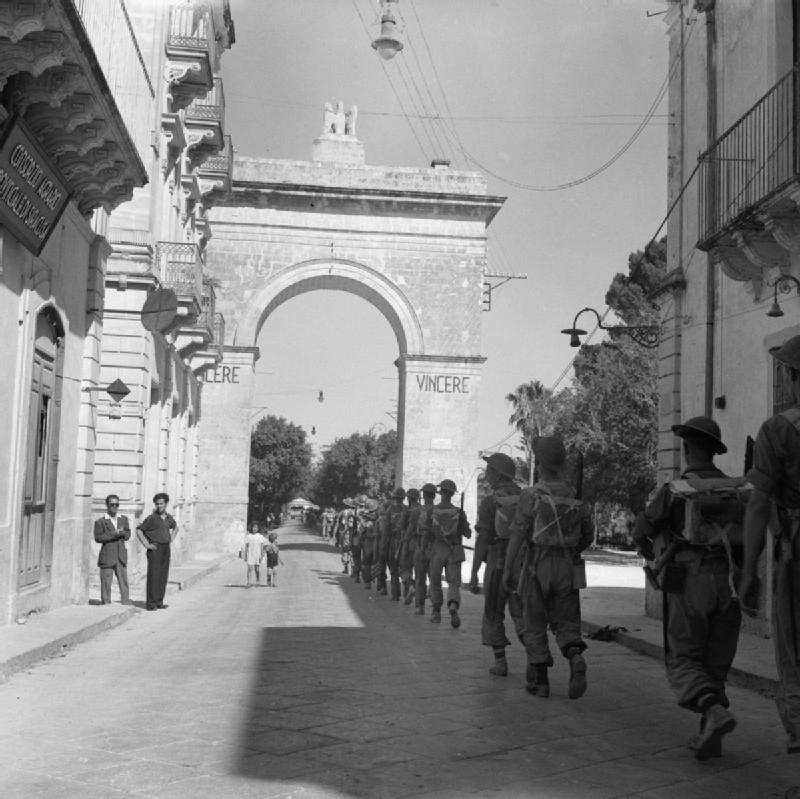
The Eighth Army
The British and Canadians faced the toughest German resistance, on the plain of Catania and the slopes of Mount Etna. The Canadian 1st Division fought its first campaign of the war here.
People
Who led the campaign
Commander, US Seventh Army
Turned a supporting role into a dash for Palermo and Messina. His career nearly ended when he slapped two soldiers suffering from battle fatigue in field hospitals.
Bernard Montgomery
Commander, British Eighth Army
The victor of El Alamein led the main attack up the east coast, but was held up for weeks at Catania.
Harold Alexander
Commander, 15th Army Group
The British general in charge of all the Allied armies on Sicily.
Omar Bradley
Commander, US II Corps
Led Patton’s main fighting corps across the center of the island. He would command the American troops at Normandy.
James M. Gavin
Colonel, 82nd Airborne
Landed miles from his target, gathered scattered paratroopers and held Biazza Ridge against German tanks.
Alfredo Guzzoni
Commander, Italian Sixth Army
The Italian general in charge of the island’s defense. Many of his coastal troops surrendered quickly, but some units fought hard.
What came next
After Sicily: on to Italy
Sicily opened the door to the Italian mainland. Italy’s new government secretly agreed to surrender, but Germany poured troops into the country and fought the Allies for every mile up the peninsula.
Remembering the campaign
Sicily-Rome American Cemetery
At Nettuno, south of Rome, the Sicily-Rome American Cemetery holds the graves of nearly 7,900 Americans who died freeing Sicily and Italy. The names of more than 3,000 missing are carved on its walls.
Go deeper
Sources and further reading
- The Day of Battle, by Rick Atkinson (2007)
- Sicily '43: The First Assault on Fortress Europe, by James Holland (2020)
- Operation Mincemeat, by Ben Macintyre (2010)
Meanwhile in Russia
Five days before the Sicily landings, Germany launched its last great offensive in the East at Kursk, starting one of the largest tank battles in history. On July 13, with the Allies ashore in Sicily, Hitler called it off.