
Home › World History › World War II › Chester W. Nimitz
Commander in Chief, Pacific, 1941–1945 · Commanders
Chester W. Nimitz
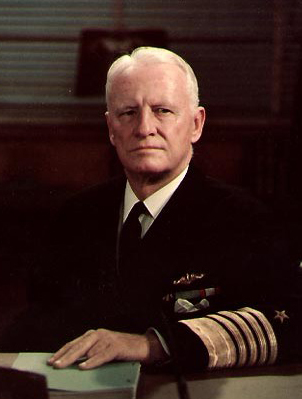
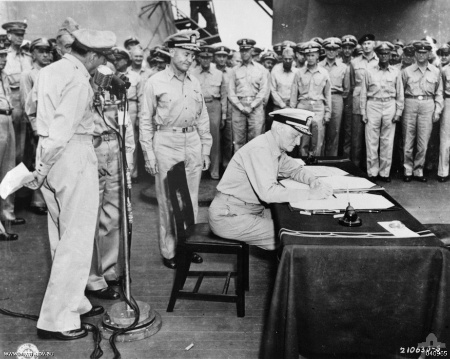
Ten days after Pearl Harbor, President Roosevelt chose a quiet, steady admiral from the Texas Hill Country to take over a shattered Pacific Fleet. Chester Nimitz rebuilt it, won at Midway, and led the island-hopping drive across the Central Pacific that ended with his signature on Japan’s surrender in Tokyo Bay.
Quick facts
Nimitz at a glance
| Born | February 24, 1885, in Fredericksburg, Texas | |
| Died | February 20, 1966, near San Francisco; buried at Golden Gate National Cemetery | |
| Education | US Naval Academy, class of 1905 (seventh of 114) | |
| Highest rank | Fleet Admiral (five stars), December 19, 1944 | |
| World War II role | Commander in Chief, US Pacific Fleet, and Commander in Chief, Pacific Ocean Areas, 1941–1945 | |
| Forces commanded | By 1945, some 2 million men and women, 5,000 ships and 20,000 aircraft | |
| After the war | Chief of Naval Operations (1945–47); later a UN envoy and regent of the University of California | |
| Family | Married Catherine Vance Freeman in 1913; four children: Catherine, Chester Jr. (a submarine hero of the war), Anna and Mary |
The big picture in 30 seconds
Why he matters
- He took command of a beaten fleet three weeks after Pearl Harbor and turned the tide within six months at Midway.
- He trusted his code breakers and his commanders, and was willing to gamble when the odds looked long.
- His Central Pacific drive captured the islands that put American bombers and ships within reach of Japan.
- He signed the Japanese surrender for the United States on September 2, 1945.
5,000
ships under his command by 1945
2 million
men and women in his forces
3,900
miles from Pearl Harbor to Tokyo Bay
5
stars: Fleet Admiral, 1944
Biography
From the Texas Hill Country to the sea
Chester William Nimitz grew up far from any ocean, in the German-American town of Fredericksburg, Texas, where his grandfather ran a hotel shaped like a steamboat. He hoped to go to West Point, but when no Army appointment was available he took the entrance exam for the Naval Academy instead and graduated in 1905.
A shaky start
In 1908, as a 22-year-old ensign commanding the destroyer USS Decatur in the Philippines, Nimitz ran his ship aground. He was court-martialed and reprimanded. The setback did not end his career; he went on to become one of the Navy’s leading experts on submarines and diesel engines.
Building a career
Nimitz commanded submarines, helped pioneer refueling ships at sea, founded one of the first Naval ROTC units at the University of California, Berkeley, and commanded the cruiser USS Augusta. By 1939 he was running the Bureau of Navigation, the office in charge of the Navy’s personnel.
Called to Pearl Harbor
On December 17, 1941, Roosevelt picked Nimitz, then a rear admiral, over 28 more senior officers to command the Pacific Fleet, promoting him straight to full admiral. He took command on December 31 on the deck of a submarine, because the battleships lay sunk around him.
The road to Tokyo
Across the Pacific
Nimitz’s forces drove west across the Central Pacific, capturing island bases one after another and skipping strongholds like Truk. General Douglas MacArthur‘s forces advanced along New Guinea to the Philippines. The two drives met at Japan’s doorstep.
May–June 1942
Trusting the code breakers
When Commander Joseph Rochefort’s code breakers told him Japan’s next target was Midway, Nimitz believed them, even though officials in Washington doubted it. He sent every carrier he had to ambush the Japanese fleet, and won the turning point of the Pacific War.
1942–45
Picking the right people
Nimitz chose Raymond Spruance, a cruiser admiral who had never commanded carriers, to lead at Midway, and kept fighters like William Halsey and planners like Richmond Kelly Turner in key jobs. He backed his commanders and rarely second-guessed them.
1943–44
Island-hopping
Rather than fight for every Japanese-held island, Nimitz’s forces seized key ones for airfields and anchorages and left others, like the great base at Truk, cut off and starving. The Gilberts, Marshalls and Marianas fell in less than a year.
1941–45
A war of submarines
A submariner himself, Nimitz unleashed his submarines against Japanese shipping from the first day of the war. US submarines sank more than half of Japan’s merchant fleet, starving its factories and armies of oil, food and raw materials.
Career
Sixty years in uniform
In his words
"Uncommon valor was a common virtue"
Among the Americans who served on Iwo Island, uncommon valor was a common virtue.
Nimitz’s tribute to the Marines and sailors who fought on Iwo Jima, issued in March 1945 as the battle ended. More Medals of Honor were awarded for Iwo Jima than for any other single battle of the war, and his words are carved on the Marine Corps War Memorial in Arlington, Virginia.
His life
Timeline
His team
Nimitz's admirals
Commander, Fifth Fleet
Calm and brilliant, he won at Midway and led the Central Pacific invasions. Nimitz trusted him above all his other admirals.
William F. Halsey
Commander, Third Fleet
Aggressive and popular with his sailors, he led the carrier raids of 1942 and the fight for the Solomons.
Richmond K. Turner
Commander, amphibious forces
Planned and led the landings from Guadalcanal to Okinawa.
Charles Lockwood
Commander, Pacific submarines
Fixed the Navy’s faulty torpedoes and led the submarine war against Japanese shipping.
Joseph Rochefort
Head of code breaking at Pearl Harbor
His team cracked enough of the Japanese naval code to reveal the plan to attack Midway.
Frank Jack Fletcher
Carrier commander, 1942
Led the American carriers at the Coral Sea and Midway.
Legacy
After the war
Nimitz led the Navy through its postwar shrinking, then spent his retirement in California, where he worked to rebuild friendship with Japan.
Visit
National Museum of the Pacific War
In Fredericksburg, Texas, the old Nimitz family hotel is now part of the National Museum of the Pacific War, with exhibits on Nimitz and the whole Pacific campaign. Nimitz is buried at Golden Gate National Cemetery near San Francisco, beside his wife and near Spruance, Turner and Lockwood.
Go deeper
Sources and further reading
- Nimitz, by E. B. Potter (1976)
- Admiral Chester W. Nimitz: The Life and Legacy of the US Pacific Fleet's Commander in Chief, by Charles River Editors
- Nimitz at War: Command Leadership from Pearl Harbor to Tokyo Bay, by Craig L. Symonds (2022)
Like father, like son
Nimitz’s son, Chester Jr., commanded the submarine USS Haddo during the war, sinking several Japanese ships and earning the Silver Star. He later retired from the Navy as a rear admiral.