
Home › World History › World War II › Battle of Midway
June 4–7, 1942 · Central Pacific
The Battle of Midway
Six months after Pearl Harbor, Japan sent its carrier fleet to seize Midway Atoll and finish off the US Navy. American code breakers knew they were coming. In one morning, US dive bombers sank three of Japan’s best carriers, and by the end of the battle all four were gone. It was the turning point of the war in the Pacific.
Quick facts
Midway at a glance
| Date | June 4–7, 1942 (main battle June 4) | |
| Location | Midway Atoll, central Pacific, about 1,300 miles northwest of Honolulu | |
| US commanders | Adm. Chester W. Nimitz; Rear Adm. Frank Jack Fletcher; Rear Adm. Raymond Spruance | |
| Japanese commanders | Adm. Isoroku Yamamoto; Vice Adm. Chuichi Nagumo | |
| US strength | 3 aircraft carriers, about 233 carrier aircraft, 127 land-based aircraft on Midway | |
| Japanese strength | 4 fleet carriers in the strike force with 248 aircraft, backed by battleships and an invasion force | |
| US losses | 1 carrier (Yorktown), 1 destroyer, about 150 aircraft, 307 killed | |
| Japanese losses | 4 fleet carriers, 1 heavy cruiser, 248 aircraft, about 3,057 killed | |
| Result | Decisive American victory and the turning point of the Pacific War |
The big picture in 30 seconds
Why it matters
- US code breakers discovered Japan's target and the date of the attack, letting Admiral Nimitz set an ambush.
- In about six minutes on the morning of June 4, American dive bombers set three Japanese carriers ablaze. The fourth was sunk that afternoon.
- Japan lost four of the six carriers that had attacked Pearl Harbor, along with hundreds of skilled aircrew and mechanics.
- Japan never again launched a major offensive in the central Pacific. Two months later the US went on the attack at Guadalcanal.
4
Japanese aircraft carriers sunk
6 minutes
for dive bombers to wreck three carriers
3,057
Japanese killed
307
Americans killed
Background
The trap at Midway
The Doolittle Raid on Tokyo in April 1942 shocked Japan’s leaders. Admiral Yamamoto proposed a plan to remove the threat for good: capture Midway, a tiny atoll at the western end of the Hawaiian chain, and draw the surviving American carriers into a battle where Japan’s larger fleet would destroy them. A smaller force would strike the Aleutian Islands off Alaska at the same time to divide American attention.
Breaking the code
At Pearl Harbor, Commander Joseph Rochefort’s code breakers in Station HYPO could read parts of the Japanese naval code, JN-25. They knew a big attack was coming against a target called “AF,” and suspected Midway. To prove it, Midway sent a fake message in plain language saying its water plant had broken down. Soon after, the Japanese reported that “AF” was short of water.
Three carriers, not two
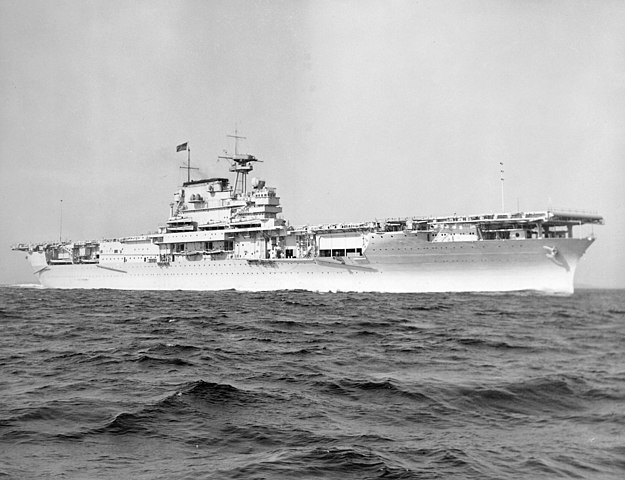
Nimitz had only two undamaged carriers, Enterprise and Hornet. The Yorktown had been badly hit at the Coral Sea a month earlier, and repairs were expected to take months. Shipyard workers at Pearl Harbor patched her up in about three days. On May 30 she sailed to join the others at a spot northeast of Midway the Americans named “Point Luck,” to wait for the Japanese to show themselves.
The battle
June 4: the decisive day
Both fleets hunted each other with scout planes. The Japanese hit Midway first, but American scouts found their carriers, and the US carriers struck while Japanese planes were being refueled and rearmed on their decks.
6:30 a.m.
Midway is attacked
A strike of 108 Japanese planes bombed Midway’s airfield and buildings. Midway’s own bombers and torpedo planes, many of them obsolete, attacked the Japanese carriers in waves and were shot down without scoring a hit. Admiral Nagumo ordered his reserve planes rearmed with bombs for a second strike on the island.
9:20 a.m.
The torpedo squadrons
The first carrier planes to find the enemy were the slow Devastator torpedo bombers, flying without fighter cover. All 15 planes of Hornet’s Torpedo Squadron 8 were shot down; Ensign George Gay was its only survivor. Their sacrifice pulled the Japanese fighters down to sea level and kept the carriers busy dodging.
10:22 a.m.
The dive bombers strike
At that moment, dive bombers from Enterprise and Yorktown arrived high above, almost unopposed. Lt. Cmdr. Wade McClusky had found the fleet by following a Japanese destroyer. Bombs tore into decks crowded with fueled and armed planes. Within six minutes, Kaga, Akagi and Soryu were burning wrecks.
Afternoon
Hiryu strikes back
The last Japanese carrier, Hiryu, launched two attacks that left Yorktown dead in the water. Around 5 p.m., American dive bombers found Hiryu and set her on fire too. A Japanese submarine finished off the drifting Yorktown on June 6; she sank the next morning.
The cost to Japan
Four carriers in one day
All four carriers of the strike force, veterans of Pearl Harbor, were lost.
Hit by at least four bombs; sank that evening.
Engulfed in fire; sank that evening.
Nagumo's flagship; scuttled before dawn on June 5.
Struck back at Yorktown first; sank on June 5.
The American carriers
Three flattops that won the battle
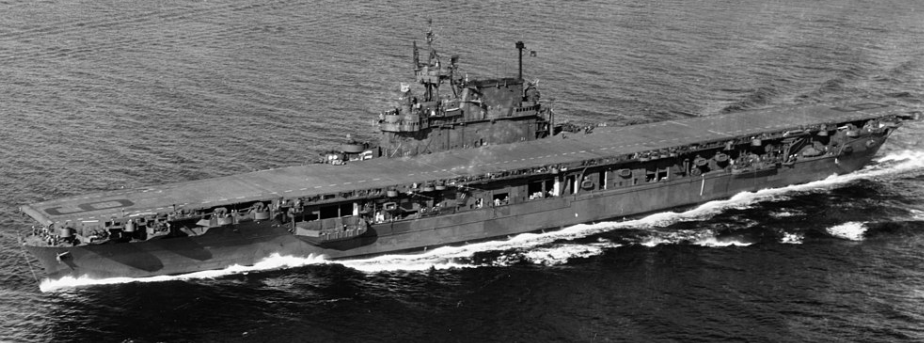
USS Enterprise
Flagship of Admiral Spruance’s Task Force 16. Her dive bombers sank Kaga and Akagi and helped sink Hiryu. She survived the war as the most decorated US ship of World War II.
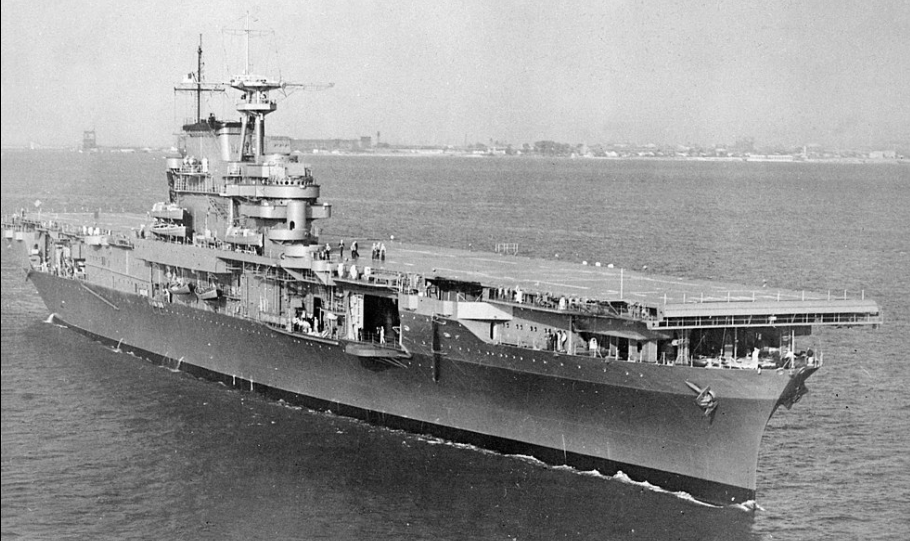
USS Hornet
The newest of the three, she had launched the Doolittle Raid just seven weeks earlier. She lost Torpedo Squadron 8 at Midway and was sunk at the Battle of the Santa Cruz Islands that October.
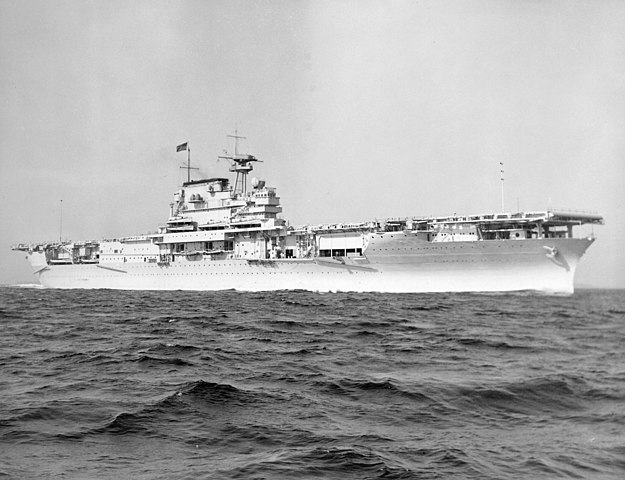
USS Yorktown
Admiral Fletcher’s flagship. Her dive bombers sank Soryu, and her scouts found Hiryu. Crippled by Hiryu’s planes and then torpedoed by a submarine, she sank on June 7.
Day by day
Timeline of the battle
Midway local time, June 1942.
People
Who led the battle
Chester W. Nimitz
Commander in Chief, US Pacific Fleet
Trusted his code breakers and risked all three of his carriers on an ambush.
Commander, Task Force 16
A cruiser admiral who stepped in when Admiral Halsey fell ill. His decision to launch early caught the Japanese carriers at their most vulnerable.
Frank Jack Fletcher
Commander, Task Force 17
In tactical command of the carriers. When his flagship Yorktown was crippled, he handed control to Spruance.
Joseph Rochefort
Head of Station HYPO
The code breaker whose team identified Midway as the target. He received the Distinguished Service Medal in 1986, ten years after his death.
C. Wade McClusky
Commander, Enterprise Air Group
Low on fuel, he spotted a lone Japanese destroyer racing north and followed it to the enemy carriers.
Isoroku Yamamoto
Commander, Japanese Combined Fleet
Designed a complicated plan that spread his forces across thousands of miles of ocean. His battleships never got into the fight.
What came next
After Midway
Midway did not end the Pacific War, but it ended Japan’s run of victories. With its carrier force cut down, Japan was forced onto the defensive, and America’s shipyards were about to tip the balance for good.
Remembering Midway
Battle of Midway National Memorial
Midway Atoll is now a national wildlife refuge, famous for its huge colonies of albatrosses, and was named the Battle of Midway National Memorial in 2000. The US Navy marks the anniversary of the battle every June.
Go deeper
Sources and further reading
- The Battle of Midway, by Craig L. Symonds (2011)
- Shattered Sword, by Jonathan Parshall and Anthony Tully (2005)
- Incredible Victory, by Walter Lord (1967)
- Miracle at Midway, by Gordon W. Prange (1982)
Meanwhile in Europe and Africa
As the carriers fought at Midway, the war elsewhere was going badly for the Allies. Rommel captured Tobruk in North Africa on June 21, 1942, and a week later Germany launched its great summer offensive in the Soviet Union toward Stalingrad.