
Home › US History › Revolutionary War › Trenton & Princeton
Revolutionary War · New Jersey · December 26, 1776 – January 3, 1777
The Battles of Trenton and Princeton
By Christmas 1776 the American cause looked lost. Washington’s army had been chased out of New York and across New Jersey, and most of his soldiers’ enlistments ran out on New Year’s Day. Then, on a stormy Christmas night, he led his men back across the icy Delaware River. In ten days he won two victories that saved the Revolution.

Washington Crossing the Delaware, Emanuel Leutze, 1851. The real crossing was at night, in sleet and snow.
Quick facts
Trenton and Princeton at a glance
| When | Trenton: December 26, 1776; Second Trenton (Assunpink Creek): January 2, 1777; Princeton: January 3, 1777 | |
| Where | Trenton and Princeton, New Jersey, after crossing the Delaware River at McConkey’s Ferry, Pennsylvania | |
| Sides | Continental Army vs. Hessian garrison (Trenton) and British regulars (Princeton) | |
| American leaders | Gen. George Washington; Gens. Nathanael Greene, John Sullivan, Hugh Mercer; Col. Henry Knox; Col. John Glover | |
| British leaders | Col. Johann Rall (Trenton); Gen. Charles Cornwallis; Lt. Col. Charles Mawhood (Princeton) | |
| Troops | About 2,400 Americans crossed the river; about 1,500 Hessians held Trenton | |
| Trenton losses | Hessians: 22 killed, 83 wounded, about 900 captured. Americans: 2 froze to death, about 5 wounded | |
| Result | Two American victories; the British pull back from most of New Jersey |
The big picture in 30 seconds
Why Trenton and Princeton matter
- They came when the Revolution was closest to collapse.
- Victory persuaded many soldiers to re-enlist and new recruits to join.
- They proved Washington could outthink British generals.
- Europe, especially France, began to take the Americans seriously.
2,400
soldiers, 18 cannon and horses ferried across
9 miles
marched through sleet to Trenton
About 900
Hessians captured
10 days
that saved the Revolution
The darkest days
A retreat across New Jersey
In the summer of 1776 the British landed some 32,000 soldiers at New York, the largest expedition Britain had ever sent overseas. They beat Washington at Long Island in August and drove him off Manhattan in the fall. In November Fort Washington fell, with nearly 3,000 Americans captured. Washington retreated across New Jersey and over the Delaware into Pennsylvania with barely 3,000 cold, hungry men.
General Howe settled into winter quarters and left a chain of outposts across New Jersey. At Trenton sat three regiments of Hessians, German soldiers hired by Britain, under Colonel Johann Rall. Washington knew he had to strike before his army melted away: most enlistments ended on December 31. The password for the attack was “Victory or Death.”
“The times that try men’s souls”
Thomas Paine, marching with the army, wrote The American Crisis. Washington had it read aloud to his troops: “The summer soldier and the sunshine patriot will, in this crisis, shrink from the service of their country; but he that stands by it now, deserves the love and thanks of man and woman.”

Where it happened
Crossing the Delaware
Washington’s main force crossed at McConkey’s Ferry, nine miles upriver from Trenton, then split into two columns under Greene and Sullivan that hit the town from the north and west at the same moment. A week later, trapped against Assunpink Creek by Cornwallis, the army slipped away at night by a back road and marched to Princeton.
Simplified map.
How the battle unfolded
Ten crucial days
From Christmas night 1776 to January 3, 1777, Washington’s army fought three battles in New Jersey.
Colonel John Glover’s Marblehead fishermen row the army across in Durham boats through ice and sleet. Henry Knox’s booming voice directs the landing. They finish hours behind schedule.
The Americans burst into Trenton. Knox’s cannon sweep King and Queen Streets. Rall is mortally wounded, and in about an hour roughly 900 Hessians surrender.
Cornwallis races to Trenton with 5,000 men. The Americans hold the bridge over the creek until dark. Cornwallis decides to “bag the fox” in the morning.
Leaving campfires burning, the army marches all night to Princeton. Mercer falls, but Washington rallies the troops in person and routs Mawhood’s British regiments.
Washington at Princeton
“It’s a fine fox chase, my boys!”
At sunrise on January 3, General Hugh Mercer’s brigade ran into British troops marching out of Princeton. In the fight in an orchard Mercer’s horse was shot, and British soldiers, thinking he was Washington, bayoneted him seven times. He died nine days later. His men broke and ran.
Washington galloped onto the field on his white horse, rode between the two lines within 30 yards of the British, and led the Americans forward. The British line gave way. As the redcoats fled, Washington is said to have cried out, “It’s a fine fox chase, my boys!” The army then marched north to safe winter quarters at Morristown.

Commanders and soldiers
Who led the armies

Planned the daring attack and led from the front at Princeton.
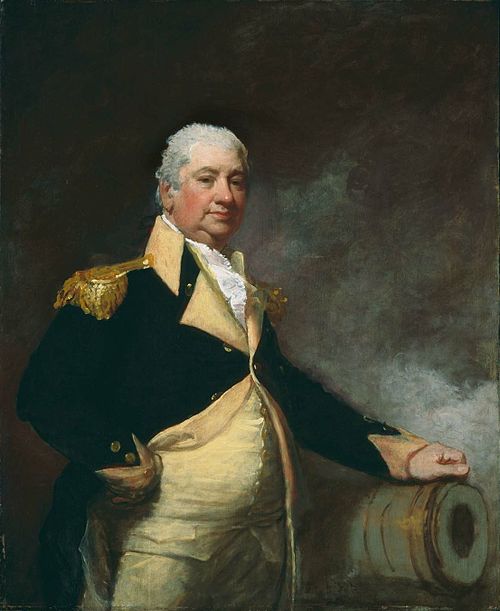
Ran the river crossing and placed the cannon that decided Trenton. Promoted to brigadier general.

Led the column that hit Trenton from the north along the Pennington Road.

Was about to sail home on leave when Trenton fell. Outfoxed at Assunpink Creek.
Why it mattered
The Revolution saved
Few battles so small have mattered so much. Trenton and Princeton cost the British fewer than 2,000 men, but they turned despair into hope. Enough soldiers agreed to stay past New Year’s Day to keep the army alive, the British gave up most of New Jersey, and people on both sides of the Atlantic saw that the rebellion was far from finished.
“These are the times that try men’s souls.”
Thomas Paine
The American Crisis, read to the troops before Trenton, December 1776
The bigger story
Revolution and Founding, 1770–1819
Our U.S. History era page puts the war in context: the road to independence, the Constitution and the first presidents.
Go deeper
Books and sources
- Washington’s Crossing, by David Hackett Fischer (2004)
- 1776, by David McCullough (2005)
- Ten Crucial Days, by William L. Kidder (2019)
- More recommended books