
Home › US History › Revolutionary War › Battle of Long Island
Revolutionary War · New York · August 27, 1776
The Battle of Long Island and the New York Campaign
Less than eight weeks after the Declaration of Independence, the Battle of Long Island, the largest battle of the whole war, was fought in what is now Brooklyn. A British night march around the American flank routed Washington’s army. Then, in one foggy night, the Americans slipped across the East River and saved themselves. By the end of 1776 Britain held New York City and the Revolution was nearly lost.

The night retreat from Long Island, August 29–30, 1776
Quick facts
The Battle of Long Island at a glance
| When | August 27, 1776 (campaign for New York: August to November 1776) | |
| Where | Brooklyn, on the western end of Long Island, New York (also called the Battle of Brooklyn) | |
| Americans | Gen. George Washington, Gen. Israel Putnam, Gen. John Sullivan, Gen. William Alexander (“Lord Stirling”) | |
| British | Gen. William Howe, with Henry Clinton, Lord Cornwallis and Hessian Gen. Leopold von Heister; Admiral Richard Howe’s fleet | |
| Soldiers | About 10,000 Americans on Long Island against about 20,000 British and Hessian troops | |
| Losses | About 300 Americans killed and about 1,000 captured; about 400 British and Hessian killed and wounded | |
| The escape | About 9,000 Americans rowed across the East River in one night, August 29–30 | |
| Result | British victory. Britain took New York City on September 15 and held it for the rest of the war |
The big picture in 30 seconds
Why the Battle of Long Island matters
- It was the largest battle of the war and the first after the Declaration of Independence.
- Washington’s night escape saved the Continental Army from being captured whole.
- New York City became Britain’s main base in America for seven years.
- The string of defeats that followed set the stage for Washington’s comeback at Trenton.
About 30,000
soldiers in the battle, the most of the war
About 400
British ships in New York harbor
About 1,300
Americans killed, wounded or captured
9,000
men rowed to safety in one night
How it began
Britain comes for New York
After the British left Boston in March 1776, everyone knew where they would strike next. New York had the best harbor in America, it sat at the mouth of the Hudson River, and many of its people were Loyalists. Washington marched his army there and built forts on Manhattan and on Brooklyn Heights, across the East River.
Beginning on June 29, the largest fleet Britain had ever sent overseas sailed into New York harbor. By August, General William Howe and his brother, Admiral Richard Howe, had about 32,000 soldiers camped on Staten Island, including thousands of hired German soldiers from Hesse. Washington had about 19,000 men, many of them militia who had never been in a battle. On July 9 his troops heard the Declaration of Independence read aloud, and that night a crowd pulled down the statue of King George III on Bowling Green.
The landing
On August 22, Howe ferried about 15,000 men across the Narrows to Gravesend Bay on Long Island; another 5,000 followed. Washington guessed wrong about where the main attack would come and kept much of his army in Manhattan. The Americans on Long Island held a line of wooded hills, the Heights of Guana, with four passes through them. Three were guarded. The fourth, Jamaica Pass, far to the east, was watched by just five militia officers on horseback.

Where it happened
Brooklyn, Manhattan and the rivers
New York in 1776 covered only the southern tip of Manhattan. Across the East River, the village of Brooklyn and the fortified Brooklyn Heights faced the city. The British fleet controlled the harbor and could land troops almost anywhere. That made New York nearly impossible to hold, and Washington knew it. Congress wanted the city defended anyway.
Simplified map. The British held New York City until November 1783.
How the battle unfolded
From Brooklyn to the Delaware
The New York campaign lasted four months. The Americans won only one real fight, and lost the city, two forts and about 4,000 prisoners.
Henry Clinton leads about 10,000 men east through the dark, captures the five lookouts and marches through the unguarded Jamaica Pass. By morning he is behind the American line.
Hessians attack from the front while Clinton’s column hits from behind. Sullivan and Stirling are both captured, and the Americans flee back to the forts on Brooklyn Heights.
Howe settles in for a siege instead of storming the forts. In the night, John Glover’s Marblehead fishermen row the whole army across the East River. Morning fog hides the last boats.
The British land at Kip’s Bay on September 15 and take the city. Americans win at Harlem Heights, fight at White Plains, then lose Fort Washington and about 2,800 men on November 16.
The bravest hour
The Maryland 400 and the escape across the East River
As the American line collapsed on August 27, hundreds of men were trapped against Gowanus Creek and its marshes. To save them, Lord Stirling turned about 400 Maryland soldiers around and led them in charge after charge against Cornwallis’s troops at the Old Stone House. They were outnumbered more than five to one, and about 256 of them were killed or captured. Watching from a hill, Washington is said to have cried, “Good God! What brave fellows I must this day lose!” Their sacrifice gave the others time to wade and swim to safety, and Maryland was later nicknamed the “Old Line State” in their honor.
Two nights later came the escape. Washington ordered every boat that could be found brought to the Brooklyn shore. Starting after dark on August 29, Glover’s men and Israel Hutchinson’s Salem regiment rowed back and forth for hours, with muffled oars, while campfires were kept burning to fool the British. Washington stayed until the last boat. When the sun rose, a thick fog lay over Brooklyn, and by the time it lifted the Americans were gone. Not one man was lost in the crossing.
Nathan Hale
A few weeks later Washington needed to know where the British would land next. Captain Nathan Hale, a 21-year-old schoolteacher from Connecticut, volunteered to go behind British lines dressed as a civilian. He was caught and hanged as a spy in Manhattan on September 22, 1776. According to legend his last words were, “I only regret that I have but one life to lose for my country.”


Commanders and soldiers
The commanders in New York

Lost the battle and the city, but saved his army with a brilliant night retreat and kept it alive to fight again.
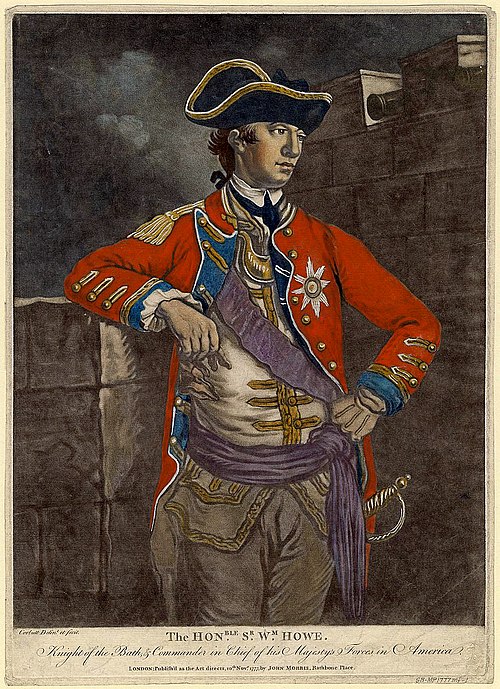
Won every battle in New York, but chose not to storm Brooklyn Heights, and let the American army escape.

Planned and led the night march through Jamaica Pass that won the battle. He took over from Howe in 1778.

The hero of Bunker Hill took command on Long Island two days before the battle and never saw the flank attack coming.

Volunteered to spy on the British after the battle. Hanged on September 22, 1776. (Statue; no portrait was made in his lifetime.)

Commanded a New York artillery company in the campaign and fought at White Plains. Washington soon made him his aide.
Why it mattered
A lost city and a saved army
The Battle of Long Island showed how far the Continental Army still had to go. Its generals were outsmarted and its militia ran. Over the next three months Washington lost New York City, Fort Washington and Fort Lee, and retreated across New Jersey with fewer than 3,000 men. Many thought the war was over.
Yet the army survived, and that mattered most. Howe had let it slip away more than once. In December, Washington crossed the Delaware and struck back at Trenton. New York City stayed in British hands until Evacuation Day, November 25, 1783, when the last redcoats sailed away and Washington rode back into the city.
Month by month
New York campaign timeline
“I only regret that I have but one life to lose for my country.”
Captain Nathan Hale
His last words as later reported, September 22, 1776
The bigger story
Revolution and Founding, 1770–1819
Our U.S. History era page puts the war in context: the road to independence, the Constitution and the first presidents.
Go deeper
Books and sources
- 1776, by David McCullough (2005)
- The Battle for New York, by Barnet Schecter (2002)
- Washington’s Crossing, by David Hackett Fischer (2004)
- More recommended books