
Home › World History › World War II › Guadalcanal
World War II · Solomon Islands · August 7, 1942 – February 9, 1943
The Battle of Guadalcanal
The Battle of Guadalcanal was the first major American offensive of the Pacific war. For six months, Marines and soldiers held a jungle airfield against Japanese attacks by land, sea and air, while the two navies fought seven great sea battles in the waters around the island. When Japan finally pulled out in February 1943, it had lost the initiative in the Pacific for good.

Marines rest in the field on Guadalcanal, 1942. U.S. Marine Corps photo.
Quick facts
Guadalcanal at a glance
| When | August 7, 1942 to February 9, 1943, about six months | |
| Where | Guadalcanal and nearby islands in the British Solomon Islands, northeast of Australia | |
| Sides | United States, Australia, New Zealand and Solomon Islanders vs. Empire of Japan | |
| Allied leaders | Maj. Gen. Alexander Vandegrift (1st Marine Division); Vice Adm. Robert Ghormley, then Adm. William Halsey | |
| Japanese leaders | Adm. Isoroku Yamamoto; Lt. Gen. Harukichi Hyakutake (17th Army) | |
| Troops | More than 60,000 Americans in all vs. about 36,000 Japanese | |
| Losses | About 7,100 Allied dead; about 19,000 Japanese dead, many from hunger and disease | |
| Result | Allied victory; Japan evacuated its last troops in early February 1943 |
The big picture in 30 seconds
Why Guadalcanal matters
- It was the first time American forces went on the attack against Japan.
- It stopped Japan from cutting the sea lanes between the United States and Australia.
- Japan lost hundreds of planes and its best pilots, losses it could not replace.
- After Guadalcanal, Japan never again launched a major offensive in the South Pacific.
6 months
of fighting, August 1942 to February 1943
7
major naval battles in the campaign
67
warships and other ships of both navies lost
About 1,300
aircraft lost by both sides
Operation Watchtower
A race for an airfield
After the American victory at Midway in June 1942, Japan was still advancing in the South Pacific. In July, Japanese engineers began building an airfield on Guadalcanal, a jungle-covered island in the Solomons. Bombers flying from it could attack the convoys carrying troops and supplies from the United States to Australia.
Admiral Ernest King pushed for an immediate attack, even though the forces were not ready. Planners nicknamed it “Operation Shoestring.” On August 7, 1942, about 11,000 Marines of the 1st Marine Division landed on Guadalcanal and seized the nearly finished airfield with little opposition, while others took nearby Tulagi after hard fighting.
Henderson Field
The Marines named the airfield for Major Lofton Henderson, a Marine pilot killed at Midway. Its planes, nicknamed the “Cactus Air Force” after the island’s code name, controlled the skies by day. At night the Japanese navy ruled the waters, landing troops and shelling the field. Every major battle that followed was a fight for Henderson Field.

Where it happened
Iron Bottom Sound
The Marine perimeter was a few miles of coast around Henderson Field, between the Matanikau River and Alligator Creek. Japanese reinforcements came down “the Slot,” the channel through the middle of the Solomons, on fast destroyer runs at night that the Americans called the Tokyo Express. So many ships sank in the sound north of the airfield that sailors named it Iron Bottom Sound.
Dozens of warships from both navies sank in the waters between Guadalcanal, Savo and Florida Island. Simplified map.
How the battle unfolded
Six months on land, sea and air
The campaign was a long series of battles, each one a Japanese attempt to retake Henderson Field.
The Marines take the airfield. Two nights later Japanese cruisers sink four Allied cruisers at Savo Island, one of the worst defeats in U.S. Navy history.
About 900 Japanese troops under Colonel Ichiki charge the Marine lines and are nearly wiped out. Ichiki had believed only a few thousand Americans were on the island.
Marine Raiders and paratroopers under Lt. Col. Merritt Edson hold a grassy ridge just south of the airfield against waves of night attacks.
Two Japanese battleships shell Henderson Field for more than an hour, wrecking about half its planes. Ten days later, Sgt. John Basilone’s machine gunners help stop the Japanese army’s biggest attack.
In savage night battles, American ships turn back a Japanese bombardment force. Two U.S. admirals are killed, but the Japanese lose two battleships and most of a troop convoy.
Starving and outnumbered, about 10,600 Japanese troops are secretly evacuated by destroyer. The Americans find the island empty.
The Cactus Air Force
Holding the sky over Henderson Field
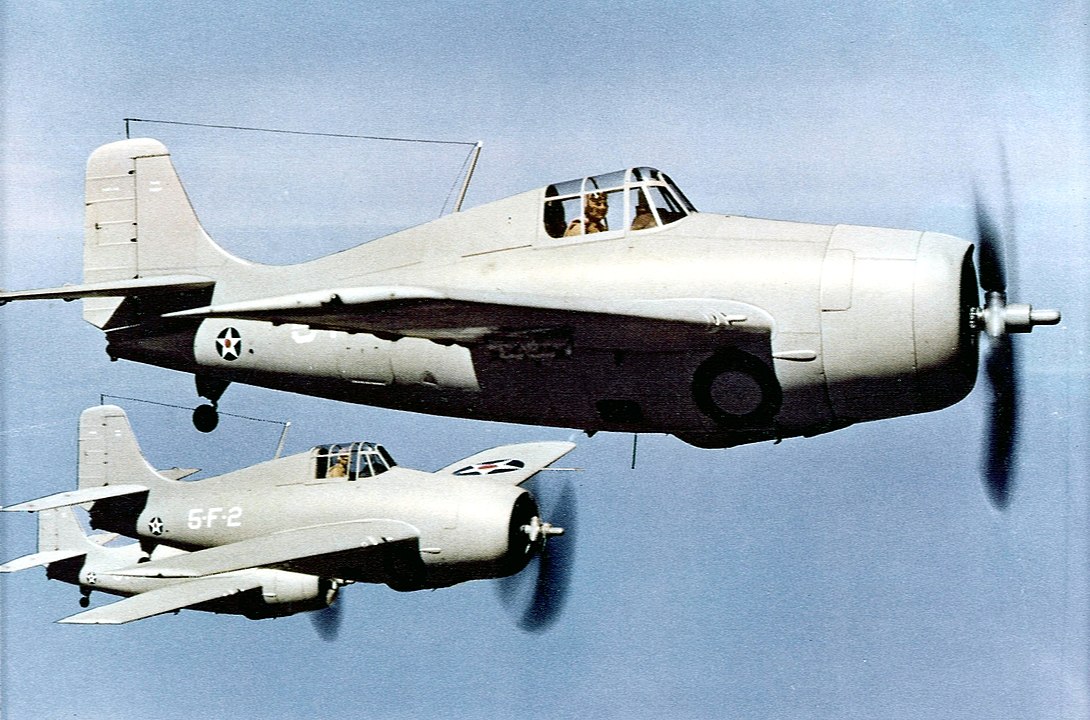
The pilots of the Cactus Air Force flew from a muddy, bomb-cratered strip, often with only a few planes ready to fly. Marine, Navy and Army fliers shared everything, living in tents under nightly shelling that the men called visits from “Washing Machine Charlie,” a lone Japanese bomber with an out-of-tune engine.
Day after day they rose to meet Japanese bombers coming from Rabaul, more than 600 miles away. Marine pilots such as Joe Foss and John L. Smith became aces, and Foss shot down 26 enemy planes, tying the American record of World War I. The Japanese pilots, at the end of a long flight with little fuel to spare, could not keep up the losses.
Commanders and fighters
Who fought for Guadalcanal

Held the Henderson Field perimeter for four months with few supplies. Medal of Honor; later Commandant of the Marine Corps.

Took over when the campaign hung in the balance. His fighting spirit lifted morale overnight, and he risked his last carriers to win.

Fed ships, planes and men into the fight and replaced Ghormley with Halsey at the darkest moment.

Committed his fleet to retaking the island. Killed in April 1943 when American P-38s shot down his plane over Bougainville.

Held his position for two days and nights in October 1942. Medal of Honor. Killed on Iwo Jima in 1945.

His battalion held the line beside Basilone’s guns in October. The most decorated Marine in history.
Why it mattered
The turning point in the South Pacific
Midway stopped the Japanese navy; Guadalcanal broke the Japanese advance on land and wore down its air and naval strength. Japan poured in ships, planes and men it could not spare, and lost the battle of attrition to American factories and shipyards. From Guadalcanal the Allies began the long climb up the Solomons toward the great Japanese base at Rabaul, and the island became a major base for the rest of the war. The Japanese soldiers who survived called it “Starvation Island.”
“Before Guadalcanal the enemy advanced at his pleasure. After Guadalcanal he retreated at ours.”
Adm. William F. Halsey Jr.
Looking back on the campaign
The bigger story
World War II
Our World War II hub covers the whole war by theater, with every battle, commander and weapon page in one place. For the home front and America’s part in the war, see America in World War II.
Go deeper
Books and sources
- Guadalcanal: The Definitive Account of the Landmark Battle, by Richard B. Frank (1990)
- Guadalcanal Diary, by Richard Tregaskis (1943)
- Neptune’s Inferno: The U.S. Navy at Guadalcanal, by James D. Hornfischer (2011)
- More recommended books