
Home › World History › Ancient Rome › The Roman Republic
Ancient Rome · 509–27 BC
The Roman Republic (509–27 BC): Government, Senate and Consuls
The Roman Republic was the government of ancient Rome for nearly 500 years, from the overthrow of the last king in 509 BC until Augustus became the first emperor in 27 BC. Instead of a king, Romans elected two consuls each year, and the Senate guided the state. Under the Republic, Rome grew from a small city into the master of the Mediterranean, and its ideas about government later inspired the founders of the United States.

The Capitoline Brutus, traditionally Lucius Junius Brutus, who drove out Rome’s last king.
Quick facts
The Roman Republic at a glance
- Dates: 509 BC to 27 BC, almost 500 years
- Capital: Rome, on the Tiber River in central Italy
- Leaders: Two consuls, elected every year, who led the government and the army
- The Senate: About 300 (later 600) former officials who advised the consuls and controlled money and foreign affairs
- The people: Male citizens voted in assemblies to elect officials and pass laws
- First written law: The Twelve Tables, about 450 BC, posted in the Forum for all to read
- Army: Citizen soldiers organized in legions of about 5,000 men
- How it ended: Civil wars, Julius Caesar’s dictatorship, and Augustus becoming emperor in 27 BC
The big picture in 30 seconds
Why the Roman Republic matters
- It showed a big state could run without a king.
- It invented checks and balances between officials.
- Words like senate, veto and citizen come from it.
- America’s founders studied it closely.
482 years
from 509 BC to 27 BC
2 consuls
elected every year
300 senators
in the early Senate
12 tables
of written law, about 450 BC
Before the Republic
From kings to a republic
According to legend, Rome was founded in 753 BC by Romulus, and seven kings ruled it in turn. The last, Tarquin the Proud, was a cruel tyrant. In 509 BC, after his son attacked a noblewoman named Lucretia, the Roman nobles led by Lucius Junius Brutus drove the royal family out of the city.
The Romans swore never to have a king again. They called their new state the res publica, meaning “the public thing” or “the people’s affair,” which gives us our word republic.
Patricians and plebeians
At first, power belonged to a few old families called patricians. Ordinary citizens, the plebeians, did most of the farming and fighting but had little say. In 494 BC the plebeians simply walked out of the city and refused to fight. To win them back, the patricians agreed to new officials called tribunes, who could protect the plebeians with the word veto, “I forbid.”

What does SPQR mean?
Senatus Populusque Romanus, “the Senate and People of Rome.” The letters appeared on coins, buildings and army standards, and Rome still uses them today.
The map
From one city to the whole Mediterranean
By 264 BC the Republic controlled all of Italy south of the Po River, after defeating its neighbors and the Greek king Pyrrhus. The Punic Wars against Carthage then gave Rome Sicily, Spain and North Africa.
In 146 BC Rome destroyed both Carthage and the Greek city of Corinth, and became the leading power from Spain to Greece. In the last century of the Republic, generals such as Pompey and Julius Caesar added Syria and Gaul.
How the government worked
Inside the Roman Republic
The Romans spread power among many officials, so no one person could become a king.
Two consuls
The top officials. Two were elected every year, and each could block the other. They commanded the armies and ran the government.
The Senate
Rome’s most powerful body. Former officials served for life and advised the consuls, managed the treasury and dealt with foreign nations.
The assemblies
Gatherings of citizens who voted on laws, declared war and elected officials. Women, slaves and foreigners could not vote.
Tribunes of the plebs
Ten officials elected by the plebeians who could veto any act that harmed the common people.
Other officials
Praetors ran the courts, quaestors handled money, aediles cared for streets and games, and censors counted citizens.
The dictator
In an emergency the Senate could name a dictator with total power for six months. Cincinnatus famously gave up the job after just 16 days.
133–44 BC
The Republic tears itself apart
Conquest made Rome rich, but the riches went to a few. Wealthy senators bought up farms and worked them with slaves, while poor soldiers lost their land. In 133 BC the tribune Tiberius Gracchus tried to give land back to the poor, and senators beat him to death. His brother Gaius met the same fate in 121 BC.
From then on, Roman politics turned violent. Generals such as Marius and Sulla used armies loyal to them, not to Rome, and Sulla marched on the city itself. Spartacus led a huge slave revolt from 73 to 71 BC.
Caesar crosses the Rubicon
In 49 BC Julius Caesar led his army across the Rubicon River into Italy, starting a civil war against Pompey and the Senate. He won and made himself dictator for life, but was murdered in 44 BC. More civil wars followed until his adopted son Octavian became Augustus, the first Roman emperor, in 27 BC.

Who was Cicero?
Rome’s greatest speaker and a defender of the Republic. He was killed in 43 BC on the orders of Mark Antony.
Key people
Leaders of the Roman Republic
Lucius Junius Brutus
died 509 BC
Founder of the Republic
Led the revolt against the last king and, by tradition, was one of the first two consuls.
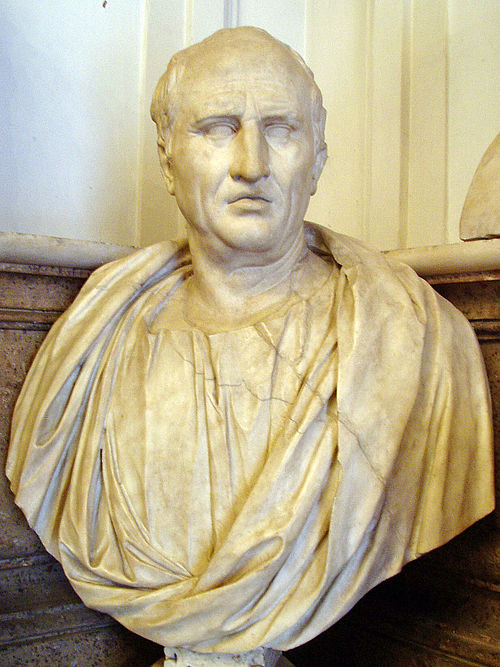
Cicero
106–43 BC
Statesman and orator
A brilliant lawyer and consul whose speeches and letters defended the Republic to the end.

Julius Caesar
100–44 BC
General and dictator
Conquered Gaul, won a civil war and became dictator, ending the Republic in all but name.
Why it mattered
The Republic’s legacy
The Roman Republic did not last, but its ideas did. It showed that a large state could be ruled by elected officials who served short terms, shared power and answered to written law. Romans thought of themselves as citizens with rights, not subjects of a king.
More than 1,700 years later, the American founders read Roman history closely. At the Constitutional Convention of 1787 they created a Senate, gave the president a veto, and divided power among branches of government so no one could become a tyrant. Many signed essays with Roman pen names such as “Publius.”
509 BC
the last king is driven out
450 BC
the Twelve Tables
146 BC
Carthage and Corinth fall
27 BC
Augustus becomes emperor
Timeline
The Roman Republic, 509–27 BC
- 509 BC Tarquin the Proud is driven out; the Republic begins.
- 494 BC The plebeians walk out; tribunes are created.
- About 450 BC The Twelve Tables, Rome’s first written laws.
- 390 BC Gauls sack the city of Rome.
- 312 BC Work begins on the Appian Way and Rome’s first aqueduct.
- 280–275 BC War with King Pyrrhus; Rome controls southern Italy.
- 264–146 BC The three Punic Wars against Carthage.
- 146 BC Rome destroys Carthage and Corinth.
- 133 BC Tiberius Gracchus is killed.
- 82 BC Sulla becomes dictator.
- 73–71 BC Spartacus leads a slave revolt.
- 60 BC Caesar, Pompey and Crassus form the First Triumvirate.
- 49 BC Caesar crosses the Rubicon; civil war.
- 44 BC Caesar is assassinated.
- 31 BC Octavian defeats Antony and Cleopatra at Actium.
- 27 BC Octavian becomes Augustus; the Republic ends.
“The good of the people shall be the highest law.”
Cicero
On the Laws, about 52 BC
The bigger story
Ancient Rome, 753 BC–AD 476
Our Ancient Rome overview tells the whole story in one place: the kings, the Republic and its wars, Julius Caesar, the emperors, daily life, and the fall of the West.
Go deeper
Sources and further reading
- SPQR: A History of Ancient Rome, by Mary Beard (2015)
- Rubicon: The Last Years of the Roman Republic, by Tom Holland (2003)
- The Storm Before the Storm, by Mike Duncan (2017)
- More recommended books