
Home › World History › Ancient Rome
World History · 753 BC–AD 476
Ancient Rome: History of the Republic and Empire, 753 BC to AD 476
Ancient Rome grew from a small village on the Tiber River in Italy into one of the largest empires in history. In more than 1,200 years it was ruled by kings, then by the elected leaders of the Roman Republic, and finally by emperors. At its height, Ancient Rome governed some 60 million people from Britain to Egypt, and its language, laws, roads and buildings still shape our world.
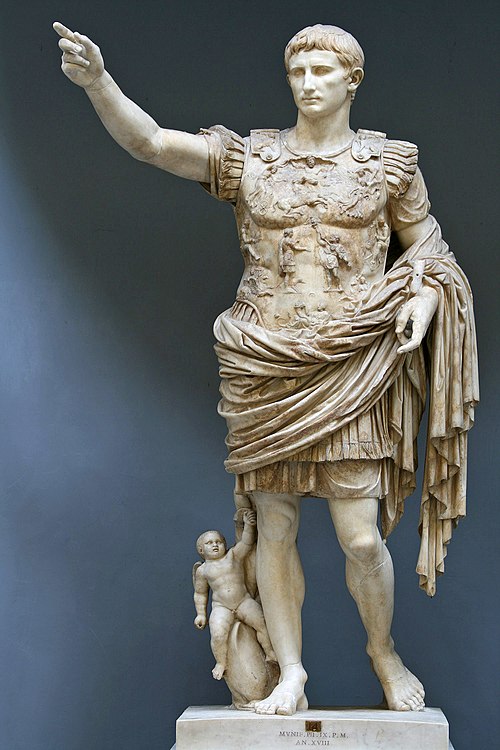
Augustus, Rome’s first emperor, in the statue known as the Augustus of Prima Porta.
Quick facts
Ancient Rome at a glance
- Dates: 753 BC (legendary founding) to AD 476 (fall of the West); the East lasted until 1453
- Three eras: The Kingdom (753–509 BC), the Republic (509–27 BC) and the Empire (27 BC–AD 476)
- Capital: Rome; later also Constantinople in the east and Ravenna in the west
- Largest size: AD 117: from Britain and Spain to Egypt, Syria and Iraq
- Languages: Latin, and Greek in the eastern provinces
- Religion: Many gods such as Jupiter, Juno and Mars; Christianity became the official religion in AD 380
- Famous buildings: The Colosseum, the Pantheon, the Roman Forum, aqueducts and Hadrian’s Wall
- How it ended: The Western Empire fell to Germanic invaders in AD 476
The big picture in 30 seconds
Why Ancient Rome matters
- It gave us republics, senates and the idea of citizenship.
- Latin became Italian, French, Spanish and more.
- Roman law still shapes legal systems today.
- Christianity spread across Europe through Rome.
1,229 years
from 753 BC to AD 476
About 60 million
people at its height
80,000 km
of paved Roman roads
About 50,000
seats in the Colosseum
From village to empire
How did Ancient Rome begin?
Roman legend says the city was founded on April 21, 753 BC, by Romulus, one of twin brothers who had been raised by a she-wolf. Archaeologists have found that people really were living in huts on Rome’s hills by the 700s BC. Seven kings ruled Rome, until the Romans drove out the last one, Tarquin the Proud, in 509 BC.
The Republic
For nearly 500 years Rome was a republic, governed by two consuls elected every year and guided by the Senate. Its citizen armies conquered Italy, then defeated Carthage in the Punic Wars and took over Greece and the eastern Mediterranean. But wealth and power led to civil wars, and Julius Caesar made himself dictator before he was murdered in 44 BC.
The Empire
In 27 BC Caesar’s heir Augustus became the first emperor. Two centuries of peace, the Pax Romana, followed. Then the empire was shaken by civil wars and invasions, divided into East and West in AD 395, and the Western Empire fell in AD 476.

Rome and Greece
Romans admired Ancient Greece and copied its art, gods and ideas. After 146 BC Greece became part of the Roman world, and educated Romans spoke Greek.
Three eras
Kings, Republic and Empire
Ancient Rome’s long history falls into three great periods.
The Kingdom, 753–509 BC
Seven kings rule the young city, from Romulus to Tarquin the Proud. Rome borrows much from its Etruscan neighbors.
The Republic, 509–27 BC
Elected consuls, the Senate and the people share power as Rome conquers the Mediterranean. Read the full story.
The Empire, 27 BC–AD 476
Emperors rule from Augustus to Romulus Augustulus, from the Pax Romana to the fall of the West. Read the full story.
The map
The Roman world
The Mediterranean Sea was the heart of the Roman world; Romans called it Mare Nostrum, “our sea.” From Rome, the empire grew to include Spain, Gaul, Britain, Greece, Asia Minor, Syria, Egypt and North Africa.
Red dots mark the events with their own pages: the founding of Rome, the destruction of Carthage, Caesar crossing the Rubicon, the Battle of Actium, Pompeii, and Ravenna, where the last western emperor fell in AD 476.
The key events
The events that shaped Ancient Rome
Each of these has its own page, marked “Read the full story.”
The Roman Republic, 509–27 BC
Romans drive out their last king and build a government of elected consuls and a Senate. Read the full story.
The Punic Wars, 264–146 BC
Rome fights Carthage for the Mediterranean, and Hannibal crosses the Alps with elephants. Read the full story.
Julius Caesar, 100–44 BC
Caesar conquers Gaul, crosses the Rubicon and is murdered on the Ides of March. Read the full story.
The Roman Empire and the Pax Romana
Augustus becomes the first emperor and two centuries of Roman peace begin. Read the full story.
Pompeii, AD 79
Mount Vesuvius erupts and buries the town of Pompeii, preserving it for 1,700 years. Read the full story.
The Fall of Rome, AD 476
Invaders, civil wars and a divided empire bring down the Western Roman Empire. Read the full story.
Key people
Famous Romans

Hannibal
247–about 183 BC
Carthaginian general
Rome’s greatest enemy, who crossed the Alps and crushed the Romans at Cannae.
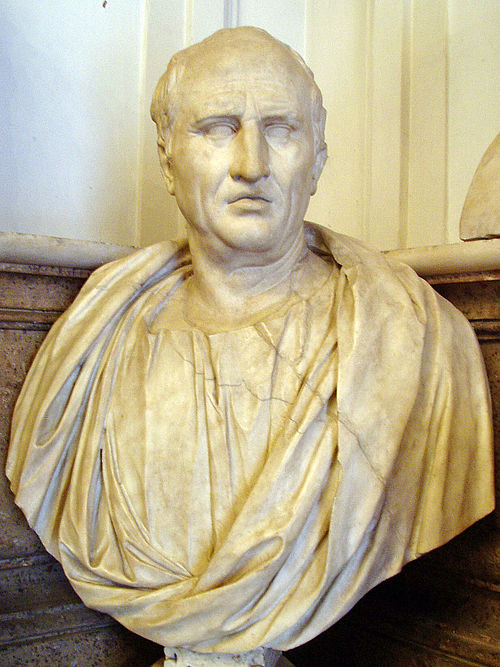
Cicero
106–43 BC
Statesman and orator
Rome’s greatest speaker and a brave defender of the Republic.

Julius Caesar
100–44 BC
General and dictator
Conquered Gaul and won a civil war, ending the Republic.

Cleopatra
69–30 BC
Queen of Egypt
Ally of Caesar and Mark Antony; her defeat at Actium made Egypt Roman.
Augustus
63 BC–AD 14
First emperor
Caesar’s heir, who turned the Republic into an empire.


Marcus Aurelius
AD 121–180
Philosopher-emperor
The last of the “Five Good Emperors” of the Pax Romana.

Constantine the Great
about AD 272–337
First Christian emperor
Legalized Christianity and founded Constantinople.
Daily life
How the Romans lived
Homes
Rich Romans lived in a domus built around an open courtyard. Most city people rented rooms in crowded apartment blocks called insulae.
Food
Bread, porridge, olives, cheese and wine for most people. The rich held long dinner parties, eating lying down on couches.
Public baths
Romans of every class met at the baths to wash, exercise and gossip, moving from warm to hot to cold pools.
Entertainment
Gladiator fights at the Colosseum, chariot races at the Circus Maximus, and plays in the theater.
Family and slaves
The father ruled the family. Slaves, often captured in war, did much of the work; some won their freedom.
Gods and religion
Romans worshiped many gods, such as Jupiter, Juno and Mars, until Christianity spread in the 300s.
Why it mattered
The legacy of Ancient Rome
Ancient Rome never really disappeared. Latin, its language, grew into Italian, French, Spanish, Portuguese and Romanian, and about 6 in 10 English words come from Latin, directly or through French. Roman law shaped the legal systems of Europe and Latin America, and Roman numerals still appear on clocks, buildings and Super Bowls.
The Roman Republic inspired America’s founders, who gave the United States a Senate and built the Capitol in Washington with Roman domes and columns. After the Western Empire fell, the Catholic Church kept Roman learning alive through the Middle Ages, and the Eastern Roman Empire lasted until 1453.
753 BC
Rome is founded, by legend
509 BC
the Republic begins
27 BC
the Empire begins
AD 476
the fall of the West
Timeline
Ancient Rome, 753 BC–AD 476
- 753 BC Rome is founded by Romulus, according to legend.
- 509 BC The last king is driven out; the Roman Republic begins.
- About 450 BC The Twelve Tables, Rome’s first written laws.
- 264–146 BC The Punic Wars against Carthage.
- 218 BC Hannibal crosses the Alps.
- 146 BC Rome destroys Carthage and Corinth.
- 58–50 BC Julius Caesar conquers Gaul.
- 49 BC Caesar crosses the Rubicon.
- 44 BC Caesar is assassinated on the Ides of March.
- 31 BC Octavian defeats Antony and Cleopatra at Actium.
- 27 BC Augustus becomes the first emperor; the Pax Romana begins.
- AD 64 The Great Fire of Rome.
- AD 79 Mount Vesuvius buries Pompeii.
- AD 80 The Colosseum opens.
- AD 117 The empire is at its largest under Trajan.
- AD 313 Constantine legalizes Christianity.
- AD 395 The empire splits into East and West.
- AD 410 The Visigoths sack Rome.
- AD 476 The last western emperor is overthrown.
“Rome was not built in a day.”
Old proverb
First recorded in a French poem of the 1100s, and still used today
The bigger story
All of World History
See how Ancient Rome fits into the bigger story, from Ancient Greece to Medieval Europe, the Age of Exploration and beyond.
Go deeper
Sources and further reading
- SPQR: A History of Ancient Rome, by Mary Beard (2015)
- Rubicon: The Last Years of the Roman Republic, by Tom Holland (2003)
- The Romans: From Village to Empire, by Mary T. Boatwright and others (2004)
- More recommended books