
Home › World History › World War II › Hiroshima and Nagasaki
World War II · Hiroshima and Nagasaki, Japan · August 6 and 9, 1945
The Atomic Bombings of Hiroshima and Nagasaki
The atomic bombings of Hiroshima and Nagasaki were the only times nuclear weapons have ever been used in war. On August 6, 1945, the American B-29 bomber Enola Gay dropped a single atomic bomb on the city of Hiroshima, Japan. Three days later a second bomb destroyed much of Nagasaki. By the end of 1945 more than 200,000 people, most of them civilians, had died from the blasts, the fires and radiation sickness. Within a week Japan announced its surrender, bringing World War II to an end. Historians still debate whether the bombings were necessary.
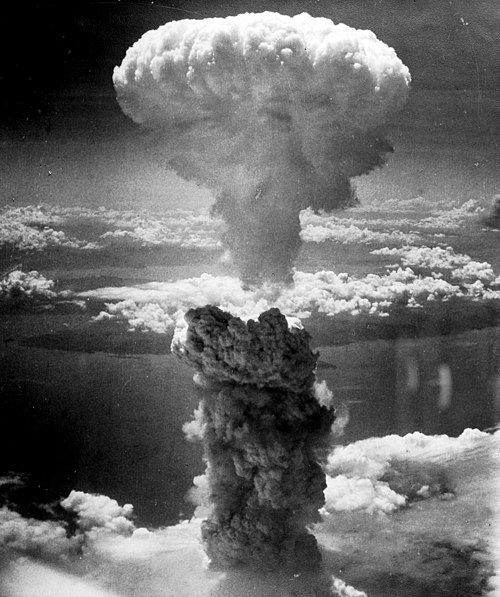
The mushroom cloud over Nagasaki, August 9, 1945. U.S. Army Air Forces photo.
Quick facts
Hiroshima and Nagasaki at a glance
| When | Hiroshima: August 6, 1945, 8:15 a.m. Nagasaki: August 9, 1945, 11:02 a.m. | |
| Where | Hiroshima, on the main island of Honshu, and Nagasaki, on the island of Kyushu, Japan | |
| Aircraft | B-29 Enola Gay, piloted by Col. Paul Tibbets; B-29 Bockscar, piloted by Maj. Charles Sweeney | |
| The bombs | “Little Boy” (uranium, about 15 kilotons) and “Fat Man” (plutonium, about 21 kilotons) | |
| Decision | President Harry S. Truman, after the Potsdam Declaration of July 26 demanded Japan’s surrender | |
| Deaths | About 140,000 in Hiroshima and about 74,000 in Nagasaki by the end of 1945, most of them civilians | |
| Result | Japan announced its surrender on August 15 and signed it on September 2, 1945 |
The big picture in 30 seconds
Why Hiroshima and Nagasaki matter
- They are the only use of nuclear weapons in war, and they began the nuclear age.
- Together with the Soviet declaration of war on August 8, they led Japan to surrender and ended World War II.
- The huge loss of civilian life raised hard moral questions that people still debate today.
- The fear of nuclear war shaped the Cold War and world politics for decades.
2
atomic bombs used in war, ever
3 days
between the two bombings
200,000+
dead by the end of 1945
6 days
from Nagasaki to Japan’s surrender announcement
The secret weapon
The Manhattan Project
In 1939 scientists warned President Franklin D. Roosevelt that Nazi Germany might build a bomb from the newly discovered power of the atom. The United States answered with the Manhattan Project, a top-secret program led by Gen. Leslie Groves, with physicist J. Robert Oppenheimer directing the laboratory at Los Alamos, New Mexico. It employed about 130,000 people and cost about $2 billion.
On July 16, 1945, the first atomic bomb was tested in the New Mexico desert. By then Germany had surrendered, but the war with Japan went on. After the bloody battles of Iwo Jima and Okinawa, American leaders feared that invading Japan could cost hundreds of thousands of lives.
July 26, 1945
At Potsdam, the Allies demanded that Japan surrender or face “prompt and utter destruction.” Japan’s government did not accept. President Harry S. Truman let the order to use the bomb go forward.

Where it happened
Two missions from Tinian
Both bombers took off in the dark from Tinian and flew about six hours north to Japan. Hiroshima was chosen partly because it held an army headquarters and had not yet been heavily bombed. On August 9, haze and smoke covered the first target, Kokura, so Bockscar flew on to Nagasaki, a port city with shipyards and war factories.
Both B-29s flew about 1,500 miles from Tinian in the Mariana Islands, far to the south. On August 9 clouds and smoke hid Kokura, the first target, so the crew turned to Nagasaki. Simplified map.
How the battle unfolded
From Trinity to surrender
Less than two months passed between the first atomic test and the end of the war.
The first atomic bomb explodes at Alamogordo, New Mexico. Truman learns the news at the Potsdam Conference.
The Allies call on Japan to surrender unconditionally. Japan’s leaders do not accept.
At 8:15 a.m. Enola Gay drops “Little Boy.” Most of the city is destroyed in seconds.
The Soviet Union declares war on Japan and invades Manchuria the next morning.
At 11:02 a.m. Bockscar drops “Fat Man” on Nagasaki. The hills around the city limit some of the damage.
Emperor Hirohito tells his people by radio that Japan will accept the Allied terms. The formal surrender is signed on September 2.
August 6, 1945
A city destroyed in an instant
The bomb exploded about 1,900 feet above the center of Hiroshima. A flash of heat many times hotter than the sun set fires across the city, and the blast flattened buildings for more than a mile in every direction. About 70,000 to 80,000 people died that day. Thousands more died in the following weeks and months from burns and radiation sickness.
Survivors, called hibakusha in Japanese, carried the effects for the rest of their lives. Their stories, first told to Americans in John Hersey’s 1946 book Hiroshima, helped the world understand what nuclear weapons do to people.
One of the few buildings left standing near the center was the Prefectural Industrial Promotion Hall. Its ruined dome is preserved today as the Hiroshima Peace Memorial, a UNESCO World Heritage Site.


Commanders and fighters
The people behind the decision

Became president in April 1945 and made the final decision to use the bomb.

Led the scientists who designed and built the first atomic bombs.
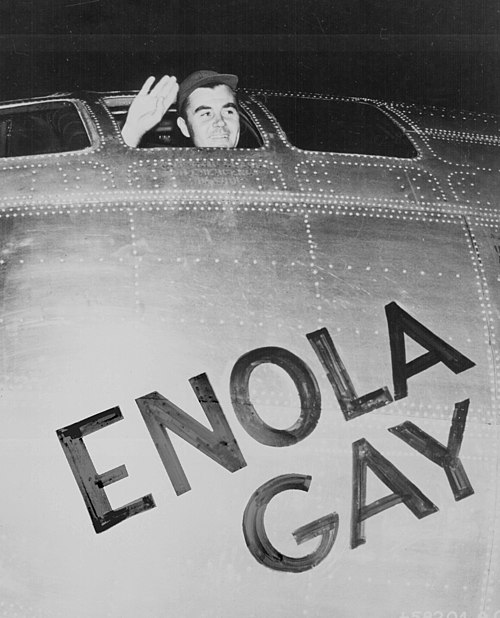
Commanded the special B-29 unit and flew the Hiroshima mission himself.

Broke a deadlock in his government and announced Japan’s surrender by radio.
Why it mattered
The end of the war and the start of the nuclear age
Japan’s surrender on September 2, 1945, aboard the battleship USS Missouri ended World War II. Supporters of the decision argue the bombs saved many more lives, American and Japanese, than an invasion would have cost. Critics argue Japan was close to surrender already, or that a demonstration could have been tried first. What is not in doubt is the human cost, or that the world changed. Within four years the Soviet Union had its own bomb, and the Cold War arms race began. Read more about the home front and the war’s end on America in World War II.
“The enemy has begun to employ a new and most cruel bomb, the power of which to do damage is indeed incalculable.”
Emperor Hirohito
Radio broadcast announcing Japan’s surrender, August 15, 1945
The bigger story
World War II
Our World War II hub covers the whole war by theater, with every battle, commander and weapon page in one place. For the home front and America’s part in the war, see America in World War II.
Go deeper
Books and sources
- Hiroshima, by John Hersey (1946)
- The Making of the Atomic Bomb, by Richard Rhodes (1986)
- Downfall: The End of the Imperial Japanese Empire, by Richard B. Frank (1999)
- More recommended books