
Home › World History › World War II › Kasserine Pass
World War II · Tunisia, North Africa · February 19–24, 1943 (campaign November 1942 – May 1943)
The Battle of Kasserine Pass and the Tunisian Campaign, 1943
The Battle of Kasserine Pass was the U.S. Army’s first major battle against the Germans in World War II, and a painful defeat. In February 1943 Erwin Rommel’s veteran tank forces struck the green American troops in the mountains of Tunisia and drove them back more than 50 miles through the Kasserine Pass. But the Americans learned fast. Under new leaders, including George S. Patton, they fought back, and in May 1943 the Allies captured about 250,000 German and Italian soldiers and ended the war in North Africa.

American soldiers march through the Kasserine Pass, Tunisia, February 1943. U.S. Army photo.
Quick facts
Kasserine Pass at a glance
| When | February 19–24, 1943, after the fight at Sidi Bou Zid on February 14–17 | |
| Where | Kasserine Pass, a gap in the Atlas Mountains of west-central Tunisia | |
| Sides | United States, Britain and Free France vs. Nazi Germany and Italy | |
| Allied leaders | Gen. Dwight D. Eisenhower; Maj. Gen. Lloyd Fredendall, U.S. II Corps; Gen. Harold Alexander | |
| Axis leaders | Field Marshal Erwin Rommel; Gen. Hans-Jürgen von Arnim | |
| Losses | About 6,300 American casualties and 183 tanks; about 1,000 German and Italian casualties | |
| Whole campaign | About 76,000 Allied casualties; about 290,000 Axis soldiers killed, wounded or captured | |
| Result | German victory at Kasserine, but Allied victory in Tunisia on May 13, 1943 |
The big picture in 30 seconds
Why Kasserine Pass matters
- It was the first big clash between American and German armies in World War II.
- The defeat exposed poor training, weak leadership and scattered units in the U.S. Army.
- Eisenhower brought in Patton and Omar Bradley, and the Army fixed its mistakes quickly.
- Three months later the Axis armies in Africa surrendered, opening the way to Sicily and Italy.
183
American tanks lost at Kasserine
6,300
American casualties
50 miles
the Germans drove the Americans back
250,000
Axis prisoners in May 1943
After Operation Torch
The race for Tunisia
In November 1942 American and British troops landed in Morocco and Algeria in Operation Torch. At the same time Gen. Bernard Montgomery’s British Eighth Army was chasing Rommel west from El Alamein in Egypt. The Allies hoped to grab the ports of Tunis and Bizerte quickly and trap Rommel between them.
Germany won the race. It rushed troops and new Tiger tanks into Tunisia by air and sea. Winter rains turned the roads to mud, and the Allied advance stalled in the mountains. Rommel’s army fell back into southern Tunisia behind the old French Mareth Line.
February 14, 1943
German panzers struck out of Faïd Pass at the American positions around Sidi Bou Zid. American units, spread out on hilltops too far apart to help each other, were overrun. A counterattack by the 1st Armored Division the next day was shot to pieces.

Where it happened
Through the mountains
Tunisia’s mountains run in two long ridges, the Eastern and Western Dorsal. The Americans held the passes. After breaking through at Sidi Bou Zid, the Germans pushed on through the Kasserine Pass in the Western Dorsal, aiming for Thala and the big Allied supply base at Tébessa in Algeria. They were stopped just short of both.
Gray arrows: the German attacks of February 14–22, from Faïd through Sidi Bou Zid and the Kasserine Pass toward Thala and Tébessa. Simplified map.
How the battle unfolded
From defeat to victory in Africa
Within three months the U.S. Army went from its worst defeat in Africa to victory in the campaign.
German tanks destroy much of an American armored combat command and cut off infantry on the hills. The Americans fall back toward Kasserine.
Rommel attacks the Kasserine Pass. The defenders, a scratch force of engineers and infantry, give way, and German tanks pour through.
British troops and American artillery, rushed 800 miles in four days, stop the Germans at Thala. Rommel calls off the attack.
Eisenhower relieves Fredendall and gives II Corps to Patton, with Omar Bradley as his deputy. Training and discipline are tightened.
The U.S. 1st Infantry Division defeats a German panzer attack at El Guettar, the first clear American victory over German armor.
British troops take Tunis, Americans take Bizerte. The last Axis armies in Africa surrender on May 13.
February 1943
Lessons paid for in blood
Kasserine was a shock to Americans at home, who had expected easy victories. Many of the soldiers were new to combat, and their officers had spread them out in small groups that the Germans picked off one at a time. Some units broke and ran. Thousands of Americans were taken prisoner.
The Army studied what went wrong and acted. Eisenhower sent away commanders who had failed and told his generals to lead from the front. Units were kept together, air support and artillery were better coordinated, and training was made harder and more realistic. American gunners had already shown at Thala and El Guettar how deadly their massed artillery could be.
The lessons of Tunisia helped make the U.S. Army the force that would land in Sicily in July 1943 and in Normandy a year later.

Commanders and fighters
The commanders in Tunisia

Planned the attack through the Kasserine Pass, his last victory in Africa.

Lost the trust of his officers and was relieved after the defeat.
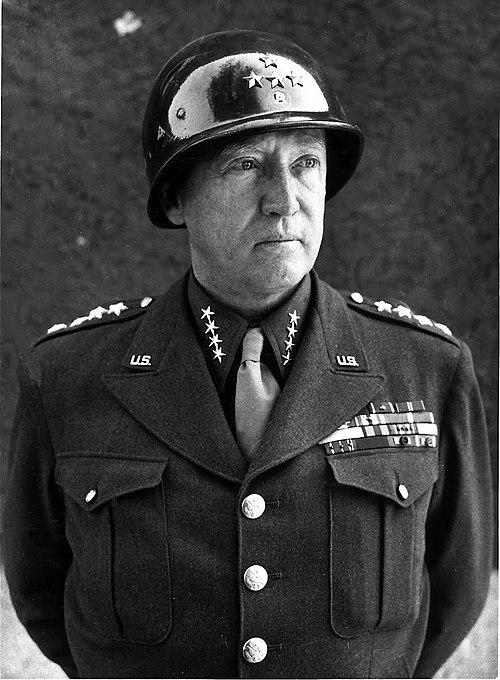
Restored discipline and fighting spirit within weeks and won at El Guettar.

Learned hard lessons about choosing and firing generals.

Led the Americans in the final drive and took Bizerte on May 7, 1943.

Broke the Mareth Line in southern Tunisia and pushed Rommel’s old army north.
Why it mattered
The end of the war in Africa
The Tunisian campaign ended with one of the biggest Axis surrenders of the war. North Africa was cleared, the Mediterranean was opened to Allied shipping, and the Allies were ready to invade Sicily in July 1943. Just as important, the U.S. Army had come of age. Kasserine taught it how to fight the Germans, and many of the generals who rose in Tunisia, including Patton and Bradley, would lead American armies across France and into Germany.
“Sir, it is my duty to report that the Tunisian campaign is over. All enemy resistance has ceased. We are masters of the North African shores.”
Gen. Harold Alexander
Message to Winston Churchill, May 13, 1943
The bigger story
World War II
Our World War II hub covers the whole war by theater, with every battle, commander and weapon page in one place. For the home front and America’s part in the war, see America in World War II.
Go deeper
Books and sources
- An Army at Dawn: The War in North Africa, 1942–1943, by Rick Atkinson (2002)
- Kasserine Pass, by Martin Blumenson (1966)
- A Soldier’s Story, by Omar N. Bradley (1951)
- More recommended books