
Home › World History › World War II › Battle of the Bulge
World War II · The Ardennes, Belgium and Luxembourg · December 16, 1944 – January 25, 1945
The Battle of the Bulge
The Battle of the Bulge was Hitler’s last great gamble in the West. In the freezing winter of 1944, more than 400,000 German troops burst out of the Ardennes Forest against thinly held American lines, hoping to split the Allies and capture the port of Antwerp. The attack pushed a huge “bulge” into the front, but the surrounded defenders of Bastogne held, Patton’s army broke through to them, and by late January the Germans had lost the men and tanks they could never replace.

American troops near Bastogne in the bitter winter of 1944–45. U.S. Army photo.
Quick facts
The Bulge at a glance
| When | December 16, 1944 to January 25, 1945, about six weeks | |
| Where | The Ardennes, a forested, hilly region of eastern Belgium and northern Luxembourg | |
| Sides | United States and Britain vs. Nazi Germany | |
| Allied leaders | Gen. Dwight D. Eisenhower; Gen. Omar Bradley; Lt. Gen. George S. Patton; Field Marshal Bernard Montgomery | |
| German leaders | Field Marshals Gerd von Rundstedt and Walter Model; Sepp Dietrich and Hasso von Manteuffel | |
| Troops | About 406,000 Germans attacked about 229,000 Americans; more than 600,000 Americans fought before the end | |
| Casualties | About 81,000 Americans killed, wounded or missing; German losses between 63,000 and 100,000 | |
| Result | Allied victory; the front was back where it started by late January 1945 |
The big picture in 30 seconds
Why the Bulge matters
- It was the largest and bloodiest battle fought by the U.S. Army in World War II.
- It used up Germany’s last reserves of men, tanks and fuel in the West.
- The stand at Bastogne and St. Vith wrecked the German timetable.
- Within weeks the Allies crossed the Rhine, and Germany surrendered in May 1945.
6 weeks
of fighting in snow and bitter cold
600,000+
American soldiers took part
81,000
American casualties
Dec. 20–26
Bastogne held out while surrounded
Hitler’s last gamble
Out of the forest
By December 1944 the Allies had liberated France and reached the borders of Germany. Hitler secretly gathered two panzer armies behind the Ardennes, a hilly forest that the Americans thought was too rough for a major attack. He had broken through the same forest in 1940. Now he planned to do it again, cross the Meuse River and capture Antwerp, the great port that supplied the Allied armies.
The American divisions in the Ardennes were spread thin. Some were new to combat; others were resting after heavy losses in the Hurtgen Forest. Allied intelligence missed the signs, and bad weather kept Allied planes on the ground.
December 16, 1944
At 5:30 a.m., German guns opened fire along a front of about 85 miles. German tanks and infantry came out of the fog and snow. Whole American units were overrun or surrounded; two regiments of the 106th Infantry Division surrendered in the Schnee Eifel, one of the largest American surrenders in Europe. But many small groups fought on at crossroads and villages, buying time.

Where it happened
The bulge in the line
The German attack drove a wedge about 50 miles deep into the American front, toward the Meuse River. On a map it looked like a bulge, and the name stuck. The key towns were road junctions: St. Vith in the north and Bastogne in the south. Whoever held them controlled the roads through the forest.
Shaded area: the “bulge” at its largest, about December 25. Gray arrows: German attacks toward the Meuse River and Antwerp. Simplified map.
How the battle unfolded
Six weeks in the Ardennes
The battle turned on a few crossroads towns and a change in the weather.
Three German armies strike across the Ardennes. Eisenhower quickly sends two airborne divisions and armored units to the threatened area.
SS troops of Kampfgruppe Peiper machine-gun at least 84 American prisoners in a field at the Baugnez crossroads. Word spreads fast and hardens American resistance.
The 7th Armored Division and other units hold the road center of St. Vith for five days before pulling back, throwing the German timetable off by days.
The 101st Airborne and parts of two armored divisions are cut off. On December 22 the Germans demand surrender. General McAuliffe answers: “Nuts!”
The weather breaks. Allied fighter-bombers attack German columns and drop supplies to Bastogne. German tanks run out of fuel just short of the Meuse near Dinant.
Patton’s 4th Armored Division reaches Bastogne. Allied armies attack from north and south and squeeze the bulge until the front is restored.
December 22, 1944
“Nuts!” at Bastogne
By December 21 Bastogne was surrounded. Inside were more than 11,000 Americans, most of them paratroopers of the 101st Airborne Division, who had been rushed in by truck without winter clothing and short of ammunition. Their acting commander was Brigadier General Anthony McAuliffe.
On December 22 four Germans under a white flag delivered a demand: surrender, or be destroyed by artillery. McAuliffe read it and said, “Aw, nuts!” His officers suggested he use that as his answer. The typed reply read: “To the German Commander. N U T S ! The American Commander.” Colonel Joseph Harper, who delivered it, explained to the puzzled Germans that it meant “Go to hell.”
The defenders held through days of shelling and tank attacks until Patton’s tanks broke through on December 26.

Commanders and fighters
Who fought in the Bulge

Saw at once that the attack was a major offensive and rushed reserves to stop it.
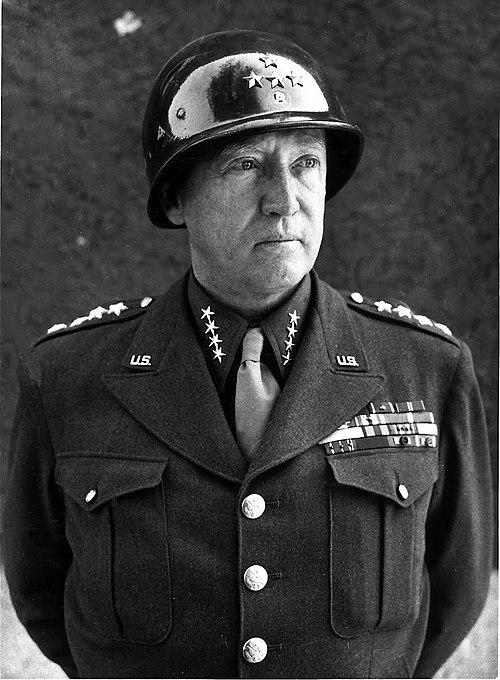
Turned his army north and relieved Bastogne, one of the great feats of the war.

Commanded the American armies in the Ardennes. Had judged the forest an unlikely place for an attack.

Held Bastogne while surrounded and gave the most famous one-word reply of the war.

Commanded the offensive on paper but thought Hitler’s goal of Antwerp could never be reached.

Led the spearhead of the 1st SS Panzer Division. His men carried out the Malmedy massacre.
Why it mattered
The beginning of the end
The Battle of the Bulge cost the U.S. Army more casualties than any other battle of the war, but it cost Germany far more than it could afford. Hitler had spent his last reserves of tanks, planes and fuel, and the German army in the West never recovered. Within six weeks the Allies were advancing again. In March 1945 they crossed the Rhine, and Germany surrendered on May 8, 1945. For the story of how the Allies got to the German border, see D-Day and the Normandy invasion.
“This is undoubtedly the greatest American battle of the war and will, I believe, be regarded as an ever-famous American victory.”
Winston Churchill
Speech to the House of Commons, January 18, 1945
The bigger story
World War II
Our World War II hub covers the whole war by theater, with every battle, commander and weapon page in one place. For the home front and America’s part in the war, see America in World War II.
Go deeper
Books and sources
- A Time for Trumpets: The Untold Story of the Battle of the Bulge, by Charles B. MacDonald (1985)
- Ardennes 1944: Hitler’s Last Gamble, by Antony Beevor (2015)
- The Guns at Last Light, by Rick Atkinson (2013)
- More recommended books