
Home › World History › The Renaissance › Martin Luther and the Protestant Reformation
The Renaissance · Germany and Europe · 1517–1563
The Protestant Reformation: Martin Luther, the 95 Theses and a Divided Church
The Protestant Reformation was a religious revolution that split Western Christianity in the 1500s. It began on October 31, 1517, when a German monk named Martin Luther published his 95 Theses attacking the sale of indulgences by the Catholic Church. Spread by the printing press, the Protestant Reformation created new churches, sparked wars, and changed Europe forever.

Martin Luther, painted by his friend Lucas Cranach the Elder, 1528.
Quick facts
The Protestant Reformation at a glance
- When: 1517 to about 1563, with wars of religion lasting until 1648
- Began in: Wittenberg, Saxony, in the Holy Roman Empire (Germany)
- Started by: Martin Luther (1483–1546), a monk and professor of the Bible
- The spark: The 95 Theses against indulgences, October 31, 1517
- Key beliefs: Salvation by faith alone, the Bible as the only authority, and the Bible in everyday languages
- Other reformers: Ulrich Zwingli in Zurich, John Calvin in Geneva, John Knox in Scotland
- New churches: Lutheran, Reformed (Calvinist), Anglican and Anabaptist
- Catholic answer: The Counter-Reformation and the Council of Trent, 1545–1563
The big picture in 30 seconds
Why the Reformation matters
- It ended the unity of the Western Church.
- Today some 900 million people are Protestants.
- It spread reading and schooling for ordinary people.
- Its religious wars shaped modern Europe and America.
95
theses, or points for debate
1517
the year it began
11 weeks
for Luther to translate the New Testament
About 900 million
Protestants in the world today
The spark
Why did Martin Luther protest?
In the early 1500s the Catholic Church was the most powerful institution in Europe, but many people complained that some of its leaders were greedy and corrupt. Pope Leo X, a member of the Medici family, needed huge sums to rebuild St. Peter’s Basilica in Rome.
To raise money, the Church sold indulgences, certificates that were said to reduce the punishment for sins after death. In Germany a friar named Johann Tetzel sold them with a catchy rhyme: “As soon as the coin in the coffer rings, the soul from purgatory springs.”
Luther’s 95 Theses
Martin Luther, a monk and professor at the University of Wittenberg, was furious. He believed that people were saved by God’s grace through faith, not by paying money. On October 31, 1517, he sent his 95 Theses, arguments against indulgences, to the Archbishop of Mainz. Tradition says he also nailed them to the door of Wittenberg’s Castle Church. Printers copied them, and within weeks they were read all over Germany.

What is an indulgence?
The Church taught that an indulgence lessened the time a soul spent in purgatory. Luther said only God could forgive sins.
The map
The Reformation spreads
From Wittenberg, Luther’s ideas spread across the German states and into Scandinavia. Other reformers went further: Ulrich Zwingli in Zurich and John Calvin in Geneva, whose teachings reached France, the Netherlands, Scotland and, later, New England.
In England, King Henry VIII broke with Rome in 1534 for his own reasons. The Catholic Church answered at the Council of Trent, in northern Italy, from 1545.
How it unfolded
The Reformation, step by step
In less than 50 years, a protest by one monk divided the Christian world.
1517: the 95 Theses
Luther challenges the sale of indulgences in Wittenberg. The printing press spreads his words.
1520: the break
Luther burns the pope’s letter threatening him and writes that the pope has no power over the Bible.
1521: the Diet of Worms
Before Emperor Charles V, Luther refuses to take back his writings. He is declared an outlaw.
1522: the German Bible
Hidden in Wartburg Castle, Luther translates the New Testament into German.
1530s–1540s: new churches
German princes, Scandinavian kings, Calvin in Geneva and Henry VIII in England break with Rome.
1555: the Peace of Augsburg
Each German ruler may choose Lutheran or Catholic faith for his land.
April 1521
Luther at the Diet of Worms
In January 1521 Pope Leo X excommunicated Luther, throwing him out of the Church. Then the young Emperor Charles V summoned him to a Diet, a great meeting of the princes of the empire, in the city of Worms. Luther was promised safe conduct, but everyone remembered that the Czech reformer Jan Hus had been burned in 1415 despite a similar promise.
On April 18, standing before the emperor, Luther was shown a table piled with his books and asked to take back what he had written. He refused unless he could be shown his errors from the Bible.
Kidnapped for his own safety
The emperor declared Luther an outlaw whom anyone could kill. On the road home, soldiers of his protector, Frederick the Wise of Saxony, staged a fake kidnapping and hid him in Wartburg Castle. Disguised as “Knight George,” Luther translated the New Testament into German in about 11 weeks.

Protestants
The name comes from 1529, when Lutheran princes made a formal protest against the emperor’s plans to stop their reforms.
Key people
Reformers and their opponents

Erasmus
about 1466–1536
Humanist scholar
Mocked Church corruption but stayed Catholic; people said he laid the egg that Luther hatched.


Emperor Charles V
1500–1558
Holy Roman Emperor
Ruled Spain, Germany and the Netherlands, and fought to keep his lands Catholic.
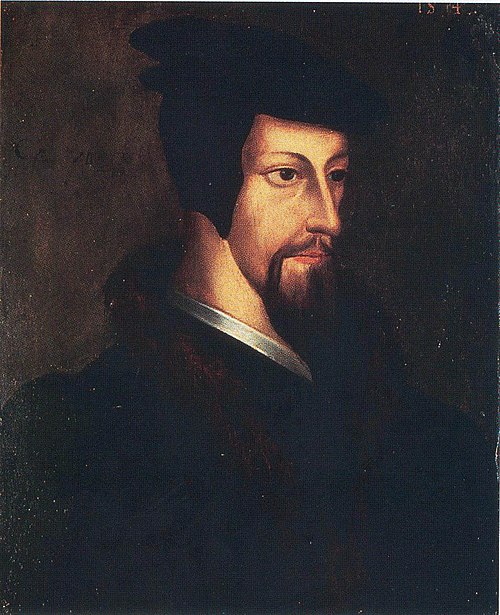
John Calvin
1509–1564
Reformer in Geneva
French reformer whose strict teachings spread to Scotland, the Netherlands and America.
Why it mattered
The world the Reformation made
The Reformation broke the religious unity of Western Europe. Northern Germany, Scandinavia, England, Scotland and the Netherlands became mostly Protestant, while Italy, Spain, France and Poland stayed mostly Catholic. Disagreements over faith fed a century of wars, ending with the Thirty Years’ War in 1648.
The Reformation also had lasting effects on everyday life. Protestants wanted everyone to read the Bible, so they set up schools, and Luther’s German Bible helped form the modern German language. The Catholic Church reformed itself in the Counter-Reformation. In time, Puritans, Quakers and other Protestants carried their faith to America, and the bitter religious wars helped lead to the idea of freedom of religion.
1517
the 95 Theses
1521
the Diet of Worms
1555
the Peace of Augsburg
1563
the Council of Trent ends
Two sides
What Catholics and Protestants disagreed about
Both sides were Christian and believed in the Bible, but they disagreed sharply about how a person is saved and who has authority in the Church.
Catholic teaching
Salvation through faith and good works and the sacraments; the Bible together with Church tradition; the pope as head of the Church; Mass in Latin; seven sacraments.
Protestant teaching
Salvation by faith alone; the Bible alone as authority; no pope; services and Bibles in the people’s own language; two sacraments, baptism and communion.
The Catholic answer
The Counter-Reformation
The Catholic Church responded with its own reforms, also called the Catholic Reformation.
The Council of Trent, 1545–1563
Bishops met in northern Italy, ended the abuses in selling indulgences, and clearly restated Catholic beliefs.
The Jesuits, 1540
Ignatius of Loyola founded the Society of Jesus, whose priests ran schools and sent missionaries around the world.
Art and faith
The Church used dramatic Baroque art and music to inspire believers.
Timeline
The Protestant Reformation, 1517–1563
- November 10, 1483 Martin Luther is born in Eisleben, Saxony.
- 1505 Caught in a thunderstorm, Luther vows to become a monk.
- October 31, 1517 Luther publishes his 95 Theses.
- 1519 Ulrich Zwingli begins reforms in Zurich.
- 1520 Luther burns the papal bull threatening him.
- January 1521 Pope Leo X excommunicates Luther.
- April 1521 Luther refuses to recant at the Diet of Worms.
- 1522 Luther’s German New Testament is printed.
- 1524–1525 The German Peasants’ War.
- 1525 Luther marries Katharina von Bora, a former nun.
- 1529 Lutheran princes protest; the name Protestant is born.
- 1534 Henry VIII breaks with Rome; Luther’s full German Bible is printed.
- 1540 The Jesuit order is founded.
- 1541 John Calvin settles in Geneva.
- 1545 The Council of Trent opens; it meets on and off until 1563.
- February 18, 1546 Luther dies in Eisleben.
- 1555 The Peace of Augsburg.
- 1563 The Council of Trent closes.
“Here I stand, I can do no other. God help me. Amen.”
Martin Luther
At the Diet of Worms, April 18, 1521, as his words were first printed
The bigger story
The Renaissance, about 1300–1600
Our Renaissance overview tells the whole story in one place: the rediscovery of ancient learning, Florence and the Medici, the great artists, the printing press, the Reformation and the new science.
Go deeper
Sources and further reading
- Here I Stand: A Life of Martin Luther, by Roland Bainton (1950)
- Martin Luther: Renegade and Prophet, by Lyndal Roper (2016)
- The Reformation: A History, by Diarmaid MacCulloch (2003)
- More recommended books