
Home › World History › World War II › Operation Barbarossa
World War II · The Eastern Front · June 22 – December 5, 1941
Operation Barbarossa: Germany’s Invasion of the Soviet Union, 1941
Operation Barbarossa was Nazi Germany’s invasion of the Soviet Union, the largest invasion in history. Before dawn on June 22, 1941, more than 3 million German and allied soldiers attacked along a front of nearly 1,800 miles, from the Baltic Sea to the Black Sea. In five months they killed or captured millions of Soviet soldiers and reached the gates of Moscow. But the Red Army did not collapse, winter came, and on December 5 the Soviets struck back. Hitler’s plan for a quick victory had failed.

German soldiers beside a half-track during the invasion of the Soviet Union, 1941. German army photo (Bundesarchiv).
Quick facts
Operation Barbarossa at a glance
| When | June 22, 1941, to the Soviet counterattack at Moscow on December 5, 1941 | |
| Where | The western Soviet Union: today’s Baltic states, Belarus, Ukraine and western Russia | |
| Sides | Nazi Germany, with Romania, Finland, Hungary, Italy and Slovakia, vs. the Soviet Union | |
| German leaders | Adolf Hitler; Field Marshals Wilhelm von Leeb, Fedor von Bock and Gerd von Rundstedt | |
| Soviet leaders | Joseph Stalin; Gen. Georgy Zhukov; Marshal Semyon Timoshenko | |
| Troops | About 3.8 million Axis soldiers, 3,500 tanks and 2,700 aircraft at the start | |
| Casualties | About 4 million Soviet soldiers killed, wounded or captured in 1941; about 800,000 German casualties | |
| Result | German failure: Moscow and Leningrad were not taken, and the war in the East went on four more years |
The big picture in 30 seconds
Why Operation Barbarossa matters
- It opened the Eastern Front, where most of the fighting and dying of the European war took place.
- Its failure meant Germany would have to fight a long war it could not win.
- The Soviet Union became an ally of Britain, and soon of the United States.
- Behind the front, German killing squads began the mass murder of Jews, the start of the Holocaust by bullets.
3.8 million
Axis soldiers invaded
1,800 miles
of front from the Baltic to the Black Sea
3 million+
Soviet soldiers captured in 1941
−40°
winter cold outside Moscow
A war of destruction
Hitler turns east
Hitler had always dreamed of conquering “living space” for Germany in the East and destroying what he called “Jewish Bolshevism.” The 1939 pact with Stalin was only a pause. After failing to defeat Britain in the air in 1940, he decided to crush the Soviet Union first, expecting victory in a few months.
Stalin ignored dozens of warnings, from his own spies, from Britain and from the United States, that an attack was coming. He had also killed or jailed thousands of his best officers in the purges of the late 1930s. When the blow fell, the Red Army was caught by surprise.
June 22, 1941
At 3:15 a.m. German guns opened fire along the whole border. The Luftwaffe destroyed about 1,200 Soviet planes on the first day, most of them on the ground. Three German army groups drove toward Leningrad, Moscow and Kiev.

Where it happened
Three roads to victory, none reached
Germany’s three army groups advanced hundreds of miles in a few months. Army Group North surrounded Leningrad. Army Group Center won huge battles at Minsk, Smolensk and Vyazma and came within about 20 miles of Moscow. Army Group South took Kiev and reached Rostov. But by December the German armies were worn out and frozen, far from home.
Gray arrows: the three German army groups, North toward Leningrad, Center toward Moscow and South toward Kiev and Rostov. Simplified map.
How the battle unfolded
Five months to the gates of Moscow
The first weeks went as Hitler hoped. Then distance, mud, cold and Soviet resistance slowed the advance to a crawl.
German forces cross the border on a front of 1,800 miles. Soviet Foreign Minister Vyacheslav Molotov tells the nation on the radio that the country has been attacked.
German tanks encircle huge Soviet armies. More than 300,000 prisoners are taken near Minsk alone.
The siege of Leningrad begins. It lasts 872 days, and about a million civilians die, most from starvation.
Hitler sends Guderian’s tanks south. More than 600,000 Soviet soldiers are captured in the largest encirclement in history.
The drive on Moscow begins, then bogs down in autumn mud. Frost hardens the roads, but brings bitter cold for which the Germans have no winter clothing.
Zhukov attacks with fresh divisions, many from Siberia. The Germans are pushed back from Moscow. Two days later, Japan attacks Pearl Harbor.
October–December 1941
The Battle of Moscow
In October 1941 the Germans broke through at Vyazma and Bryansk and captured another 600,000 Soviet soldiers. Panic spread in Moscow, and the government began moving east. Stalin stayed. He put Georgy Zhukov in charge of the defense, and hundreds of thousands of Muscovites, mostly women, dug anti-tank ditches around the city.
On November 7 Stalin held the traditional Red Square parade anyway. Troops marched past the Kremlin and straight to the front. By early December German scouts could see the Kremlin towers through field glasses, but their men were freezing, their tanks would not start, and their guns jammed in temperatures far below zero.
Then Zhukov struck with fresh armies, many brought from Siberia once a spy reported that Japan would not attack. The Germans were thrown back 60 to 150 miles. It was the first major defeat of the German army in the war.

Commanders and fighters
The leaders in Operation Barbarossa

Planned a war of conquest and extermination in the East and expected to win it in weeks.

Ignored the warnings, then stayed in Moscow and led the Soviet war effort with an iron hand.
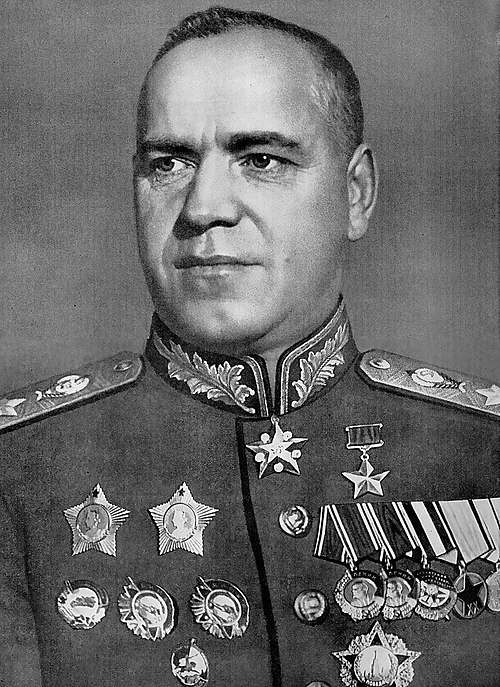
Saved Leningrad from capture, then organized the defense of Moscow and the December counterattack.

Led the tank spearheads to Smolensk and Kiev and toward Moscow. Fired by Hitler after the retreat.
Why it mattered
The war Germany could not win
Operation Barbarossa failed in its goal of destroying the Soviet Union in one campaign. From now on Germany faced a long war against an enemy with far more people and, soon, American help. The fighting in the East would grow even bigger in 1942, at the Battle of Stalingrad. About four of every five German soldiers killed in World War II died on the Eastern Front. The Soviet Union lost about 27 million people, soldiers and civilians, more than any other country in the war.
“Our cause is just. The enemy will be beaten. Victory will be ours.”
Vyacheslav Molotov
Soviet Foreign Minister, radio address on the day of the invasion, June 22, 1941
The bigger story
World War II
Our World War II hub covers the whole war by theater, with every battle, commander and weapon page in one place. For the home front and America’s part in the war, see America in World War II.
Go deeper
Books and sources
- When Titans Clashed: How the Red Army Stopped Hitler, by David Glantz and Jonathan House (1995)
- Barbarossa: The Russian-German Conflict 1941–45, by Alan Clark (1965)
- Moscow 1941, by Rodric Braithwaite (2006)
- More recommended books