
Home › World History › Ancient Greece › Alexander the Great
Ancient Greece · Macedon · 356–323 BC
Alexander the Great (356–323 BC): Conquests, Battles and Empire
Alexander the Great was the king of Macedon, in northern Greece, who in just 11 years conquered the Persian Empire and built one of the largest empires the world had ever seen, from Greece and Egypt to the borders of India. He never lost a battle. He died in Babylon in 323 BC at the age of 32, but the Greek language and culture he spread shaped the Middle East and the Mediterranean for a thousand years.
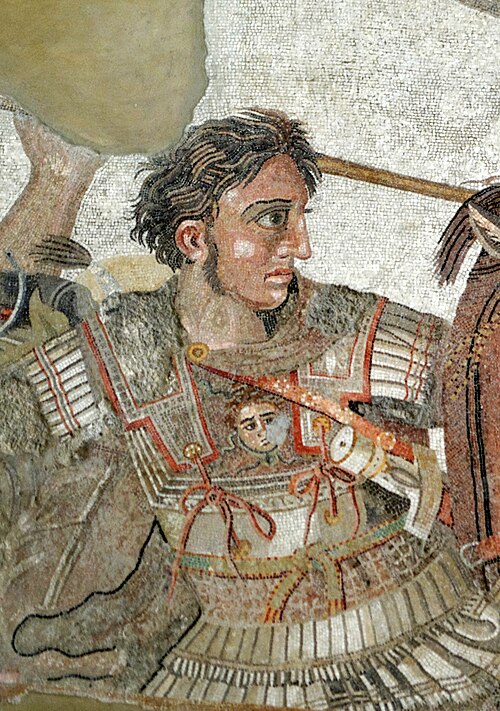
Alexander in battle on his horse Bucephalus, from the Alexander Mosaic found at Pompeii (about 100 BC).
Quick facts
Alexander the Great at a glance
- Born: July 356 BC in Pella, capital of Macedon, son of King Philip II and Queen Olympias
- Teacher: The philosopher Aristotle, from age 13
- King: 336 BC, at age 20, after his father was murdered
- Empire: About 2 million square miles, from Greece and Egypt to modern Pakistan
- Great battles: Granicus (334 BC), Issus (333 BC), Gaugamela (331 BC) and the Hydaspes (326 BC)
- Famous horse: Bucephalus, which he tamed as a boy and rode for almost 20 years
- Cities founded: About 20 named Alexandria, the greatest in Egypt
- Died: June 323 BC in Babylon, aged 32, probably of fever
The big picture in 30 seconds
Why Alexander matters
- He ended the Persian Empire in four years.
- He spread Greek language and ideas across three continents.
- His city of Alexandria became the center of learning.
- Generals from Caesar to Napoleon studied his campaigns.
About 20,000
miles marched by his army
11 years
of conquest
About 20
cities named Alexandria
0
battles lost
The young king
Philip, Aristotle and the road to Persia
Alexander’s father, Philip II, turned Macedon from a backward kingdom into the strongest power in Greece. He built a professional army around the phalanx, a block of soldiers armed with the sarissa, a pike up to 18 feet long, backed by heavy cavalry called the Companions. In 338 BC Philip crushed Athens and Thebes at Chaeronea, where the 18-year-old Alexander led the cavalry charge.
As a boy Alexander had been taught by Aristotle, who gave him a copy of Homer’s Iliad that he kept under his pillow. He saw himself as a new Achilles.
King at 20
Philip planned to invade Persia, but in 336 BC he was stabbed to death at a wedding. Alexander, aged 20, took the throne, killed his rivals and marched south when the Greek cities rebelled. He destroyed Thebes in 335 BC as a warning; Athens quickly submitted. In the spring of 334 BC he crossed the Hellespont into Asia with about 37,000 men.

Taming Bucephalus
Plutarch says the boy Alexander tamed a wild horse no one could ride by turning it to face the sun, so it could not see its own shadow.
The map
From Macedon to India
Alexander’s army crossed into Asia in 334 BC and won its first battle at the Granicus River. It swept down the coast to Syria, besieged Tyre for seven months, and entered Egypt, where Alexander was welcomed as pharaoh and founded Alexandria.
He then marched into the heart of Persia, beat Darius at Gaugamela, and took Babylon, Susa and Persepolis. Years of fighting in Central Asia followed before he crossed into India. When his worn-out army refused to go farther, he turned back, and in 325 BC lost thousands of men crossing the Gedrosian Desert.
His conquests
Alexander’s great battles and conquests
The Granicus, 334 BC
Alexander led his cavalry across a river and up a steep bank into the Persian line. He nearly died when a Persian noble struck at his head, but won his first victory in Asia.
Issus, 333 BC
In a narrow plain in Syria, Alexander charged straight at King Darius III, who fled. Darius’s mother, wife and daughters were captured and treated with honor.
Tyre and Egypt, 332–331 BC
Alexander built a causeway half a mile into the sea to capture the island city of Tyre. Egypt welcomed him as pharaoh, and he founded Alexandria.
Gaugamela, 331 BC
On a wide plain in Mesopotamia, Darius gathered a huge army with scythed chariots and elephants. Alexander’s charge broke it, and the Persian Empire fell.
Central Asia, 329–327 BC
Three hard years against rebels in Bactria and Sogdiana, modern Afghanistan and Uzbekistan. Alexander married Roxana, a Bactrian noblewoman.
The Hydaspes, 326 BC
In India he beat King Porus and his war elephants. Impressed by Porus’ courage, Alexander let him keep his kingdom. Bucephalus died soon after.
June 323 BC
The death of Alexander
At the Hyphasis River (the modern Beas) in India, Alexander’s soldiers, eight years and thousands of miles from home, refused to march any farther. He sulked in his tent for three days, then gave in. On the way back he was badly wounded by an arrow storming a town, and his army suffered terribly in the Gedrosian Desert.
Back in Babylon he planned new campaigns, to Arabia and perhaps to the west. In June 323 BC, after a long night of drinking, he fell ill with a fever and died about ten days later, aged 32. Asked who should inherit his empire, he is said to have answered: “To the strongest.”
The empire breaks apart
His generals, called the Diadochi or “Successors,” fought over his empire for 40 years. In the end three great kingdoms emerged: the Ptolemies in Egypt, the Seleucids in Asia and the Antigonids in Macedon. All were later swallowed by Rome, which conquered Greece in 146 BC.

The Gordian knot
At Gordium in 333 BC Alexander was shown a knot that only the future ruler of Asia could untie. He cut it with his sword.
Key people
The people in Alexander’s story

Philip II
382–336 BC
King of Macedon, his father
Built the army Alexander led and made Macedon master of Greece.

Aristotle
384–322 BC
Philosopher, his teacher
Student of Plato and one of the greatest thinkers in history. Taught Alexander for about three years.
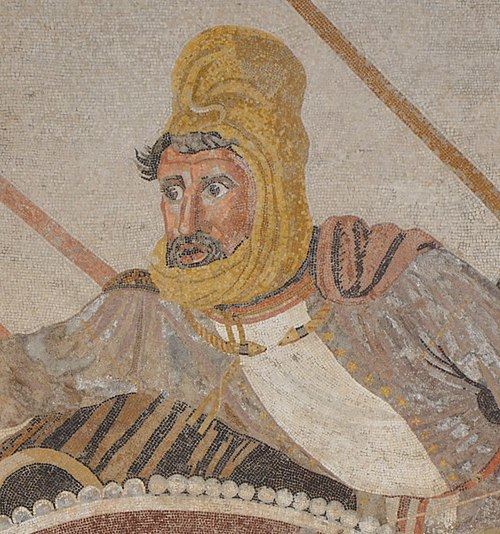
Darius III
about 380–330 BC
King of Persia, 336–330 BC
Fled from Alexander at Issus and Gaugamela and was killed by his own officers in 330 BC.
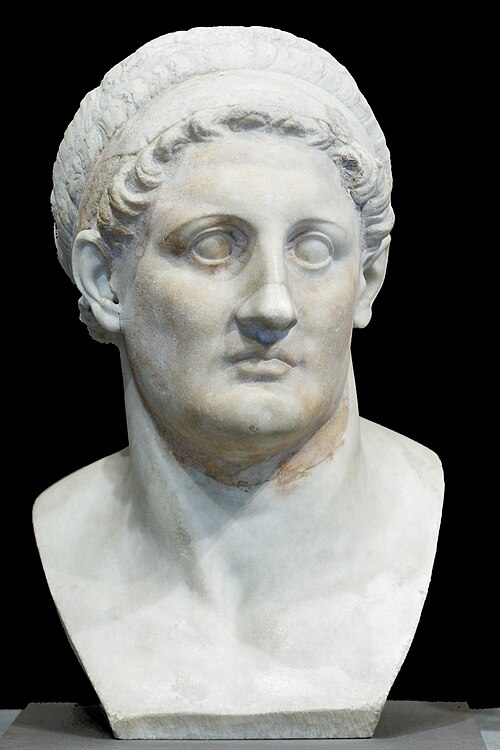
Ptolemy I
about 367–282 BC
General, later King of Egypt
A boyhood friend of Alexander who founded the dynasty that ended with Cleopatra.
Why it mattered
The Hellenistic world
Alexander’s conquests opened the Hellenistic Age, from his death in 323 BC to Cleopatra’s in 30 BC. Greek became the common language from Egypt to Afghanistan; it was the language in which the New Testament was later written. Greek cities, theaters and gymnasiums spread across the old Persian Empire, and Greek and Eastern ideas mixed in art, science and religion.
His city of Alexandria grew into the greatest city of the age, with its Lighthouse, one of the Seven Wonders, and its Library, which tried to collect every book in the world. Julius Caesar is said to have wept before a statue of Alexander because he had done so little by the same age, and generals from Hannibal to Napoleon studied his campaigns.
336 BC
becomes king at 20
331 BC
Persian Empire falls
323 BC
dies in Babylon
146 BC
Rome conquers Greece
What came next
After Alexander: Greece and Rome
Ancient Rome
Rome defeated the Macedonian kings and took over the Greek world. Our Ancient Rome pages tell the story.
The Punic Wars
In 146 BC Rome destroyed both Carthage and the Greek city of Corinth, ending Greek independence. Read the full story.
Julius Caesar
Rome’s most famous general admired Alexander and later met Cleopatra, the last of the Ptolemies. Read the full story.
Timeline
The life of Alexander the Great, 356–323 BC
- July 356 BC Alexander is born in Pella, Macedon.
- 343 BC Aristotle becomes his teacher.
- 338 BC He leads the cavalry at Chaeronea; Macedon defeats Athens and Thebes.
- 336 BC Philip II is murdered; Alexander becomes king.
- 335 BC He destroys rebellious Thebes.
- 334 BC He crosses into Asia and wins at the Granicus.
- 333 BC He cuts the Gordian knot and defeats Darius at Issus.
- 332 BC The siege of Tyre; Egypt welcomes him as pharaoh.
- 331 BC He founds Alexandria and wins at Gaugamela.
- 330 BC Persepolis burns; Darius is murdered.
- 327 BC He marries Roxana and invades India.
- 326 BC He defeats Porus at the Hydaspes; his army refuses to go on.
- 325 BC The deadly march through the Gedrosian Desert.
- June 323 BC Alexander dies in Babylon, aged 32.
“To the strongest.”
Alexander the Great
His reported answer, on his deathbed, when asked who should inherit his empire
The bigger story
Ancient Greece, 800–146 BC
Our Ancient Greece overview tells the whole story in one place: city-states and democracy, Athens and Sparta, the Persian Wars, the thinkers and builders, and the empire of Alexander.
Go deeper
Sources and further reading
- The Life of Alexander, by Plutarch
- The Campaigns of Alexander, by Arrian
- Alexander the Great, by Robin Lane Fox (1973)
- More recommended books