
Home › People › US Presidents › William Howard Taft
27th President · 1909–1913 · Republican
William Howard Taft: President and Chief Justice
William Howard Taft never really wanted to be president; his dream was the Supreme Court. Theodore Roosevelt’s chosen successor, he brought more antitrust cases than Roosevelt and saw the income tax amendment pass, but a bitter split with Roosevelt cost him a second term. Eight years later he became chief justice, the only person to hold both offices.

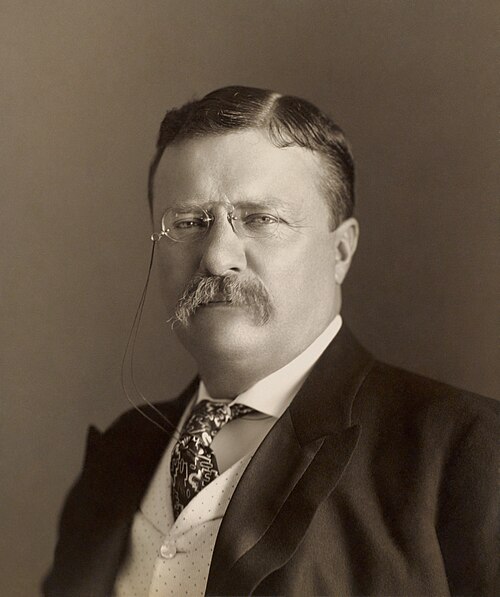
William Howard Taft, photographed in 1908
Quick facts
William Howard Taft at a glance
| Born | September 15, 1857, in Cincinnati, Ohio | |
| Died | March 8, 1930, in Washington, D.C., aged 72 | |
| President | 27th, from March 4, 1909, to March 4, 1913 | |
| Vice president | James S. Sherman, who died days before the 1912 election | |
| Party | Republican | |
| Education | Yale College, 1878; Cincinnati Law School, 1880 | |
| Profession | Lawyer and judge | |
| Before the White House | Federal judge, governor of the Philippines, secretary of war | |
| After the White House | Yale law professor; chief justice of the United States, 1921–1930 | |
| Wife | Helen “Nellie” Herron (married June 19, 1886) | |
| Children | Three: Robert, Helen and Charles | |
| Buried | Arlington National Cemetery, the first president buried there |
The big picture in 30 seconds
Why he matters
- The only person to serve as both president and chief justice.
- Brought about twice as many antitrust suits as Roosevelt, including the case that broke up Standard Oil.
- Backed the 16th Amendment, which allowed a federal income tax.
- Admitted New Mexico and Arizona, completing the 48 states.
- Started the parcel post and postal savings banks.
- His split with Roosevelt in 1912 helped elect Woodrow Wilson.
2
of the nation’s highest offices he held: president and chief justice
48
states after New Mexico and Arizona joined in 1912
3,020
cherry trees Japan gave Washington, D.C., in 1912 at Nellie Taft’s urging
8
electoral votes he won in 1912, the fewest for a sitting president
Early years
A judge at heart
William Howard Taft was born on September 15, 1857, in Cincinnati, Ohio. His father, Alphonso Taft, was President Grant’s attorney general. Big, cheerful and hard-working, Will graduated second in his class at Yale and studied law in Cincinnati.
Taft loved the law. He became a state judge at 29, US solicitor general at 32 and a federal appeals judge at 34. In 1886 he married Helen “Nellie” Herron, who was more ambitious for his political career than he was.
Governor and secretary
In 1900 President McKinley sent Taft to the Philippines, where he became the first civilian governor. He twice turned down a seat on the Supreme Court to finish his work there. In 1904 Roosevelt made him secretary of war, in charge of building the Panama Canal, and Roosevelt’s trusted troubleshooter.

Election of 1908
Roosevelt's choice
Electoral votes: 483 electors; 242 needed to win. Popular vote: Taft 51.6%, Bryan 43.0%
Election of 1912
A three-way split
Electoral votes: 531 electors; 266 needed to win. Popular vote: Wilson 41.8%, Roosevelt 27.4%, Taft 23.2%, Debs 6.0%
The presidency, 1909–1913
A lawyer in the White House
Taft believed the president could do only what the Constitution and the laws clearly allowed. He got a lot done, but he disliked politics, and progressive Republicans felt he had abandoned Roosevelt’s ideas.
1909–1913
Trustbusting
Taft’s Justice Department brought about 80 antitrust suits. In 1911 the Supreme Court broke up Standard Oil, and Taft sued U.S. Steel, which angered Roosevelt.
1909
The income tax amendment
Taft asked Congress to pass the 16th Amendment, allowing a federal income tax. It was ratified in February 1913.
1909
The tariff fight
Taft signed the Payne-Aldrich Tariff, which kept rates high, and called it the best tariff ever passed. Progressives were furious.
January 1910
Pinchot is fired
Taft fired Gifford Pinchot, Roosevelt’s chief forester, after he attacked the interior secretary over coal lands in Alaska.
1912
Two new states
New Mexico joined on January 6 and Arizona on February 14, filling in the last of the 48 states in the continental US.
1910–1913
Postal savings and parcel post
Post offices began offering savings accounts in 1911, and on January 1, 1913, the parcel post began delivering packages.
The election of 1912
A party split in two
Roosevelt and Taft together won more votes than Wilson, but by dividing the Republicans they handed him the presidency. The Socialist Eugene Debs won the best result his party ever had.
Official returns. Taft is the only sitting president to finish third in his bid for re-election.
Chief Justice
The job he always wanted
After leaving office, Taft taught law at Yale and supported the war effort in World War I. In 1921 President Warren G. Harding named him chief justice of the United States. Taft said he did not remember that he had ever been president.
As chief justice he made the courts run more efficiently, won the Supreme Court the power to choose most of the cases it hears, and persuaded Congress to build the Court its own building. He resigned because of poor health in February 1930 and died a month later.

“I do not remember that I ever was President.”
William Howard Taft
Words widely attributed to him as chief justice
His life at a glance
Life timeline
People
Who's who in Taft's story


Visit
William Howard Taft National Historic Site
The William Howard Taft National Historic Site in Cincinnati, Ohio, preserves the house where he was born and grew up. Taft is buried at Arlington National Cemetery, near the Potomac.