
Home › People › US Presidents › Warren G. Harding
29th President · 1921–1923 · Republican
Warren G. Harding: The Return to Normalcy
Warren G. Harding was a small-town Ohio newspaper publisher who promised a nation tired of war a “return to normalcy.” He won by the largest popular-vote margin in a century, cut taxes and spending, and hosted a conference that slowed a naval arms race. He died suddenly after two and a half years, just before scandals in his government came to light.

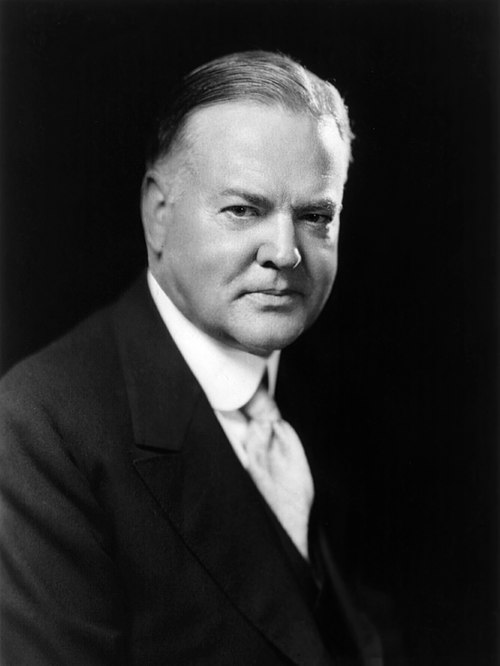
Warren G. Harding, photographed by Harris & Ewing, about 1920
Quick facts
Warren G. Harding at a glance
| Born | November 2, 1865, in Blooming Grove, Ohio | |
| Died | August 2, 1923, in San Francisco, California, aged 57, while still in office | |
| President | 29th, from March 4, 1921, to August 2, 1923 | |
| Vice president | Calvin Coolidge, who succeeded him | |
| Party | Republican | |
| Education | Ohio Central College, Iberia, Ohio, 1882 | |
| Profession | Publisher of the Marion Star newspaper | |
| Before the White House | Ohio state senator, lieutenant governor of Ohio, US senator (1915–1921) | |
| Wife | Florence Kling DeWolfe, married July 8, 1891 | |
| Children | A stepson, Marshall DeWolfe; a daughter, Elizabeth Ann Blaesing (born 1919), with Nan Britton | |
| Election | Won in 1920 over Democrat James M. Cox, 404 electoral votes to 127 | |
| Buried | Harding Memorial, Marion, Ohio, beside Florence |
The big picture in 30 seconds
Why he matters
- Won the 1920 election, the first in which women everywhere in the country could vote, by 26 points.
- Created the federal budget system and the Bureau of the Budget, so the government finally had one yearly budget.
- Hosted the Washington Naval Conference, the first major arms-limitation agreement among the great powers.
- Freed the Socialist leader Eugene Debs from prison, and spoke out for Black voting rights in the Deep South.
- Was the first president to visit Alaska and Canada, and the first heard by many Americans on the radio.
- His name became tied to the Teapot Dome scandal, which made his presidency a byword for corruption.
60.3%
of the popular vote in 1920, the biggest margin since 1820
881 days
in office, one of the shortest presidencies
5 powers
signed the 1922 naval treaty limiting battleships
39 years
as owner and publisher of the Marion Star
Early years
A printer's apprentice from Ohio
Warren Gamaliel Harding was born on November 2, 1865, on a farm in Blooming Grove, Ohio, the eldest of eight children of George Tryon Harding, a farmer who became a doctor, and Phoebe Dickerson Harding, a midwife. He learned to set type on a local newspaper as a boy and graduated from tiny Ohio Central College in 1882.
In 1884, at age 18, he and two friends bought the failing Marion Star for $300. Harding turned it into a successful daily, and the newspaper made him a leading citizen of Marion, a booming railroad town.
Florence and politics
In 1891 he married Florence Kling DeWolfe, a divorced mother five years older than him and the daughter of Marion’s richest man, who opposed the match. Florence ran the Star‘s circulation department and became the driving force behind his career. Handsome, friendly and a fine speaker, Harding won a seat in the Ohio Senate in 1899, served as lieutenant governor and, in 1914, was elected to the US Senate.

The road to the White House
The dark horse of 1920
In the Senate, Harding was a loyal Republican who missed many votes and introduced few bills. But he was well liked, and in 1920 the Republican convention in Chicago was deadlocked between stronger candidates. Party leaders met late at night in a hotel suite (the famous “smoke-filled room”), and Harding was nominated on the tenth ballot, with Massachusetts governor Calvin Coolidge as his running mate.
“Not heroics, but healing”
After World War I, the 1918 flu, strikes and race riots, many Americans wanted calm. Harding promised a “return to normalcy” and ran a “front porch” campaign from his home in Marion, where some 600,000 people came to hear him. On election night in November 1920, station KDKA in Pittsburgh broadcast the returns, the first commercial radio broadcast in America.

Election of 1920
A record landslide
Electoral votes: 531 electors; 266 needed to win. Popular vote: Harding 16.1 million (60.3%), Cox 9.1 million (34.1%)
The presidency, 1921–1923
Normalcy in practice
Harding took office on March 4, 1921, in the middle of a sharp postwar recession. He picked some outstanding cabinet members, including Charles Evans Hughes at State, Andrew Mellon at the Treasury and Herbert Hoover at Commerce, along with some poor ones from his Ohio circle of friends.
June 10, 1921
A real federal budget
The Budget and Accounting Act created the Bureau of the Budget and the General Accounting Office. For the first time the president sent Congress one budget for the whole government. Spending fell sharply and the government ran surpluses.
1921–1922
The Washington Naval Conference
Hughes stunned the delegates by proposing to scrap dozens of warships. The Five-Power Treaty set limits on battleships for the US, Britain, Japan, France and Italy, and halted a costly naval race for more than a decade.
July 2, 1921
Peace with Germany
The Senate had rejected the Treaty of Versailles, so the United States was still technically at war. Harding signed a resolution ending the war, followed by separate peace treaties with Germany, Austria and Hungary.
December 1921
Freedom for Eugene Debs
Harding commuted the sentences of Debs and 23 other prisoners jailed for opposing World War I. Debs was released on Christmas Day and visited Harding at the White House.
October 26, 1921
A speech in Birmingham
Before a segregated crowd in Alabama, Harding called for political and economic equality for Black Americans, the first president to say so in the Deep South. He also backed an anti-lynching bill, which Southern senators blocked.
1921–1922
Tariffs and immigration limits
Harding signed tax cuts, the high Fordney-McCumber Tariff and the first law setting quotas on immigration by nationality, which sharply cut arrivals from southern and eastern Europe.
Boom after bust
From recession to the Roaring Twenties
Harding inherited a severe recession, with prices falling and millions out of work. By the time he died, the economy was booming.
Estimates by economist Stanley Lebergott, as published in the Census Bureau's Historical Statistics of the United States. Harding's years shown in red.
Scandal
“My damned friends”
Harding was honest about money himself, but he trusted the wrong people. Charles Forbes, head of the new Veterans Bureau, stole and wasted millions meant for veterans’ hospitals. Jess Smith, an aide to Attorney General Harry Daugherty, sold favors, and the “Ohio Gang” of Harding’s cronies did business from a house on K Street.
Teapot Dome
The worst scandal came out after Harding’s death. Interior Secretary Albert B. Fall had secretly leased Navy oil reserves at Teapot Dome, Wyoming, and Elk Hills, California, to oilmen Harry Sinclair and Edward Doheny, and accepted about $400,000 in “loans” and gifts. In 1929 Fall became the first cabinet member sent to prison for crimes in office.
“America’s present need is not heroics, but healing; not nostrums, but normalcy; not revolution, but restoration; not agitation, but adjustment; not surgery, but serenity.”
Warren G. Harding, speech in Boston
May 14, 1920
The Voyage of Understanding
A sudden death in San Francisco
In June 1923 the Hardings set out by train on a 15,000-mile “Voyage of Understanding” across the West. He became the first president to visit Alaska, where he drove a golden spike to finish the Alaska Railroad, and on July 26 the first sitting president to visit Canada, speaking to a crowd of 40,000 in Vancouver.
On the way south he fell ill. He died at the Palace Hotel in San Francisco on the evening of August 2, 1923, most likely of a heart attack. Millions lined the tracks as his funeral train crossed the country. In Vermont, Vice President Coolidge was sworn in by lamplight by his father, a notary public.
How he is remembered
Harding was very popular when he died, but the scandals that followed, and later revelations about his affairs, sank his reputation, and he long ranked near the bottom in historians’ surveys. Some historians now give him more credit for the budget reforms, the naval treaty and his stand on civil rights. In 2015, DNA tests confirmed that Elizabeth Ann Blaesing, born in 1919, was his daughter with Nan Britton.
His life at a glance
Life timeline
People
Who's who in Harding's story



Visit
Harding Home and Memorial
In Marion, Ohio, you can tour the restored Harding Home, with the front porch where he campaigned in 1920, a presidential library and museum, and the Harding Memorial, the round marble tomb of Warren and Florence Harding.