
Home › People › US Presidents › William McKinley
25th President · 1897–1901 · Republican
William McKinley and the Spanish-American War
William McKinley, a Civil War veteran from Ohio, led the country out of a long depression and through a short war with Spain in 1898. The victory gave the United States Puerto Rico, Guam and the Philippines, and he also annexed Hawaii, making America a world power. Six months into his second term, he was assassinated in Buffalo.

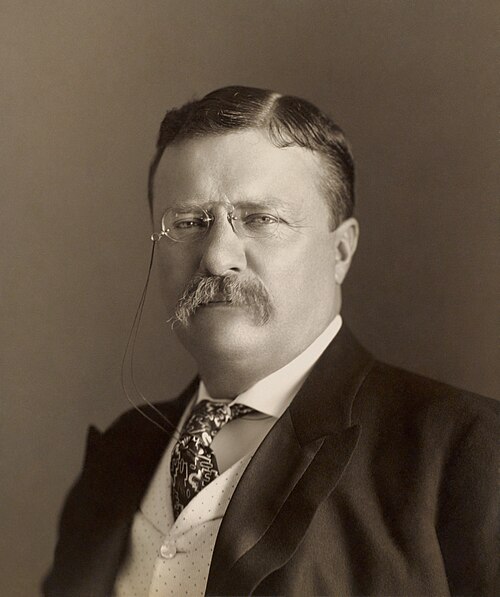
William McKinley, photographed about 1896
Quick facts
William McKinley at a glance
| Born | January 29, 1843, in Niles, Ohio | |
| Died | September 14, 1901, in Buffalo, New York, aged 58 | |
| President | 25th, from March 4, 1897, to September 14, 1901 | |
| Vice presidents | Garret A. Hobart (1897–1899); Theodore Roosevelt (1901) | |
| Party | Republican | |
| Education | Allegheny College; Albany Law School | |
| Profession | Lawyer | |
| Military | Enlisted as a private in the 23rd Ohio; rose to brevet major | |
| Wife | Ida Saxton (married January 25, 1871) | |
| Children | Two daughters, Katherine and Ida, who both died young | |
| Elections | Won in 1896 and 1900, both times against William Jennings Bryan | |
| Buried | McKinley National Memorial, Canton, Ohio |
The big picture in 30 seconds
Why he matters
- Won the Spanish-American War in less than four months.
- Gained Puerto Rico, Guam and the Philippines, and annexed Hawaii.
- Signed the Gold Standard Act of 1900.
- Supported the Open Door policy for trade with China.
- The last Civil War veteran to serve as president.
- The third president to be assassinated.
16
weeks from the declaration of war to the armistice with Spain
4
island territories added: Hawaii, Puerto Rico, Guam and the Philippines
750,000
visitors who came to hear his front-porch speeches in 1896
Early years
A soldier from Ohio
William McKinley Jr. was born on January 29, 1843, in Niles, Ohio, the seventh of nine children of an iron foundry manager. Illness and lack of money ended his studies at Allegheny College. When the Civil War began he enlisted as a private in the 23rd Ohio Infantry, commanded for a time by Rutherford B. Hayes. At Antietam, as a commissary sergeant, he drove a wagon of hot coffee and food to the troops under fire.
After the war McKinley studied law and settled in Canton, Ohio. In 1871 he married Ida Saxton, a banker’s daughter. Their two daughters died young, and Ida suffered from epilepsy for the rest of her life. McKinley cared for her devotedly.
Congress and governor
McKinley served in Congress for most of 1877 to 1891 and wrote the high McKinley Tariff of 1890. He then served two terms as governor of Ohio. His friend Mark Hanna, a Cleveland businessman, organized his run for president.

Election of 1896
Gold against silver
Electoral votes: 447 electors; 224 needed to win. Popular vote: McKinley 51.0%, Bryan 46.7%
Election of 1900
A bigger win
Electoral votes: 447 electors; 224 needed to win. Popular vote: McKinley 51.6%, Bryan 45.5%
The presidency, 1897–1901
America becomes a world power
McKinley raised tariffs and kept the dollar on gold, and the economy recovered from the depression of the 1890s. But his presidency is remembered most for the war with Spain over Cuba, where Cubans had been fighting for independence since 1895.
February 15, 1898
The Maine explodes
The battleship USS Maine blew up in Havana harbor, killing 260 of the crew. Newspapers blamed Spain: “Remember the Maine!”
April 25, 1898
War with Spain
After weeks of trying to avoid war, McKinley asked Congress to act. It declared war and promised that Cuba would be independent.
May 1, 1898
Manila Bay
Commodore George Dewey’s squadron destroyed the Spanish fleet in the Philippines without losing a single American in battle.
July 1, 1898
San Juan Hill
American troops, including Theodore Roosevelt’s Rough Riders and Black regiments of “Buffalo Soldiers,” captured the heights above Santiago, Cuba.
December 10, 1898
The Treaty of Paris
Spain gave up Cuba and ceded Puerto Rico, Guam and the Philippines to the US for $20 million. Filipinos who wanted independence then fought American troops until 1902.
1899–1900
The Open Door
Secretary of State John Hay asked the powers to keep China open to everyone’s trade. McKinley sent troops to help end the Boxer Rebellion in 1900.
A short war
Disease was deadlier than bullets
The war lasted less than four months. Far more American soldiers died of typhoid, malaria and yellow fever in crowded camps than were killed by the enemy.
Figures commonly given from War Department reports. Most of the deaths came in army camps in the United States and Cuba.
September 1901
Assassination in Buffalo
On September 5, 1901, McKinley spoke at the Pan-American Exposition in Buffalo, New York, calling for more trade with other nations. The next afternoon he greeted the public in the fair’s Temple of Music. Leon Czolgosz, an anarchist, approached with a revolver wrapped in a handkerchief and shot him twice.
As guards wrestled the gunman down, McKinley told them not to hurt him, and asked his secretary to break the news gently to Ida. He seemed to recover at first, but gangrene set in, and he died on September 14. Theodore Roosevelt, 42, became the youngest president. After McKinley’s death, Congress gave the Secret Service the job of protecting presidents.
“Let us remember that our interest is in concord, not conflict, and that our real eminence rests in the victories of peace, not those of war.”
William McKinley
His last speech, Buffalo, September 5, 1901
His life at a glance
Life timeline
People
Who's who in McKinley's story




Visit
McKinley Presidential Library & Museum
The McKinley Presidential Library & Museum in Canton, Ohio, stands beside the McKinley National Memorial, where the president is buried. The National McKinley Birthplace Memorial is in Niles, Ohio.