
Home › US History › Modern America › Watergate Scandal
Modern America · Washington, D.C. · 1972–1974
The Watergate Scandal
The Watergate scandal was the political scandal that forced Richard Nixon to resign the presidency on August 9, 1974, the only president ever to do so. It began with a break-in at the Democratic Party’s offices in the Watergate building in June 1972 and grew into proof that the president had helped cover it up. Reporters, a Senate committee, a special prosecutor and secret White House tapes uncovered the truth, and dozens of officials went to prison.

President Richard Nixon in his official portrait. The Watergate scandal forced him to resign on August 9, 1974
Quick facts
The Watergate scandal at a glance
| Dates | Break-in June 17, 1972; Nixon resigned August 9, 1974 | |
| Where | The Watergate office complex in Washington, D.C., home of the Democratic National Committee | |
| President | Richard Nixon, 37th President, reelected in a landslide in November 1972 | |
| The tapes | Secret recordings of Nixon’s conversations, revealed in July 1973 | |
| Supreme Court | United States v. Nixon, July 24, 1974: 8–0 order to hand over the tapes | |
| Impeachment | The House Judiciary Committee approved three articles in late July 1974 | |
| Convicted | 69 people charged; 48 convicted or pleaded guilty, including top White House aides | |
| Pardon | President Gerald Ford pardoned Nixon on September 8, 1974 |
The big picture in 30 seconds
Why Watergate matters
- It is the only time a U.S. president has resigned.
- It proved that no one, not even the president, is above the law.
- It led to new laws on campaign money, ethics and government secrecy.
- The word “-gate” is still added to the names of scandals.
26 months
from the break-in to the resignation
48
people convicted
18½ minutes
erased from a key tape
8–0
Supreme Court vote on the tapes
A third-rate burglary
The break-in at the Watergate
Shortly after 2 a.m. on June 17, 1972, a security guard named Frank Wills noticed tape on a door lock at the Watergate office building. Police arrested five men inside the offices of the Democratic National Committee. They carried cameras, bugging equipment and thousands of dollars in new $100 bills. One of them, James McCord, was the security chief of the Committee to Re-elect the President.
The White House press secretary called it “a third-rate burglary attempt,” and the story faded. That November, Nixon won reelection with 49 of 50 states. But the money the burglars carried was traced to Nixon’s campaign, and two young Washington Post reporters, Bob Woodward and Carl Bernstein, kept digging with help from a secret source they called “Deep Throat.”
The cover-up
Nixon did not order the break-in, as far as anyone knows. But six days after it, he approved a plan to have the CIA tell the FBI to stop investigating. His aides paid the burglars hush money to keep quiet. It was the cover-up, not the crime, that destroyed his presidency.
Who uncovered it
Four groups that found the truth
No single person brought down Nixon. Reporters, judges, members of Congress from both parties and government lawyers each uncovered part of the story, and each depended on the others.
The turning point came on July 16, 1973, when a former aide, Alexander Butterfield, told the Senate committee that Nixon had secretly recorded nearly every conversation in the Oval Office since 1971. From that moment the fight was over the tapes.
How the scandal unfolded
Twenty-six months
The scandal grew slowly, then fell apart quickly once the tapes were revealed.
Five burglars are caught in the Democratic offices at the Watergate.
Nixon is reelected, winning every state except Massachusetts.
Televised hearings reveal the cover-up and the existence of a secret taping system.
Nixon has special prosecutor Cox fired. The attorney general and his deputy resign in protest.
The Supreme Court orders Nixon to hand over the tapes. Days later, the House committee votes to impeach.
Nixon resigns. Gerald Ford is sworn in and says “our long national nightmare is over.”
The White House, August 5, 1974
The “smoking gun” tape
After the Supreme Court ruled, Nixon released the transcript of a conversation from June 23, 1972, six days after the break-in. On it, he could be heard approving a plan to have the CIA block the FBI’s investigation. It was proof that the president had obstructed justice from the very start, and it became known as the “smoking gun.”
Nixon’s last support collapsed. Every Republican on the House Judiciary Committee who had voted against impeachment said they would now vote for it. On August 7, Senator Barry Goldwater and other Republican leaders told Nixon he had perhaps 15 votes left in the Senate, far fewer than the 34 he needed to avoid being removed. On the evening of August 8, he told the nation on television that he would resign at noon the next day.
The missing minutes
One key tape, from June 20, 1972, has a gap of 18½ minutes of humming. Nixon’s secretary Rose Mary Woods said she might have erased about five minutes by accident. What was said has never been found.

Who was who in Watergate
Who was who in Watergate

Covered up his campaign’s role in the break-in and became the only president to resign.

The only president never elected president or vice president. He pardoned Nixon a month after taking office.

The secret source “Deep Throat,” who guided Woodward. He revealed his identity in 2005.

The folksy chairman of the Senate Watergate Committee, who called himself “just a country lawyer.”

Demanded the tapes and was fired in the Saturday Night Massacre, which turned the public against Nixon.
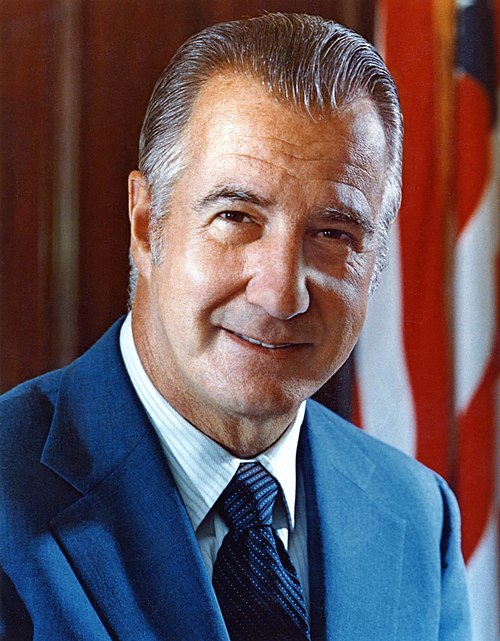
Resigned in October 1973 over a separate bribery scandal, which is how Ford became vice president.
Why it mattered
A government changed by scandal
Watergate shook Americans’ trust in government, but it also showed that the system worked: the press, the courts and Congress held a powerful president to account. Some 69 people were charged, including former attorney general John Mitchell and top aides H. R. Haldeman and John Ehrlichman, who all went to prison.
Congress passed new laws in response. The Federal Election Campaign Act amendments of 1974 limited campaign contributions and created the Federal Election Commission. The Ethics in Government Act of 1978 required officials to report their finances, and the Presidential Records Act made White House records public property. Voters elected dozens of new reformers to Congress in 1974.
Day by day
The Watergate scandal, 1971–1974
“Our Constitution works; our great Republic is a government of laws and not of men.”
President Gerald Ford
Remarks on taking the oath of office, August 9, 1974
The bigger story
Modern America, 1946 to today
Our U.S. History era page puts this in context: the Cold War, the civil rights movement, the space race and the new century.
Go deeper
Books and sources
- All the President’s Men, by Carl Bernstein and Bob Woodward (1974)
- The Wars of Watergate, by Stanley I. Kutler (1990)
- Watergate: A New History, by Garrett M. Graff (2022)
- More recommended books