
Home › People › US Presidents › Richard M. Nixon
37th President · 1969–1974 · Republican
Richard M. Nixon: China, the Moon and Watergate
Richard M. Nixon was a grocer’s son from California who rose to vice president at 40, lost the presidency in 1960 and came back to win it in 1968. He opened relations with communist China, signed the first nuclear arms limits with the Soviet Union, ended the US role in the Vietnam War and created the Environmental Protection Agency. The Watergate scandal then made him the only president ever to resign.

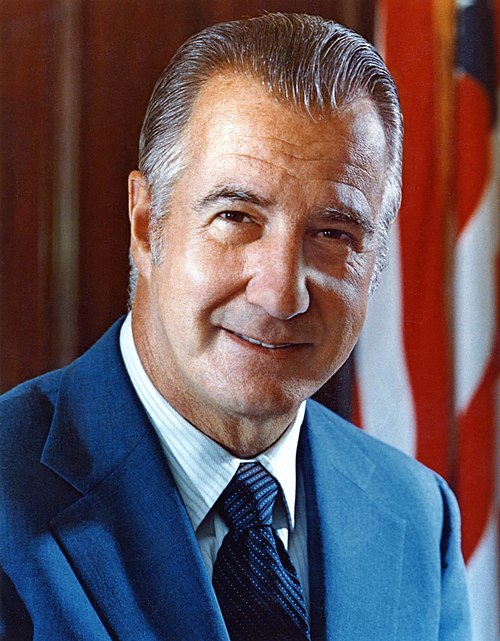
Richard M. Nixon, official portrait photograph, 1971
Quick facts
Richard M. Nixon at a glance
| Born | January 9, 1913, in Yorba Linda, California | |
| Died | April 22, 1994, in New York City, aged 81 | |
| President | 37th, from January 20, 1969, to August 9, 1974 (resigned) | |
| Vice presidents | Spiro T. Agnew (1969–1973), Gerald R. Ford (1973–1974) | |
| Party | Republican | |
| Education | Whittier College, 1934; Duke University School of Law, 1937 | |
| Military | US Navy lieutenant commander in the South Pacific in World War II | |
| Before the White House | US representative (1947–1950), US senator (1950–1953), vice president under Eisenhower (1953–1961) | |
| Wife | Thelma Catherine “Pat” Ryan, married June 21, 1940 | |
| Children | Two daughters, Tricia and Julie | |
| Elections | Lost in 1960; won in 1968 and in a 49-state landslide in 1972 | |
| Buried | Richard Nixon Presidential Library, Yorba Linda, California |
The big picture in 30 seconds
Why he matters
- Visited China in 1972, ending more than 20 years of hostility between the two countries.
- Signed the first treaties limiting nuclear weapons with the Soviet Union, a policy called détente.
- Withdrew US troops from Vietnam; the last combat forces left in March 1973.
- Created the Environmental Protection Agency and signed the Clean Air Act and the Endangered Species Act.
- Was president when Apollo 11 landed on the Moon in July 1969.
- Resigned on August 9, 1974, after the Watergate cover-up, the only president ever to do so.
49 states
won in his 1972 landslide over George McGovern
8 days
in China in February 1972, the visit that opened relations
18
the new voting age under the 26th Amendment, ratified in 1971
Aug. 9, 1974
the day he resigned, the only president ever to do so
Early years
A hard start in California
Richard Milhous Nixon was born on January 9, 1913, in a house his father built in Yorba Linda, California. His family were Quakers and often short of money; they later ran a grocery store and gas station in Whittier. Two of his four brothers died young, of tuberculosis and meningitis.
Nixon was a hard-working student and champion debater. He turned down a scholarship to Harvard because his family could not afford the travel and living costs, and went to nearby Whittier College instead. He then earned a law degree at Duke University.
Pat
Nixon met Pat Ryan, a schoolteacher, when they were both cast in a local play in 1938. He told her that night he would marry her. They married in 1940. During World War II he served as a Navy supply officer in the South Pacific, where he ran a hamburger stand for flight crews and won money at poker.

Into politics
Rise, fall and comeback
Nixon won a seat in Congress in 1946. On the House Un-American Activities Committee he pursued Alger Hiss, a former State Department official accused of spying for the Soviets, and became nationally known as a fierce anti-communist. In 1950 he won a Senate seat, and in 1952, at 39, Eisenhower chose him as his running mate.
Vice president
Nixon was an unusually active vice president. In Moscow in 1959 he argued with Soviet leader Nikita Khrushchev in a model American kitchen at a trade fair, a debate shown on TV in both countries. In 1960 he ran for president and lost to John F. Kennedy by one of the closest margins in history.
The comeback
After losing the race for governor of California in 1962, Nixon told reporters, “You won’t have Nixon to kick around anymore.” Most people thought his career was over. But he campaigned for other Republicans and in 1968 promised to bring “law and order” and to end the war in Vietnam with honor.
Election of 1968
A three-way race
Electoral votes: 538 electors; 270 needed to win. Popular vote: Nixon 31.8 million (43.4%), Humphrey 31.3 million (42.7%), Wallace 9.9 million (13.5%)
Election of 1972
A 49-state landslide
Electoral votes: 538 electors; 270 needed to win. Popular vote: Nixon 47.2 million (60.7%), McGovern 29.2 million (37.5%)
Foreign policy
Opening to China and détente
Nixon and his national security adviser, Henry Kissinger, believed the US could use the split between the two communist giants, China and the Soviet Union, to its advantage. Nixon, with his long record as an anti-communist, could reach out to them without being called weak. People still say “only Nixon could go to China” about a leader who does something unexpected.
February 21–28, 1972
The trip to China
After secret talks arranged by Kissinger, Nixon flew to Beijing and met Chairman Mao Zedong. Nixon called it “the week that changed the world.” Full diplomatic relations followed in 1979.
May 26, 1972
Arms control with the Soviets
In Moscow, Nixon and Soviet leader Leonid Brezhnev signed the SALT I agreement and the Anti-Ballistic Missile Treaty, the first limits on nuclear weapons of the Cold War.
July 20, 1969
Men on the Moon
Nixon spoke by telephone to Neil Armstrong and Buzz Aldrin on the Moon, the most distant phone call in history, and greeted the crew on their return.


Vietnam
Bringing the troops home
Nixon’s plan, called “Vietnamization,” was to train South Vietnam’s army to fight on its own while American troops came home. At the same time he widened the war with secret bombing and a 1970 invasion of Cambodia, which set off huge protests. At Kent State University in Ohio, National Guard troops shot and killed four students. The Paris Peace Accords were signed on January 27, 1973, and the last US combat troops left that March. South Vietnam fell to the North in 1975.
Source: US Department of Defense. Nixon's years in office shown in red. The peak, about 543,000, came in April 1969.
At home
Nixon's domestic record
Nixon is often remembered for foreign policy and Watergate, but he signed a long list of important laws, many passed by a Democratic Congress.
1970
Protecting the environment
Nixon created the Environmental Protection Agency and signed the Clean Air Act (1970) and the Endangered Species Act (1973). The first Earth Day was held in April 1970.
July 1, 1971
Voting at 18
The 26th Amendment lowered the voting age from 21 to 18. Many argued that men old enough to be drafted were old enough to vote. The draft itself ended in 1973.
August 15, 1971
The “Nixon shock”
Facing inflation, Nixon froze wages and prices for 90 days and ended the right of foreign governments to trade dollars for gold.
June 23, 1972
Title IX
He signed the education law whose Title IX banned sex discrimination in schools that get federal money, opening the way for girls’ and women’s sports.
Watergate
“I am not a crook”
On June 17, 1972, police arrested five men breaking into the Democratic National Committee offices in the Watergate building in Washington. They were connected to Nixon’s reelection committee. Nixon had not ordered the break-in, but within days he joined in covering it up, including ordering the CIA to ask the FBI to stop investigating.
Reporters Bob Woodward and Carl Bernstein of the Washington Post, helped by a secret source they called “Deep Throat,” kept the story alive. In 1973 Senate hearings revealed that Nixon had secretly taped his conversations in the Oval Office. He fought to keep the tapes, and in the “Saturday Night Massacre” of October 20, 1973, he had the special prosecutor investigating him fired.
Resignation
On July 24, 1974, the Supreme Court ruled 8–0 that Nixon must hand over the tapes. Days later the House Judiciary Committee approved articles of impeachment. One tape, released on August 5, proved he had joined the cover-up six days after the break-in. Republican leaders told him he would be convicted. On the evening of August 8 he announced his resignation, and the next morning he waved goodbye from the steps of a helicopter on the White House lawn.

“The greatest honor history can bestow is the title of peacemaker.”
Richard M. Nixon, first inaugural address
January 20, 1969
Final years
Elder statesman
One month after Nixon resigned, President Ford gave him a full pardon, so he was never charged with a crime. He retired to San Clemente, California, and in 1977 admitted in a series of TV interviews with David Frost that he had “let the American people down.” He then rebuilt his reputation as an expert on foreign affairs, writing nine more books and advising later presidents.
Pat Nixon died in 1993. Nixon died after a stroke on April 22, 1994, and all five living presidents attended his funeral in Yorba Linda.
How he is remembered
Nixon is one of the most complicated figures in American history. His opening to China and his environmental laws are widely praised. His abuses of power, the Watergate cover-up, his secret bombing of Cambodia and his lists of “enemies” led Congress to pass new limits on presidents, and made “-gate” the label for scandals ever since.
His life at a glance
Life timeline
People
Who's who in Nixon's story



Visit
Yorba Linda, California
The Richard Nixon Presidential Library and Museum in Yorba Linda includes his birthplace, the graves of Richard and Pat Nixon, a replica of the East Room and the helicopter he left the White House in. Its Watergate gallery was rebuilt in 2016 using the tapes and records held by the National Archives.