
Home › World History › England and Britain › Henry VIII and the English Reformation
England and Britain · The Tudors · 1527–1559
Henry VIII and the English Reformation: Why Henry Broke with Rome
The English Reformation was the break between the Church in England and the Pope in Rome, begun by King Henry VIII in the 1530s. Henry wanted to end his marriage to Catherine of Aragon, and when the Pope refused, he made himself head of the Church of England. Within thirty years England had become a Protestant country.

King Henry VIII, painted in the workshop of Hans Holbein the Younger around 1537.
Quick facts
The English Reformation at a glance
- Dates: 1527 (Henry asks for an annulment) to 1559 (the Elizabethan Settlement)
- Monarchs: Henry VIII, then Edward VI, Mary I and Elizabeth I
- The spark: Henry’s wish to end his marriage to Catherine of Aragon and marry Anne Boleyn
- Key law: The Act of Supremacy (1534) made the king Supreme Head of the Church of England
- Monasteries: About 800 monasteries, nunneries and friaries closed in 1536–1540, their lands taken by the Crown
- In English: The Great Bible (1539) and the Book of Common Prayer (1549) put worship into English
- Resistance: The Pilgrimage of Grace (1536), with perhaps 30,000 rebels in the north
- Outcome: A Protestant Church of England, with the monarch as its head, as it still is today
The big picture in 30 seconds
Why the English Reformation matters
- It created the Church of England.
- It made the king, not the Pope, master of the Church.
- It made Parliament part of the biggest change in English history.
- Its quarrels led to the Puritans, the Pilgrims and the English Civil War.
6
wives of Henry VIII
1534
Act of Supremacy
About 800
religious houses closed
About 280
Protestants burned under Mary I
The King’s Great Matter
Why Henry VIII wanted a new wife
Henry VIII became king in 1509 and married Catherine of Aragon, the Spanish widow of his older brother Arthur. After nearly twenty years they had only one living child, a daughter, Mary. Henry believed England needed a son to avoid another civil war like the Wars of the Roses. By 1527 he had also fallen in love with Anne Boleyn, a lady of the court.
Henry asked Pope Clement VII to annul (cancel) his marriage, arguing from the Bible that marrying a brother’s widow was a sin. But Catherine’s nephew was the Holy Roman Emperor Charles V, whose army had just sacked Rome. The Pope would not say yes.
New ideas from Germany
At the same time, the ideas of Martin Luther, who had broken with Rome in 1517, were spreading in England. Henry himself was no Protestant: in 1521 he wrote a book attacking Luther, and a grateful Pope named him “Defender of the Faith.” But some of the people around him, including Anne Boleyn, Thomas Cromwell and Thomas Cranmer, wanted real reform of the Church.

Defender of the Faith
The title the Pope gave Henry in 1521 is still used by British monarchs. Look for the letters F D or FID DEF on British coins.
The map
Where the Reformation was felt
The break with Rome was made in London, in Parliament and at court. Its effects reached every parish. Monasteries from Fountains Abbey in Yorkshire to Glastonbury in Somerset were closed, stripped and sold, and many became the ruins that tourists visit today.
The north, where the old faith was strongest, rose in revolt in 1536. The rebels of the Pilgrimage of Grace marched under a banner of the Five Wounds of Christ and took York before they were tricked into going home.
How it happened
The break with Rome, step by step
The English Reformation came in stages, pushed forward by the king, his ministers and Parliament.
1527–1529: the Great Matter
Henry asks the Pope to annul his marriage. A court in London fails to decide, and Cardinal Wolsey, the king’s chief minister, falls from power.
1529–1536: the Reformation Parliament
Parliament passes law after law cutting the Church’s ties to Rome, guided by Thomas Cromwell, Henry’s new chief minister.
1533: Henry marries Anne Boleyn
Thomas Cranmer, the new Archbishop of Canterbury, declares the first marriage void. Anne is crowned, and in September gives birth to the future Elizabeth I.
1534: the Act of Supremacy
Parliament names Henry the Supreme Head of the Church of England. Refusing to accept this is made treason.
1536–1540: the monasteries close
Cromwell’s agents close every monastery. Their gold, lead and lands go to the Crown, and much of the land is sold to nobles and gentry.
1539: the Great Bible
An English Bible is placed in every parish church, so ordinary people can read or hear the Bible in their own language.
July 6, 1535
The execution of Sir Thomas More
Sir Thomas More had been Henry’s Lord Chancellor, the highest official in the land, and was famous across Europe as the author of Utopia. But he could not accept that a king could be head of the Church. He resigned in 1532 and kept silent, hoping silence would protect him.
It did not. In 1534 he refused to swear the oath that went with the Act of Succession, and was locked in the Tower of London. Tried for treason on evidence many thought false, he was beheaded on Tower Hill. On the scaffold he is reported to have said he died “the King’s good servant, but God’s first.” Bishop John Fisher had been executed two weeks earlier, and many monks died for the same refusal.
A warning to all England
The deaths of More and Fisher showed that Henry would destroy even his oldest friends to win obedience. The Catholic Church later made both men saints.

The fate of Anne Boleyn
Anne also failed to give Henry a son. In May 1536 she was accused of adultery and treason, almost certainly falsely, and beheaded at the Tower of London.
Key people
The people who made the English Reformation
King Henry VIII
1491–1547
King of England, 1509–1547
Broke with Rome to end his first marriage, made himself head of the Church, and married six times.

Catherine of Aragon
1485–1536
Henry’s first queen
A Spanish princess who refused to accept that her marriage was invalid, and was sent away from court.
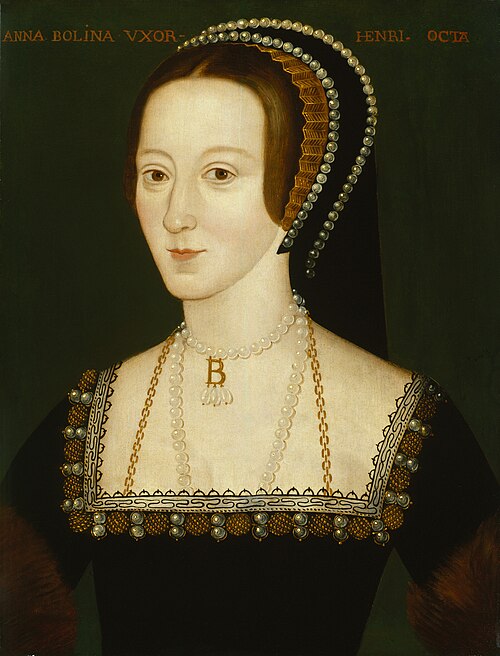
Anne Boleyn
about 1501–1536
Henry’s second queen
Supported Church reform, gave birth to Elizabeth I, and was beheaded in 1536.

Thomas Cromwell
about 1485–1540
Chief minister
A blacksmith’s son who rose to run the government, steered the break with Rome, and closed the monasteries.

Sir Thomas More
1478–1535
Lord Chancellor
Scholar and author of Utopia, executed for refusing to accept Henry as head of the Church.

Queen Elizabeth I
1533–1603
Queen of England, 1558–1603
Anne Boleyn’s daughter, who settled the Church of England as a Protestant church in 1559.
Why it mattered
A Protestant England
Henry VIII broke with the Pope, but kept much of the old Catholic worship. Real Protestant change came under his son, Edward VI, who brought in the English Book of Common Prayer in 1549. Then Henry’s daughter Mary I, a devout Catholic, brought England back to Rome and burned about 280 Protestants as heretics, earning the name “Bloody Mary.” Finally Elizabeth I made the Church of England Protestant again in the Elizabethan Settlement of 1559, and this time it lasted.
The English Reformation tied church and state together: the monarch is still the Supreme Governor of the Church of England. It made England an enemy of Catholic Spain, which led to the Spanish Armada of 1588. And it left many Protestants, the Puritans, wanting a purer church, a quarrel that would send the Pilgrims to America and help start the English Civil War.
1534
Act of Supremacy
1549
Book of Common Prayer
1555–1558
Protestants burned under Mary I
1559
the Elizabethan Settlement
Henry’s six wives
Divorced, beheaded, died; divorced, beheaded, survived
English schoolchildren learn this rhyme to remember the fates of Henry’s six queens.
Catherine of Aragon, 1509–1533
Married for 24 years and mother of Mary I. Henry ended the marriage by breaking with Rome. Divorced.
Anne Boleyn, 1533–1536
Mother of Elizabeth I. Accused of adultery and treason and beheaded at the Tower of London.
Jane Seymour, 1536–1537
Gave Henry his longed-for son, the future Edward VI, but died twelve days later.
Anne of Cleves, 1540
A German princess Henry chose from a portrait. He disliked her on sight and the marriage was annulled after six months.
Catherine Howard, 1540–1542
A teenage cousin of Anne Boleyn, beheaded for adultery.
Catherine Parr, 1543–1547
A clever, Protestant-minded widow who nursed Henry and outlived him. Survived.
Meanwhile in America
From the English Reformation to the Pilgrims
The Puritans
Many English Protestants felt the Church of England kept too much of the old Catholic ways. These Puritans wanted to “purify” it.
The Pilgrims, 1620
A group who gave up on the Church of England entirely sailed on the Mayflower and founded Plymouth Colony.
Jamestown, 1607
Virginia, England’s first lasting colony, made the Church of England its official church.
Timeline
The English Reformation, 1509–1559
- 1509 Henry VIII becomes king and marries Catherine of Aragon.
- 1517 Martin Luther begins the Protestant Reformation in Germany.
- 1521 The Pope names Henry “Defender of the Faith.”
- 1527 Henry asks the Pope to annul his marriage.
- 1529 Cardinal Wolsey falls; the Reformation Parliament first meets.
- January 1533 Henry secretly marries Anne Boleyn.
- September 1533 Princess Elizabeth is born.
- 1534 The Act of Supremacy makes Henry head of the Church of England.
- July 6, 1535 Sir Thomas More is beheaded.
- May 19, 1536 Anne Boleyn is beheaded.
- 1536 The smaller monasteries close; the Pilgrimage of Grace rises in the north.
- 1539 The Great Bible is placed in every parish church.
- 1540 The last monasteries close; Thomas Cromwell is executed.
- 1547 Henry VIII dies; Edward VI makes England Protestant.
- 1549 The first Book of Common Prayer.
- 1553–1558 Mary I restores the Catholic Church.
- 1559 Elizabeth I’s Settlement makes the Church of England Protestant for good.
“The King our sovereign lord, his heirs and successors, kings of this realm, shall be taken, accepted and reputed the only supreme head in earth of the Church of England.”
The Act of Supremacy
Passed by Parliament, November 1534
The bigger story
England and Britain, 1485–1900
Our England and Britain overview tells the whole story in one place: the Tudors and the break with Rome, the Stuarts and the fight between king and Parliament, the union with Scotland, and the British Empire.
Go deeper
Sources and further reading
- Heretics and Believers: A History of the English Reformation, by Peter Marshall (2017)
- The Stripping of the Altars, by Eamon Duffy (1992)
- Thomas Cromwell: A Life, by Diarmaid MacCulloch (2018)
- More recommended books