
Home › People › US Presidents › Calvin Coolidge
30th President · 1923–1929 · Republican
Calvin Coolidge: Silent Cal and the Roaring Twenties
Calvin Coolidge was a thrifty, tight-lipped Vermonter who was sworn in by his own father by lamplight. He led the country through the boom years of the 1920s, cut taxes, paid down the national debt and kept the government small, then surprised everyone by refusing to run again in 1928.

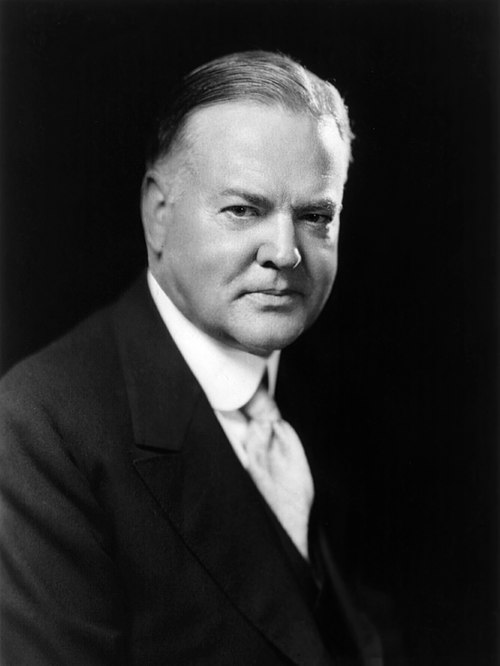
Calvin Coolidge, about 1919
Quick facts
Calvin Coolidge at a glance
| Born | July 4, 1872, in Plymouth Notch, Vermont, the only president born on Independence Day | |
| Died | January 5, 1933, in Northampton, Massachusetts, aged 60 | |
| President | 30th, from August 2, 1923, to March 4, 1929 | |
| Vice president | None until 1925; then Charles G. Dawes (1925–1929) | |
| Party | Republican | |
| Education | Amherst College, 1895 | |
| Profession | Lawyer in Northampton, Massachusetts | |
| Before the White House | Mayor of Northampton, governor of Massachusetts (1919–1921), vice president (1921–1923) | |
| Wife | Grace Anna Goodhue, married October 4, 1905 | |
| Children | Two sons: John and Calvin Jr., who died in 1924 at age 16 | |
| Election | Won in 1924 over John W. Davis and Robert La Follette | |
| Buried | Plymouth Notch Cemetery, Vermont |
The big picture in 30 seconds
Why he matters
- Became famous nationwide for standing firm in the 1919 Boston police strike.
- Took over calmly after Harding's death and restored trust after the Harding scandals.
- Cut income taxes and ran a budget surplus every year, cutting the national debt by about a quarter.
- Signed the Indian Citizenship Act of 1924, which made all Native Americans born in the US citizens.
- Backed the Kellogg-Briand Pact of 1928, in which dozens of nations promised not to use war to settle disputes.
- Critics say his hands-off approach ignored farm troubles and the stock speculation that led to the 1929 crash.
July 4
his birthday, the only president born on Independence Day
$5.4 billion
cut from the national debt between 1923 and 1929
520
press conferences, more per year than any president before or since
54%
of the popular vote in the three-way race of 1924
Early years
A Vermont boyhood
John Calvin Coolidge Jr. was born on July 4, 1872, in the tiny village of Plymouth Notch, Vermont, where his father kept the general store, farmed and held nearly every local office. His mother died when he was 12 and his sister when he was 18. He was a shy, serious boy who did farm chores, made maple sugar and saved his money.
He graduated with honors from Amherst College in Massachusetts in 1895, then learned law in an office in Northampton instead of going to law school. He opened his own practice there in 1898.
Grace
In 1905 he married Grace Anna Goodhue, a lively teacher at the Clarke School for the Deaf. People said that she was as warm and talkative as he was quiet. They had two sons, John and Calvin Jr.

The road to the White House
From city hall to the statehouse
Coolidge climbed the political ladder one rung at a time: city council, state legislator, mayor of Northampton, state senate president, lieutenant governor and, in 1918, governor of Massachusetts. He lost only one election in his life. He believed in hard work, saving money and saying as little as possible.
The Boston police strike
In September 1919 most of Boston’s police walked off the job, and rioting and looting followed. Governor Coolidge called out the state guard and backed the firing of the strikers. When labor leader Samuel Gompers protested, Coolidge replied that there was “no right to strike against the public safety by anybody, anywhere, any time.” The line made him a national figure, and the Republicans picked him as Harding’s running mate in 1920.
“Coolidge is president”
Vice President Coolidge was visiting his father in Vermont when word came on the night of August 2, 1923, that Harding had died. The house had no telephone or electricity. At 2:47 a.m. on August 3, by the light of a kerosene lamp, John Coolidge, a notary public, swore in his son as president.
Election of 1924
“Keep Cool with Coolidge”
Electoral votes: 531 electors; 266 needed to win. Popular vote: Coolidge 15.7 million (54.0%), Davis 8.4 million (28.8%), La Follette 4.8 million (16.6%)
The presidency, 1923–1929
Prosperity and a small government
Coolidge believed the federal government should do less, spend less and let business grow. “The chief business of the American people is business,” he told newspaper editors in 1925. His years matched the Roaring Twenties: cars, radios, movies and a soaring stock market.
1924 and 1926
Tax cuts and surpluses
Working with Treasury Secretary Andrew Mellon, Coolidge cut income tax rates, especially at the top. The government still ran a surplus every year and paid down the debt left from World War I.
June 2, 1924
Citizenship for Native Americans
The Indian Citizenship Act made all Native Americans born in the United States citizens. Coolidge also posed with Native leaders and was adopted into the Sioux nation during a 1927 visit to South Dakota.
May 26, 1924
Closing the door
Coolidge signed the Immigration Act of 1924, which set strict quotas favoring northern Europe and barred immigration from Japan. He objected to the Japanese ban but signed the bill anyway.
1927 and 1928
Trouble on the farm
Farmers did not share in the boom. Coolidge twice vetoed the McNary-Haugen bill, which would have had the government buy surplus crops, calling it price-fixing.
June 11, 1927
Welcoming Lindbergh
After Charles Lindbergh flew solo across the Atlantic, Coolidge sent a Navy cruiser to bring him home and presented him with the first Distinguished Flying Cross before a huge crowd in Washington.
August 27, 1928
Outlawing war
Secretary of State Frank Kellogg and France’s Aristide Briand wrote a pact renouncing war as national policy. It was signed by dozens of nations and approved by the Senate 85 to 1. Kellogg won the Nobel Peace Prize.
Paying the bills
The national debt shrinks
Coolidge cared deeply about thrift, in his own household and in Washington. He held weekly budget meetings and the government spent less than it took in every year he was president.
Source: US Treasury, historical debt outstanding. Figures rounded.
Silent Cal
A quiet man in a noisy decade
Coolidge’s few words became legend. A guest at a dinner once told him she had bet she could get more than two words out of him. “You lose,” he replied. In fact he gave hundreds of press conferences and many speeches, and he was one of the first presidents to speak to the whole nation regularly by radio.
He took long naps, kept a menagerie of pets (dogs, birds, a raccoon named Rebecca and a pygmy hippo given to the National Zoo), and spent summers in the Black Hills of South Dakota, where he dedicated the start of work on Mount Rushmore in 1927.
“I do not choose to run”
On August 2, 1927, the fourth anniversary of becoming president, Coolidge handed reporters in Rapid City slips of paper that read: “I do not choose to run for President in nineteen twenty eight.” He would say nothing more about it. His commerce secretary, Herbert Hoover, won the 1928 election.
The Mississippi flood
In 1927 the Mississippi River flooded 27,000 square miles and drove hundreds of thousands of people from their homes. Coolidge put Hoover in charge of relief but refused to visit the region or call a special session of Congress, which many people resented.
“There is no right to strike against the public safety by anybody, anywhere, any time.”
Calvin Coolidge, telegram to labor leader Samuel Gompers
September 14, 1919, during the Boston police strike
Final years
Back to Northampton
The Coolidges left Washington in March 1929 and returned to Northampton, first to their half of a rented two-family house and then to a larger home called The Beeches. He wrote his autobiography and a daily newspaper column, and served on the board of an insurance company.
Seven months after he left office, the stock market crashed and the Great Depression began. Coolidge was troubled by it and told a friend he no longer fit in with the times. He died of a heart attack at home on January 5, 1933, and was buried in Plymouth Notch beside his son.
How he is remembered
For decades Coolidge was blamed for the boom-and-bust of the 1920s and remembered mostly for his silence. Since the 1980s, admirers including Ronald Reagan, who hung Coolidge’s portrait in the Cabinet Room, have praised his honesty, tax cuts and balanced budgets. Most historians still rank him in the middle of the presidents.
His life at a glance
Life timeline
People
Who's who in Coolidge's story




Visit
Coolidge's Vermont birthplace
The President Calvin Coolidge State Historic Site in Plymouth Notch, Vermont, preserves the whole village: his birthplace, the family home where he took the oath of office, his father’s store and the cemetery where he is buried. In Northampton, Massachusetts, the Forbes Library holds the Calvin Coolidge Presidential Library and Museum.