
Home › US History › Industry, Immigration and WWI › Spanish-American War
Industry, Immigration and WWI · Cuba, Puerto Rico and the Philippines · 1898
The Spanish-American War of 1898
The Spanish-American War was a short war fought in 1898 between the United States and Spain, sparked by Cuba’s fight for independence and the mysterious sinking of the battleship USS Maine in Havana Harbor. In under four months, the U.S. Navy destroyed two Spanish fleets and Theodore Roosevelt’s Rough Riders charged up San Juan Hill. Spain lost the last of its American empire, and the United States gained Puerto Rico, Guam and the Philippines and became a world power.

Colonel Theodore Roosevelt of the 1st U.S. Volunteer Cavalry, the “Rough Riders,” in 1898
Quick facts
The Spanish-American War at a glance
| Dates | April 21 to August 12, 1898 (armistice); Treaty of Paris signed December 10, 1898 | |
| Where | Cuba, Puerto Rico, the Philippines and Guam | |
| Sides | United States and Cuban rebels against the Kingdom of Spain | |
| President | William McKinley | |
| Result | U.S. victory; Cuba freed from Spain; the U.S. gained Puerto Rico, Guam and the Philippines | |
| U.S. deaths | About 385 killed in battle and more than 2,000 from disease | |
| Key battles | Manila Bay (May 1), San Juan Hill (July 1), Santiago de Cuba (July 3) | |
| Key figures | William McKinley, Theodore Roosevelt, George Dewey, William Shafter, Emilio Aguinaldo |
The big picture in 30 seconds
Why the Spanish-American War matters
- It ended Spain’s 400-year empire in the Americas.
- The United States gained its first overseas colonies.
- It made Theodore Roosevelt a national hero and, by 1901, president.
- It led to a long, bloody war in the Philippines.
113 days
from declaration to armistice
2
Spanish fleets destroyed
385
Americans killed in battle
$20 million
paid to Spain for the Philippines
Cuba Libre
Why the United States went to war
By the 1890s Cuba and Puerto Rico were nearly all that was left of Spain’s once-great American empire. In 1895 Cuban rebels led by José Martí and Máximo Gómez rose up again. To cut them off from the people, the Spanish general Valeriano Weyler forced hundreds of thousands of country people into guarded camps. Disease and hunger in the camps killed perhaps 170,000 Cubans.
American newspapers, especially William Randolph Hearst’s New York Journal and Joseph Pulitzer’s New York World, filled their pages with shocking stories, some true and some invented. This sensational reporting became known as “yellow journalism.” Americans also had $50 million invested in Cuban sugar and trade.
“Remember the Maine!”
In January 1898 President McKinley sent the battleship USS Maine to Havana to protect Americans there. On the night of February 15 a huge explosion sank the ship, killing 266 sailors. A Navy court blamed a Spanish mine. Most historians now think it was more likely an accidental fire in a coal bunker that set off the ammunition, but in 1898 the newspapers had no doubt. Congress declared war in April.

Where it happened
A war on two oceans
The Navy struck first, and far away. On May 1, 1898, Commodore George Dewey’s squadron sailed into Manila Bay in the Philippines and sank or burned every Spanish warship there without losing a single American sailor in battle.
In the Caribbean the Navy trapped Spain’s Atlantic fleet in the harbor of Santiago de Cuba. About 17,000 American soldiers sailed from Tampa, landed at Daiquirí in June and marched on Santiago. After the Spanish fleet was destroyed trying to escape on July 3, the city surrendered. General Nelson Miles then landed in Puerto Rico and met little resistance.
Simplified map. The army landed at Daiquirí, east of Santiago. The war’s first battle was fought 9,000 miles away, at Manila Bay in the Philippines, on May 1, 1898.
How the war unfolded
The “splendid little war”
It took just over three months to beat Spain on land and sea.
The battleship sinks in Havana Harbor. “Remember the Maine!” becomes a battle cry.
Congress declares that war has existed since April 21. The Teller Amendment promises not to annex Cuba.
Dewey destroys the Spanish Pacific squadron in the Philippines in a single morning.
U.S. regulars, the Black “Buffalo Soldiers” and the Rough Riders storm the heights above Santiago.
Spain’s Atlantic fleet tries to break out and is destroyed in four hours.
Spain agrees to stop fighting. Manila falls the next day, before the news arrives.
Outside Santiago, July 1, 1898
The charge up San Juan Hill
The heights east of Santiago were held by about 750 Spanish soldiers in trenches and blockhouses. On the morning of July 1, some 8,000 Americans moved forward through thick jungle under heavy fire from Spanish Mauser rifles, which used smokeless powder and were hard to spot. Gatling guns and a few cannon gave cover. Lieutenant Colonel Theodore Roosevelt, mounted on his horse Little Texas, led the Rough Riders and Black troopers of the 9th and 10th Cavalry up Kettle Hill, then joined the attack on San Juan Hill.
By afternoon the heights were taken. Together with the fight at nearby El Caney, the day cost about 200 American dead and more than 1,000 wounded. Newspapers made Roosevelt a hero. He was elected governor of New York that fall, vice president in 1900, and became president when William McKinley was assassinated in 1901.
The Buffalo Soldiers
Black regular soldiers of the 9th and 10th Cavalry and the 24th and 25th Infantry fought in the thick of the battle. Five Black soldiers received the Medal of Honor for the Cuban campaign.
_-_by_William_Dinwiddie_LCCN96521936.jpg/960px-Colonel_Roosevelt_and_his_Rough_Riders_at_the_top_of_the_hill_which_they_captured,_Battle_of_San_Juan)_-_by_William_Dinwiddie_LCCN96521936.jpg)
Leaders of the war
The leaders of 1898

Tried to avoid war, then led the nation through it and decided to keep the Philippines.

Left his job as assistant secretary of the Navy to fight in Cuba and came home a hero.

“You may fire when you are ready, Gridley.” His victory at Manila Bay made him a national idol.
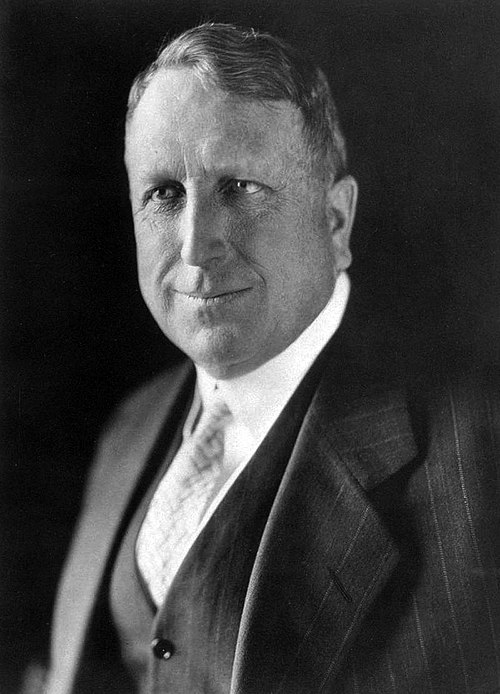
His New York Journal stirred up war fever with sensational “yellow journalism.”

Fought Spain alongside the Americans, then fought the United States when it refused to grant independence.

Lincoln’s former secretary oversaw the peace treaty and later the “Open Door” policy in China.
Why it mattered
America becomes a world power
In the Treaty of Paris, signed December 10, 1898, Spain gave Cuba its independence and handed Puerto Rico and Guam to the United States. It also sold the Philippines for $20 million. That same year the United States annexed Hawaii. In just a few months the country had gained an overseas empire stretching across the Pacific.
Not everyone approved. Mark Twain, Andrew Carnegie and former president Grover Cleveland joined the Anti-Imperialist League. Filipinos who had fought for freedom from Spain now fought American rule in the Philippine-American War (1899–1902), which cost more than 4,000 American and at least 200,000 Filipino lives. Cuba became independent in 1902, but under the Platt Amendment the U.S. kept the right to intervene and a naval base at Guantánamo Bay.
The Treaty of Paris, 1898
What changed hands
Spain lost the last pieces of its overseas empire in the Americas and the Pacific.
Year by year
From Cuban revolt to American empire, 1895–1902
“You may fire when you are ready, Gridley.”
Commodore George Dewey
To the captain of USS Olympia, Battle of Manila Bay, May 1, 1898
The bigger story
Industry, Immigration and World War I, 1880–1919
Our U.S. History era page shows how this fits into forty years that turned a farming nation into the world’s largest industrial power, from Edison’s light bulb to the trenches of France.
Go deeper
Books and sources
- The War Lovers: Roosevelt, Lodge, Hearst, and the Rush to Empire, 1898, by Evan Thomas (2010)
- The Rough Riders, by Theodore Roosevelt (1899)
- Overthrow: America’s Century of Regime Change from Hawaii to Iraq, by Stephen Kinzer (2006)
- More recommended books