
Home › People › US Presidents › Lyndon B. Johnson
36th President · 1963–1969 · Democrat
Lyndon B. Johnson: The Great Society and Vietnam
Lyndon B. Johnson was a tall, forceful Texan who became president when John F. Kennedy was assassinated in 1963. He used his skill at handling Congress to pass the Civil Rights Act, the Voting Rights Act, Medicare and a “War on Poverty,” the biggest burst of reform since the New Deal. At the same time he sent more than half a million troops to Vietnam, a war that tore the country apart.

Lyndon B. Johnson, official portrait photograph
Quick facts
Lyndon B. Johnson at a glance
| Born | August 27, 1908, near Stonewall, Texas | |
| Died | January 22, 1973, at his ranch near Stonewall, Texas, aged 64 | |
| President | 36th, from November 22, 1963, to January 20, 1969 | |
| Vice president | None until 1965; then Hubert H. Humphrey (1965–1969) | |
| Party | Democratic | |
| Education | Southwest Texas State Teachers College (now Texas State University), 1930 | |
| Military | US Navy lieutenant commander in World War II; awarded the Silver Star | |
| Before the White House | US representative (1937–1949), US senator (1949–1961) and Senate majority leader from 1955, vice president (1961–1963) | |
| Wife | Claudia Alta “Lady Bird” Taylor, married November 17, 1934 | |
| Children | Two daughters, Lynda Bird and Luci Baines | |
| Election | Won in 1964 over Barry Goldwater in a landslide | |
| Buried | Johnson family cemetery, LBJ Ranch, Stonewall, Texas |
The big picture in 30 seconds
Why he matters
- Signed the Civil Rights Act of 1964, which outlawed segregation in public places and job discrimination.
- Signed the Voting Rights Act of 1965, which ended the tests and tricks used to stop Black Southerners from voting.
- Created Medicare and Medicaid, health insurance for older and low-income Americans.
- Launched the War on Poverty, including Head Start, food stamps and federal aid to schools.
- Escalated the Vietnam War from about 16,000 advisers to more than 500,000 troops.
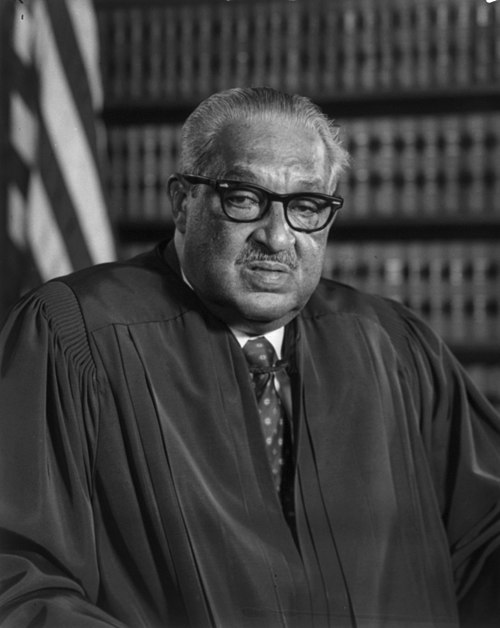
- Appointed Thurgood Marshall, the first Black justice of the Supreme Court.
61.1%
of the popular vote in 1964, the largest share in modern times
19 million
older Americans signed up for Medicare in its first year
19% → 12.8%
fall in the poverty rate from 1964 to 1968
536,000
US troops in Vietnam at the end of 1968
Early years
A Texas Hill Country boy
Lyndon Baines Johnson was born on August 27, 1908, in a farmhouse near Stonewall, Texas, in the dry Hill Country west of Austin. His father served in the Texas legislature but often struggled with money. After high school Lyndon drifted to California and back, then worked his way through a small teachers college in San Marcos.
The Cotulla school
In 1928 he taught at a poor school for Mexican American children in Cotulla, Texas. He bought sports equipment with his own pay and made the children speak English to help them get ahead. Johnson said the hunger and prejudice he saw there stayed with him all his life, and he remembered those students when he signed his education and civil rights laws.
Lady Bird
In 1934 Johnson met Claudia Alta Taylor, known since childhood as “Lady Bird,” and proposed on their first date. They married ten weeks later. She later built a fortune from a radio and TV station in Austin.

Into politics
Master of the Senate
Johnson worked for a Texas congressman in Washington and then ran the New Deal’s National Youth Administration in Texas. In 1937 he won a seat in Congress as a strong supporter of Franklin Roosevelt, and he brought electricity to the Hill Country’s farms. He served briefly in the Navy in the Pacific in 1942 and received the Silver Star.
“Landslide Lyndon”
In 1948 Johnson won the Democratic primary for the Senate by just 87 votes, amid charges of fraud, and was mocked as “Landslide Lyndon.” By 1955 he was Senate majority leader, maybe the most powerful ever. He was famous for “the Johnson treatment”: towering over a senator, grabbing his arm and talking until he gave in. In 1957 he steered the first civil rights law since Reconstruction through the Senate.
Vice president
Johnson lost the 1960 nomination to Kennedy, who then picked him as his running mate to help win Texas and the South. As vice president he chaired the space council and the committee on equal jobs, but he felt shut out by Kennedy’s aides.

Election of 1964
A record landslide
Electoral votes: 538 electors; 270 needed to win. Popular vote: Johnson 43.1 million (61.1%), Goldwater 27.2 million (38.5%)
The Great Society, 1964–1968
“Let us continue”
Five days after the assassination, Johnson told Congress that the best way to honor Kennedy was to pass his civil rights bill. Then he went further. In 1964 he declared an “unconditional war on poverty,” and in a speech at the University of Michigan he described a “Great Society” with “an end to poverty and racial injustice.” With big Democratic majorities after 1964, Congress passed most of his program.
July 2, 1964
The Civil Rights Act
Outlawed segregation in restaurants, hotels and other public places, and banned job discrimination by race, color, religion, sex or national origin. It passed after the longest filibuster in Senate history.
August 6, 1965
The Voting Rights Act
After marchers were beaten at Selma, Alabama, Johnson told Congress “we shall overcome.” The law ended literacy tests, and Black voter registration in the South soared.
July 30, 1965
Medicare and Medicaid
Health insurance for Americans 65 and older and for many poor families. Johnson signed it in Independence, Missouri, beside Harry Truman.
April 1965
Schools and Head Start
The Elementary and Secondary Education Act sent federal money to schools in poor areas. Head Start offered preschool to low-income children.
October 3, 1965
A new immigration law
Signed at the Statue of Liberty, it ended the quotas that had favored immigrants from northern Europe since the 1920s.
April 11, 1968
Fair housing
A week after Martin Luther King Jr. was killed, Johnson signed a law banning discrimination in the sale and rental of housing.

The War on Poverty
Fewer Americans in poverty
The share of Americans living below the official poverty line fell sharply in the 1960s, helped by a booming economy, Social Security increases and the new Great Society programs. Historians still debate how much credit each deserves.
Source: US Census Bureau, historical poverty tables. Johnson's presidency shown in red. 1973 was the lowest rate on record until 2019.
Vietnam
The war that ended his presidency
Johnson inherited a commitment to defend South Vietnam against communist North Vietnam and the Viet Cong guerrillas. In August 1964, after reports of attacks on US Navy ships, Congress passed the Gulf of Tonkin Resolution, which let him use force without declaring war. One of the reported attacks most likely never happened.
In March 1965 Johnson began bombing North Vietnam and sent the first Marine combat units. By the end of 1968 more than 536,000 Americans were serving there, and draft calls rose. Johnson feared that losing Vietnam would mean losing all of Asia to communism, yet he also feared the war would destroy his Great Society.
The Tet Offensive
On January 30, 1968, communist forces attacked more than 100 cities and towns across South Vietnam, even the US Embassy in Saigon. They were beaten back, but the shock convinced many Americans that the war could not be won. Anti-war protests spread, with marchers chanting, “Hey, hey, LBJ, how many kids did you kill today?”
“I shall not seek”
On March 31, 1968, Johnson stunned the nation by announcing on television that he would not run for another term. Days later Martin Luther King Jr. was assassinated, and in June so was Robert Kennedy. Riots broke out in many cities, and Republican Richard Nixon won the presidency that fall.
“The Great Society rests on abundance and liberty for all. It demands an end to poverty and racial injustice, to which we are totally committed in our time.”
Lyndon B. Johnson, University of Michigan commencement address
May 22, 1964
Final years
Back to the ranch
Johnson retired to his ranch on the Pedernales River, let his hair grow long and wrote his memoirs. His library opened at the University of Texas in Austin in 1971. A heavy smoker with a long history of heart trouble, he died of a heart attack at the ranch on January 22, 1973, aged 64, the day before a ceasefire in Vietnam was announced.
How he is remembered
Johnson’s legacy is split in two. His domestic laws changed American life: segregation ended in public places, Black Southerners won the vote, and Medicare still covers tens of millions. But Vietnam cost tens of thousands of American lives, divided the nation and destroyed trust in his honesty, which reporters called the “credibility gap.” Historians usually rank him in the top dozen presidents, with the war as the great exception.
His life at a glance
Life timeline
People
Who's who in Johnson's story



Visit
Austin and the LBJ Ranch
The LBJ Presidential Library at the University of Texas in Austin holds a replica of his Oval Office and recordings of his phone calls. West of Austin, Lyndon B. Johnson National Historical Park includes his boyhood home, the ranch house known as the Texas White House and the family cemetery where he is buried.