
Home › People › US Presidents › Bill Clinton
42nd President · 1993–2001 · Democrat
Bill Clinton: Boom Years and Impeachment
Bill Clinton was a governor from Arkansas who grew up without much money and became the first president born after World War II. He presided over the longest economic expansion in American history up to then and the first balanced federal budgets in a generation, signed welfare reform and NAFTA, and brokered peace efforts from Northern Ireland to the Balkans. He was also impeached by the House in 1998 and acquitted by the Senate.

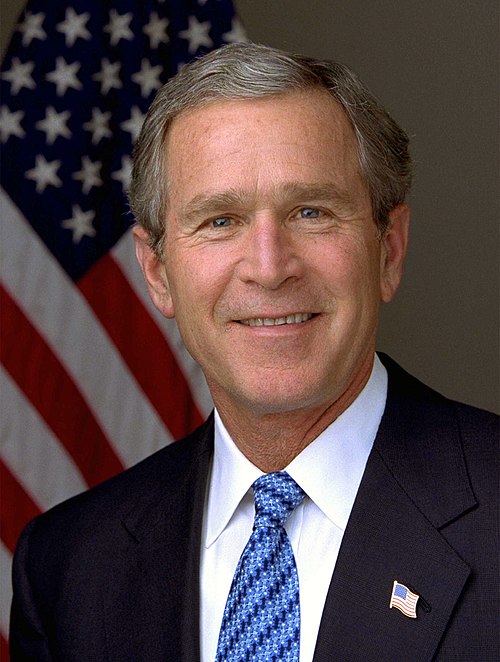
Bill Clinton, official presidential portrait photograph
Quick facts
Bill Clinton at a glance
| Born | August 19, 1946, in Hope, Arkansas, as William Jefferson Blythe III | |
| Vice president | Al Gore | |
| President | 42nd, from January 20, 1993, to January 20, 2001 | |
| Party | Democratic | |
| Education | Georgetown University, 1968; Rhodes Scholar at Oxford University; Yale Law School, 1973 | |
| Before the White House | Law professor, Arkansas attorney general (1977–1979), governor of Arkansas (1979–1981 and 1983–1992) | |
| Wife | Hillary Rodham, married October 11, 1975 | |
| Children | One daughter, Chelsea | |
| Elections | Won in 1992 over George H. W. Bush and Ross Perot, and in 1996 over Bob Dole and Perot | |
| Economy | About 22.7 million jobs added; budget surpluses from 1998 to 2001 | |
| Impeachment | Impeached by the House in December 1998; acquitted by the Senate in February 1999 | |
| Library | William J. Clinton Presidential Center, Little Rock, Arkansas |
The big picture in 30 seconds
Why he matters
- The first “baby boomer” president, born after World War II.
- Presided over a long boom and the first federal budget surpluses since 1969.
- Signed NAFTA, the Family and Medical Leave Act and the 1996 welfare reform law.
- Helped bring peace in Bosnia and Northern Ireland, and hosted the Oslo Accords signing between Israel and the Palestinians.
- Became the second president impeached by the House, over lying under oath about an affair, and was acquitted.
- Left office with one of the highest approval ratings of any departing president.
46
his age at inauguration, the third-youngest president
22.7 million
jobs added during his two terms
$236 billion
federal budget surplus in 2000, the largest in US history
66%
his approval rating as he left office (Gallup)
Early years
The man from Hope
William Jefferson Blythe III was born on August 19, 1946, in Hope, Arkansas, three months after his father died in a car accident. His mother, a nurse, later married Roger Clinton, a car dealer who drank heavily and was sometimes violent. As a teenager, Bill stood up to him to protect his mother and younger half brother, and he took his stepfather’s last name.
He was a top student who played saxophone in the school band. In 1963, as a delegate to Boys Nation, he shook hands with President John F. Kennedy in the White House Rose Garden, a moment he said made him decide on a life in politics.
Georgetown, Oxford and Yale
Clinton studied foreign affairs at Georgetown University in Washington and won a Rhodes Scholarship to Oxford in England. At Yale Law School he met Hillary Rodham, a brilliant student from Illinois. They married in 1975, and their daughter, Chelsea, was born in 1980.

Into politics
The comeback kid
Clinton went home to teach law in Arkansas and ran for Congress in 1974, losing narrowly. He was elected state attorney general in 1976 and, in 1978, governor at 32, the youngest in the nation. Voters threw him out after one term, angry about a car license fee, but he won the office back in 1982 and held it for ten more years, focusing on schools and jobs.
1992
Clinton ran as a “New Democrat” who would be tough on crime, reform welfare and focus on the economy. His campaign office had a sign that read “It’s the economy, stupid.” After surviving stories about his personal life and the draft, he finished second in New Hampshire and called himself “the Comeback Kid.”
Election of 1992
A three-way race
Electoral votes: 538 electors; 270 needed to win. Popular vote: Clinton 44.9 million (43.0%), Bush 39.1 million (37.4%), Perot 19.7 million (18.9%)
Election of 1996
Reelected
Electoral votes: 538 electors; 270 needed to win. Popular vote: Clinton 47.4 million (49.2%), Dole 39.2 million (40.7%), Perot 8.1 million (8.4%)
First term, 1993–1996
Wins, losses and the Republican Revolution
Clinton’s first two years brought major laws and a major defeat. In the 1994 midterm elections, Republicans led by Newt Gingrich won control of the House for the first time in 40 years with their “Contract with America.” Clinton and the new Congress fought, shutting down the government twice in 1995–96, then made deals.
February 5, 1993
Family and Medical Leave Act
Gave many workers up to 12 weeks of unpaid, job-protected leave to care for a new baby or a sick family member.
December 8, 1993
NAFTA
The North American Free Trade Agreement with Canada and Mexico, started under Bush, passed with more Republican than Democratic votes. It remains debated.
1993–1994
Health care fails
A plan for health insurance for every American, led by Hillary Clinton, collapsed in Congress. In 1997 he signed CHIP, health coverage for millions of children.
1993–1994
Crime and guns
He signed the Brady Bill requiring background checks for handgun buyers and a 1994 crime law that funded 100,000 police officers and banned assault weapons for ten years.
August 22, 1996
Welfare reform
Working with Republicans, he signed a law that added work requirements and time limits to welfare, keeping his pledge to “end welfare as we know it.”
April 19, 1995
Oklahoma City
An anti-government extremist bombed a federal building, killing 168 people. Clinton’s words at the memorial service comforted the nation.
The economy
From deficits to surpluses
A 1993 budget that raised taxes on high earners passed without a single Republican vote. Later budget deals with Republicans held down spending. Along with a booming economy powered by the rise of the internet and the end of Cold War military costs, they turned years of deficits into four years of surpluses.
Source: White House Office of Management and Budget, historical tables. Deficits shown below the line. Fiscal years run October to September, so 2001 was Clinton's last budget.
The world
Peacemaking and its limits
On September 13, 1993, Clinton brought Israeli Prime Minister Yitzhak Rabin and Palestinian leader Yasser Arafat together on the White House lawn to sign the Oslo Accords, and gently nudged them into a handshake. Rabin was assassinated two years later, and Clinton’s final push for a peace deal at Camp David in 2000 failed.
The Balkans and Ireland
In 1995 NATO airstrikes and American diplomacy ended the war in Bosnia with the Dayton Accords. In 1999 NATO bombed Serbia to stop attacks on ethnic Albanians in Kosovo. Clinton’s envoy, former senator George Mitchell, helped negotiate the 1998 Good Friday Agreement that brought peace to Northern Ireland.
Somalia and Rwanda
After 18 American soldiers were killed in a battle in Mogadishu, Somalia, in October 1993, Clinton pulled US troops out. The next year the US and the world did nothing as about 800,000 people were murdered in the genocide in Rwanda. Clinton later called it one of his greatest regrets.

1998–1999
Impeachment
Independent counsel Kenneth Starr was first appointed in 1994 to investigate the Clintons’ role in a failed Arkansas land deal called Whitewater. In January 1998 his investigation expanded after reports that Clinton had had an affair with Monica Lewinsky, a young White House intern, and had lied about it under oath in a sexual harassment lawsuit.
Clinton publicly denied the affair, then admitted in August 1998 that he had misled the country. On December 19, 1998, the Republican-led House impeached him for perjury and obstruction of justice, mostly along party lines. He was only the second president impeached, after Andrew Johnson in 1868.
Acquitted
Removing a president requires a two-thirds vote of the Senate, 67 senators. On February 12, 1999, the Senate voted 45 to 55 on perjury and 50 to 50 on obstruction, so Clinton stayed in office. Public opinion polls showed most Americans disapproved of his conduct but did not want him removed, and his approval ratings stayed high.
“There is nothing wrong with America that cannot be cured by what is right with America.”
Bill Clinton, first inaugural address
January 20, 1993
After the White House
A busy ex-president
Clinton opened an office in Harlem, New York, and founded the Clinton Foundation, which works on global health, including lowering the price of HIV/AIDS drugs in poor countries. He wrote a long memoir, My Life, and teamed up with George H. W. Bush to raise money after the 2004 tsunami and Hurricane Katrina. He had heart bypass surgery in 2004.
Hillary Clinton was elected a US senator from New York in 2000, served as Secretary of State from 2009 to 2013 and was the Democratic nominee for president in 2016, losing to Donald Trump.
How he is remembered
Supporters remember the strong economy, the balanced budgets and his skill at moving his party to the center. Critics fault his personal conduct and impeachment, the 1994 crime law’s role in mass imprisonment and financial deregulation that some blame for the 2008 crash. Historians usually rank him in the upper half of presidents.
His life at a glance
Life timeline
People
Who's who in Clinton's story


Visit
Little Rock and Hope
The William J. Clinton Presidential Center and Park in Little Rock covers his presidency with a replica Oval Office and Cabinet Room. In Hope, Arkansas, the President William Jefferson Clinton Birthplace Home National Historic Site preserves the house where he lived with his grandparents.