
Home › US History › Revolutionary War › Yorktown
Revolutionary War · Virginia · September 28 – October 19, 1781
The Siege of Yorktown
In the fall of 1781 a British army of about 8,000 men under Lord Cornwallis dug in at the little tobacco port of Yorktown, Virginia, waiting for the Royal Navy. Instead a French fleet arrived, and an American and French army marched about 400 miles from New York to trap him. After three weeks of siege, Cornwallis surrendered. The war for independence was, in effect, won.

Surrender of Lord Cornwallis, John Trumbull, 1820 (U.S. Capitol Rotunda)
Quick facts
Yorktown at a glance
| When | September 28 to October 19, 1781; the naval Battle of the Capes was fought September 5 | |
| Where | Yorktown and Gloucester Point on the York River, Virginia, near the mouth of Chesapeake Bay | |
| Sides | Continental Army, Virginia militia and a French army and fleet vs. British, German and Loyalist troops | |
| Allied leaders | Gen. George Washington; Gen. the Comte de Rochambeau; Adm. the Comte de Grasse; Marquis de Lafayette | |
| British leaders | Lt. Gen. Charles, Lord Cornwallis; Brig. Gen. Charles O’Hara; Lt. Col. Banastre Tarleton | |
| Troops | About 17,000 allied soldiers (about 9,000 American, 8,000 French) vs. about 9,000 British and German soldiers and sailors | |
| Casualties | British about 150 killed and 330 wounded; allies about 90 killed and 300 wounded | |
| Result | Decisive allied victory; about 7,000 soldiers and 800 sailors surrender, the last major battle of the war |
The big picture in 30 seconds
Why Yorktown matters
- A second whole British army surrendered, four years after Saratoga.
- It broke Britain’s will to keep fighting; Lord North’s government fell in March 1782.
- It showed the power of the French alliance, on land and at sea.
- It led directly to peace talks and the Treaty of Paris, 1783.
About 400 miles
marched from New York
24
French ships of the line at the Capes
3 weeks
of siege
About 7,000
British and German soldiers surrendered
The road to Yorktown
Cornwallis moves north
After 1778 Britain shifted its effort to the South. It captured Savannah and, in May 1780, Charleston with more than 5,000 Americans. But Cornwallis could not hold the backcountry. Patriot partisans such as Francis Marion, the “Swamp Fox,” raided his outposts. Loyalists were crushed at Kings Mountain, Daniel Morgan beat Tarleton at Cowpens, and Nathanael Greene bled the British army at Guilford Courthouse. In the spring of 1781 Cornwallis marched into Virginia.
Ordered to hold a deep-water port for the navy, he chose Yorktown. In August Washington learned that Admiral de Grasse was sailing from the Caribbean to the Chesapeake with a French fleet. Leaving a small force to fool General Clinton in New York, Washington and Rochambeau marched their armies south in secret. Lafayette’s small army was already in Virginia keeping watch on Cornwallis.
The Battle of the Capes
On September 5, 1781, a British fleet of 19 ships of the line under Admiral Thomas Graves met de Grasse’s 24 off the Virginia Capes. After a fight of about two and a half hours, neither side lost a ship, but the British were badly damaged and sailed back to New York. Cornwallis was cut off from rescue by sea.

Where it happened
Trapped on the York River
Yorktown sits on a bluff on the York River, with Gloucester Point across the water. By the end of September the allied armies had sealed off the town by land, and de Grasse’s fleet held the mouth of Chesapeake Bay between Cape Henry and Cape Charles. Cornwallis had nowhere to go.
Simplified map.
How the battle unfolded
The siege, step by step
Washington ran the siege the European way, with trenches dug closer and closer to the enemy lines, called parallels.
The allied army marches from Williamsburg and surrounds Yorktown. Cornwallis pulls back from his outer works into the town.
Soldiers dig a trench about 600 yards from the British lines. On October 9 the guns open fire. Washington is said to have fired the first American cannon himself.
At night, French troops storm Redoubt 9 while Americans under Alexander Hamilton take Redoubt 10 with bayonets. The second parallel is completed.
A storm wrecks an escape across the river. On October 17 a drummer beats for a parley. On the 19th the British march out and lay down their arms.
October 19, 1781
The surrender
At 2 p.m. on October 19, the British and German garrison marched out between two long lines of soldiers, the French in white on one side and the Americans, many in ragged clothes, on the other. Their bands played a slow march; legend says it was “The World Turned Upside Down.” Many British soldiers smashed their muskets as they threw them down.
Cornwallis said he was ill and sent his second in command, Brigadier General Charles O’Hara. O’Hara tried to hand his sword to Rochambeau, who pointed to Washington. Washington, in turn, had O’Hara give it to his own second in command, General Benjamin Lincoln, who had surrendered Charleston to the British the year before.
Commanders and soldiers
Who led the armies

Planned the march south and directed the siege. The victory made him the most famous man in America.

An experienced siege general who led about 5,500 French troops from Rhode Island to Yorktown.

Brought his fleet and 3,000 more troops from the West Indies and beat off the Royal Navy.

Shadowed Cornwallis across Virginia all summer and kept him from escaping south.

Led the bayonet attack that captured Redoubt 10 on October 14.
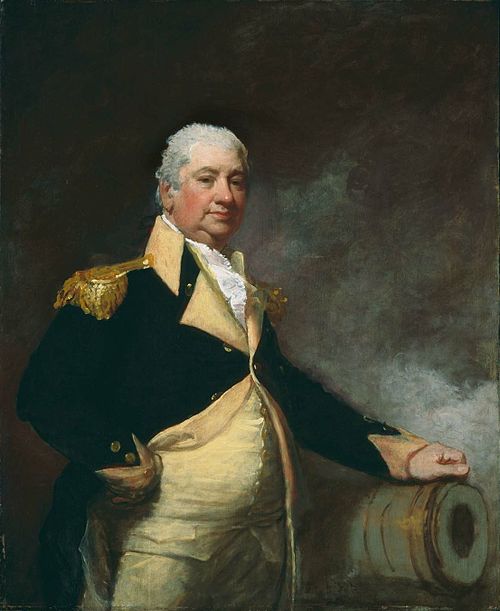
Placed the American siege guns that battered Yorktown day and night.

Fought brilliantly in the South but walked into a trap. He later served as governor-general of India.

Feared and hated in the South. At Yorktown he held Gloucester Point across the river.
Why it mattered
“Oh God! It is all over!”
When the news reached London in November, Prime Minister Lord North is said to have cried out, “Oh God! It is all over!” Britain still had armies in New York, Charleston and Savannah, but Parliament voted to end offensive war in America, and North resigned in March 1782. Peace talks began in Paris, and on September 3, 1783, Britain recognized the independence of the United States.
“The play, sir, is over.”
The Marquis de Lafayette
Writing to the French government after the surrender, October 1781
The bigger story
Revolution and Founding, 1770–1819
Our U.S. History era page puts the war in context: the road to independence, the Constitution and the first presidents.
Go deeper
Books and sources
- The Guns of Independence: The Siege of Yorktown, 1781, by Jerome A. Greene (2005)
- In the Hurricane’s Eye, by Nathaniel Philbrick (2018)
- Victory at Yorktown, by Richard M. Ketchum (2004)
- More recommended books