
Industrialist · 1863–1947
Henry Ford: Putting America on Wheels
A Michigan farm boy who loved machines built the Model T, invented the moving assembly line and doubled his workers’ pay, making the car something ordinary families could own. He was also a bitter enemy of labor unions and spread vicious antisemitism.
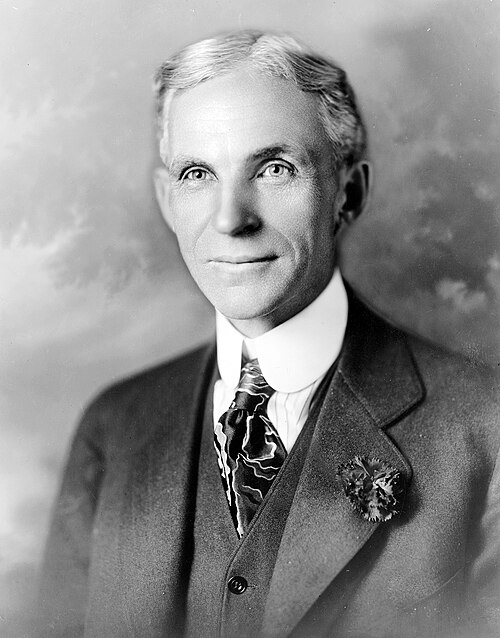
Henry Ford in 1919
Quick facts
Henry Ford at a glance
| Born | July 30, 1863, on his family's farm in Springwells Township (now Dearborn), Michigan | |
| Died | April 7, 1947, at Fair Lane, his Dearborn estate, aged 83 | |
| Early jobs | Machinist's apprentice in Detroit; engineer at the Edison Illuminating Company, 1891–1899 | |
| First car | The Quadricycle, finished June 4, 1896 | |
| Company | Founded the Ford Motor Company on June 16, 1903 | |
| Model T | 1908–1927; about 15 million built | |
| Assembly line | Moving line at Highland Park, Michigan, 1913: car assembly cut from about 12.5 hours to about 1.5 | |
| $5 day | Doubled most workers' pay to $5 a day in January 1914 | |
| Wife | Clara Bryant, married April 11, 1888; one son, Edsel (1893–1943) | |
| Buried | Ford Cemetery, Detroit |
The big picture in 30 seconds
Why he matters
- Mass production made the car affordable and changed where Americans lived, worked and shopped.
- The $5 day showed that factory workers could also be customers.
- “Fordism,” the moving line and high-volume production, spread to nearly every industry in the world.
- His factories, including the Willow Run bomber plant, helped make America the “arsenal of democracy” in World War II.
- His antisemitic publications did real and lasting harm, and are part of his legacy too.
15 million
Model T Fords built, 1908–1927
$5
a day, double the usual factory wage, from 1914
93 minutes
to assemble a Model T chassis on the moving line, 1914
8,685
B-24 bombers built at Ford’s Willow Run plant in World War II
Early years
A farm boy who fixed watches
Henry Ford was born on July 30, 1863, the oldest son of William and Mary Ford, who farmed near Detroit. He hated farm chores but loved taking apart watches and putting them back together. When he was 12 he saw a steam engine moving under its own power on a country road, a moment he later said changed his life. His mother died the same year.
At 16 he walked to Detroit to work as a machinist’s apprentice. He later serviced Westinghouse steam engines for farmers. In 1888 he married Clara Bryant, a farmer’s daughter, and in 1891 he went to work for the Edison Illuminating Company in Detroit, rising to chief engineer.
The Quadricycle
In his spare time, in a brick shed behind his house, Ford built a gasoline-powered vehicle on four bicycle wheels. In the early hours of June 4, 1896, he found it was too wide for the shed door, knocked out part of the wall with an axe, and drove it into the street.
Building a company
Two failures, then Ford Motor
Ford’s first car company, the Detroit Automobile Company, failed in 1901, and he left his second, which became Cadillac. To win backers he built racing cars; his giant “999,” driven by Barney Oldfield, won races and headlines in 1902.
On June 16, 1903, Ford and eleven investors founded the Ford Motor Company with $28,000 in cash. Its first car, the Model A, sold well, and Ford soon bought out partners who wanted to build expensive cars for the rich. He wanted to build a car for everyone.
The Model T, 1908–1927
A car for the great multitude
The Model T went on sale on October 1, 1908. It was simple, tough, high off the ground for rutted country roads, and easy to fix. Ford kept improving how it was made instead of how it looked, and each year the price fell.
Falling price
What a Model T touring car cost

Nicknamed the “Tin Lizzie,” the Model T was so common that Americans told jokes about it. Farmers used them to run saws and pumps. The last of about 15 million rolled off the line in May 1927.
1910
Highland Park
Ford opened a huge, bright new factory in Highland Park, Michigan, designed around the flow of parts and work.
1913
The moving assembly line
Borrowing ideas from meatpacking plants, Ford’s engineers moved the car past workers on a line. Assembly time dropped from about 12.5 hours to about 93 minutes.
January 5, 1914
The five-dollar day
The work was dull and workers kept quitting, so Ford doubled pay to $5 for an eight-hour day. Thousands lined up outside the plant.

“Any customer can have a car painted any colour that he wants so long as it is black.”
Henry Ford
My Life and Work, 1922
The dark side
Antisemitism and war on the unions
Ford was proud of being unschooled, and suspicious of bankers, experts and outsiders. From 1920 to 1927 his newspaper, the Dearborn Independent, ran a long series of articles attacking Jews, later published as the book The International Jew. Ford’s dealers were pressed to hand the paper out. After a libel suit, he issued a public apology in 1927, but the books kept circulating, including in Nazi Germany. In 1938 he accepted a medal from the Nazi government.
Against the unions
Ford fought hard against labor unions. His company’s “Service Department,” run by Harry Bennett, used spies and thugs against workers. In the 1937 “Battle of the Overpass” Ford security men beat union organizers, including Walter Reuther. Ford finally signed a contract with the United Auto Workers in 1941.
Later years
River Rouge, Willow Run and Greenfield Village
In the 1920s Ford built the River Rouge complex near Dearborn, the largest factory in the world, which took in iron ore and coal at one end and sent out finished cars at the other. In 1927 he finally replaced the Model T with a new Model A. He also bought the Lincoln Motor Company in 1922.
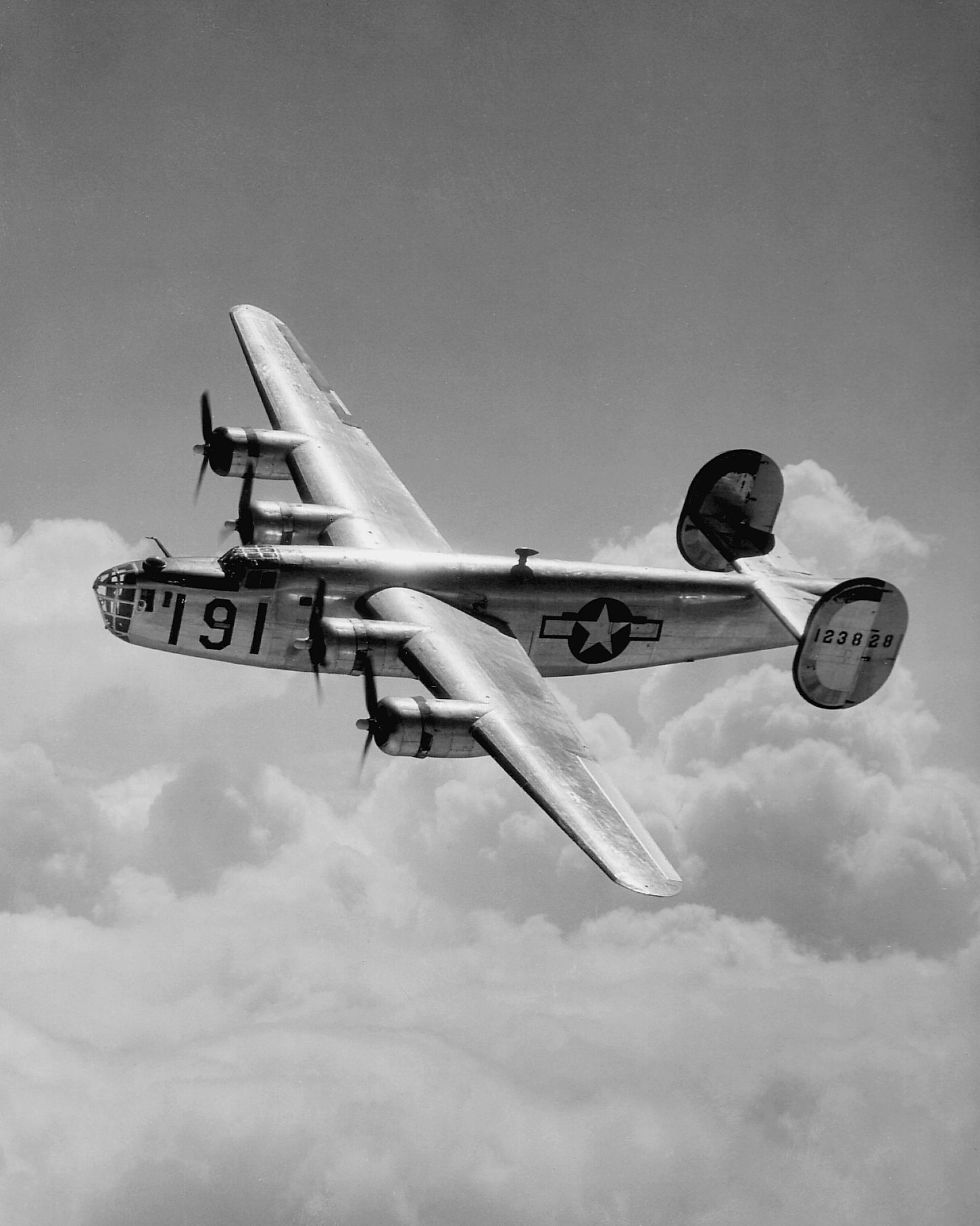
During World War II his company built a mile-long plant at Willow Run, Michigan, that turned out B-24 Liberator bombers, at its peak one an hour. His son Edsel died in 1943, and the aging Ford handed control to his grandson, Henry Ford II, in 1945.
Saving the past
Ford collected old machines and buildings, including Edison’s Menlo Park laboratory and the Wright brothers’ cycle shop, and moved them to Greenfield Village and the Henry Ford Museum in Dearborn. Edison was guest of honor at its dedication on October 21, 1929.
His life at a glance
Life timeline
People
Who's who in Ford's story
Clara Bryant Ford
Wife
Backed him from the start, and in 1941 helped persuade him to sign with the union rather than shut the company down.
Edsel Ford
Son
President of the company from 1919. More interested in design than his father, he backed the stylish Lincoln cars. He died at 49.
Hero and friend
Ford’s former boss, camping partner and winter neighbor in Fort Myers, Florida.
James Couzens
Business partner
The tough business manager behind the company’s early success and the $5 day. Later a U.S. senator.
Harry Bennett
Enforcer
Head of the Service Department, which spied on and attacked union organizers.
Henry Ford II
Grandson
Took over in 1945, fired Bennett and modernized the struggling company.
Visit
The Henry Ford, Dearborn
The Henry Ford Museum of American Innovation and Greenfield Village in Dearborn, Michigan, hold Ford’s Quadricycle, early Model Ts and Edison’s rebuilt Menlo Park lab. Tours of the Ford Rouge factory start at the museum. Ford’s home, Fair Lane, is nearby.
Go deeper
Sources and further reading
- Wheels for the World, by Douglas Brinkley (2003)
- The People's Tycoon: Henry Ford and the American Century, by Steven Watts (2005)
- My Life and Work, by Henry Ford with Samuel Crowther (1922)