Home › World History › World War I › Key people
World War I · People
Key People of World War I
Emperors and presidents, generals and admirals, pilots, poets and ordinary soldiers. These are the people who started, fought, ended and remembered the Great War, each with a real portrait from the time.

Quick facts
Who’s who at a glance
| United States | President Woodrow Wilson; Gen. John J. Pershing (AEF) | |
| Britain | Prime Ministers H. H. Asquith, then David Lloyd George (Dec. 1916); Gens. Sir John French, then Sir Douglas Haig | |
| France | Premier Georges Clemenceau (from Nov. 1917); Gens. Joffre, Pétain, Nivelle; Marshal Foch (Allied supreme commander, 1918) | |
| Russia | Tsar Nicholas II (abdicated March 1917) | |
| Germany | Kaiser Wilhelm II; Gens. Moltke, Falkenhayn, then Hindenburg and Ludendorff | |
| Austria-Hungary | Emperor Franz Joseph (died 1916), then Emperor Karl I | |
| Ottoman Empire | Enver Pasha (war minister); Mustafa Kemal at Gallipoli |
The big picture in 30 seconds
Remember these names
- Franz Ferdinand: his murder started the war.
- Wilson: brought America in and wrote the Fourteen Points.
- Foch: led all the Allied armies to victory in 1918.
- Hindenburg and Ludendorff: ran Germany’s war from 1916 to 1918.
The Allies
Allied leaders
The political leaders who took their nations through the war and wrote the peace.

Won reelection in 1916 on “He kept us out of war,” then asked for war in April 1917. His Fourteen Points and League of Nations shaped the peace; the Senate rejected both.
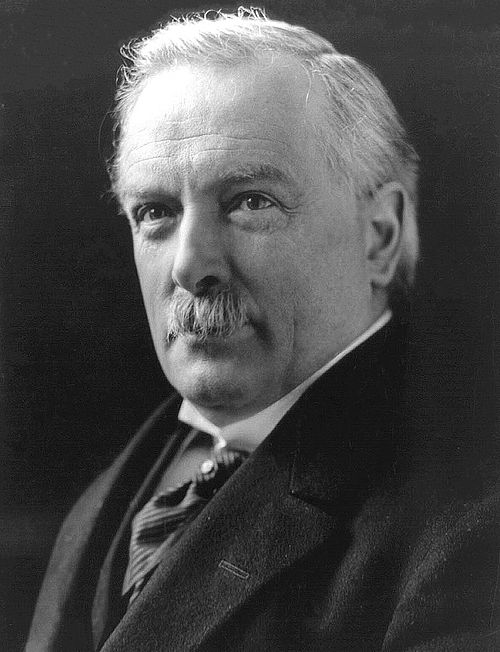
As minister of munitions he fixed the 1915 shell shortage. Prime minister from December 1916, he drove the war effort and was one of the Big Four at Paris.
“The Tiger” became premier at 76 in November 1917 and vowed to fight to the end. He pushed for a harsh peace on Germany.
Took personal command of the army in 1915. Defeats and hunger led to revolution; he abdicated in 1917 and was killed with his family in 1918.
The Allies
Allied commanders
The generals who held the line and then won the war in 1918.
“Black Jack” Pershing built an American army of two million in France and led it at St. Mihiel and the Meuse-Argonne.
Fought at the Marne and the Somme, then coordinated all Allied armies from 1918 and dictated the Armistice terms.
Calm “Papa Joffre” won the First Battle of the Marne in 1914 and led the French army until late 1916.
Led the British in France from December 1915 through the Somme, Passchendaele and the victorious Hundred Days.
The defender of Verdun. In 1917 he calmed the mutinies in the French army by improving soldiers’ conditions.
Sent troops to the Marne in Paris taxis and helped turn the battle in September 1914.
Led the failed 1915 landings on the Gallipoli Peninsula and was recalled in October.
Planned the Somme attack of 1916, then led the great Allied breakthrough at Amiens in August 1918.
The Central Powers
Emperors and generals of the Central Powers
Germany, Austria-Hungary, the Ottoman Empire and their commanders.
Encouraged Austria-Hungary in July 1914. Sidelined by his generals as the war went on, he abdicated on November 9, 1918.
Shot with his wife Sophie in Sarajevo on June 28, 1914. Ironically, he had favored peace and more rights for the Slavs.
The victor of Tannenberg in 1914 became a national idol. Later president of Germany, he appointed Hitler chancellor in 1933.
The real brain behind Hindenburg. He planned the 1918 Spring Offensive and later spread the myth that Germany was “stabbed in the back.”
Launched the invasion of Belgium and France in 1914 and was replaced after the defeat at the Marne.
Planned the Battle of Verdun. Later commanded armies in Romania and Palestine.
Stopped the Allies at Gallipoli in 1915. As Atatürk he founded the Republic of Turkey in 1923.
Organized the Ottoman defense of Gallipoli and later commanded in Palestine.
Heroes and legends
Aces, soldiers, nurses and poets
Some of the war’s most famous people never commanded an army.
On October 8, 1918, in the Argonne, he silenced a nest of machine guns and captured 132 Germans. Medal of Honor.
A race-car driver turned fighter pilot, he shot down 26 enemy aircraft with the 94th Aero Squadron, the top U.S. score of the war.
Germany’s top ace, with 80 victories, flew a red Fokker triplane. Shot down and killed in April 1918.
British officer who fought alongside the Arab Revolt against the Ottoman Empire, raiding the Hejaz Railway and entering Damascus in 1918.
Fought off a German raiding party in May 1918 despite many wounds. France gave him the Croix de Guerre; the U.S. awarded the Medal of Honor in 2015.
Helped some 200 Allied soldiers escape occupied Belgium. Executed by a German firing squad in October 1915, causing worldwide outrage.
Wrote In Flanders Fields in May 1915 after a friend died at Ypres. The poem made the poppy the symbol of remembrance.
Fought at the Somme in 1916. Memories of the trenches echo through The Lord of the Rings.
Making the peace
The Big Four at Paris, 1919
Leaders from about 30 nations met in Paris from January 1919, but four men made the big decisions: Woodrow Wilson of the United States, David Lloyd George of Britain, Georges Clemenceau of France and Vittorio Orlando of Italy. Wilson wanted a fair peace built on his Fourteen Points and a League of Nations. Clemenceau wanted security for France and for Germany to pay. Lloyd George was caught in between. The Germans were not allowed to negotiate.
The Treaty of Versailles was signed in the Hall of Mirrors on June 28, 1919, five years to the day after the shots in Sarajevo.

See the whole war
World War I hub
The causes, fronts, battles, weapons and ships of the Great War, with links to every page in this section.
Go deeper
Books and sources
- The Guns of August, by Barbara Tuchman (1962)
- Paris 1919, by Margaret MacMillan (2001)
- Dreadnought, by Robert K. Massie (1991)
- More recommended books