
Home › US History › The Civil War
US History · 1861–1865
The Civil War
Four years of war decided whether the United States would stay one nation and whether slavery would end. Follow the war battle by battle, meet the leaders on both sides, and see how a divided country was put back together.
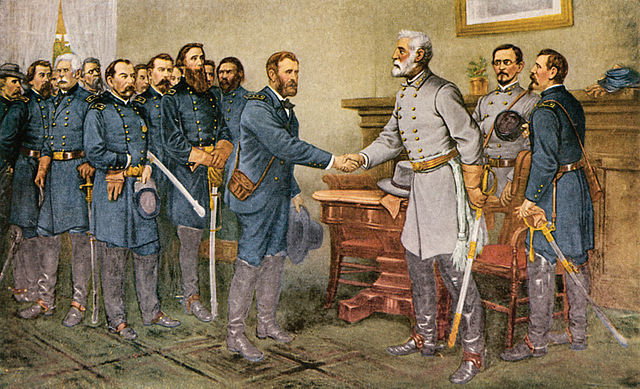
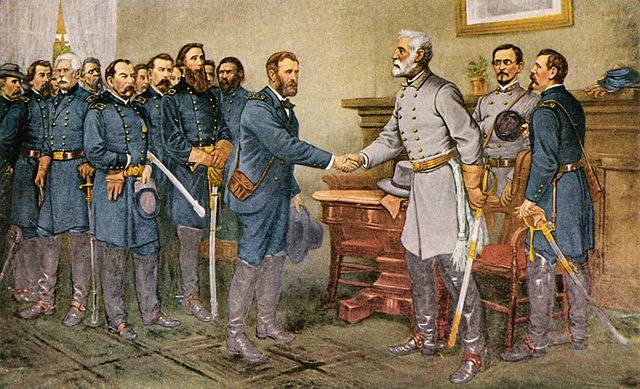
Lee surrenders to Grant at Appomattox Court House, April 9, 1865
Quick facts
The Civil War at a glance
| Dates | April 12, 1861 (Fort Sumter) to April 9, 1865 (Lee's surrender at Appomattox); the last Confederate forces gave up that spring and summer | |
| The sides | Union: 23 states, including the slave-holding border states of Delaware, Maryland, Kentucky and Missouri. Confederacy: 11 seceded states | |
| Leaders | Union: President Abraham Lincoln, General Ulysses S. Grant. Confederacy: President Jefferson Davis, General Robert E. Lee | |
| Who fought | About 2.1 million Union soldiers, including about 180,000 Black soldiers, and roughly 750,000 to 1 million Confederates | |
| The cost | About 620,000 to 750,000 soldiers died, more than in any other American war; two of every three died of disease | |
| Bloodiest day | Antietam, September 17, 1862: about 23,000 killed, wounded or missing | |
| Outcome | The Union was preserved, and the 13th Amendment (December 1865) abolished slavery everywhere in the United States |
The big picture in 30 seconds
Why it matters
- It settled for good that states cannot leave the Union.
- About four million enslaved people gained their freedom.
- The 13th, 14th and 15th Amendments rewrote the Constitution around freedom, citizenship and voting.
- It was one of the first industrial wars: railroads, telegraphs, ironclads and rifled guns.
4 years
April 1861 to April 1865
620,000+
soldiers died, most from disease
384
principal battles identified by the National Park Service
4 million
enslaved people freed
How it started
Why the war came
For decades, Congress patched over the fight about slavery with compromises. When the country expanded west, each new territory reopened the question of whether slavery would spread. By 1860 the compromises had run out.
1820–1857
Slavery and the West
The Missouri Compromise (1820), the Kansas-Nebraska Act (1854) and the Dred Scott decision (1857) turned every new territory into a battleground. “Bleeding Kansas” saw open fighting years before the war.
November 1860
Lincoln's election
Abraham Lincoln won the presidency without carrying a single Southern state, on a promise to stop slavery’s spread into the territories. Many Southern leaders saw it as the beginning of the end for slavery.
Dec. 1860 – May 1861
Secession
South Carolina left the Union on December 20, 1860. Six more states followed before Lincoln took office and formed the Confederacy. After Fort Sumter, four more joined them.
Key battles
The war, battle by battle
Twelve battles that shaped the war, in the order they happened. Each card shows who won and what it cost. Casualties are killed, wounded, captured and missing on both sides combined, and are approximate.
1861 – early 1862
Opening shots
Both sides expected a short war. Bull Run ended that hope in the East, while Grant’s first victories in the West showed what was coming.


1862
The war grows
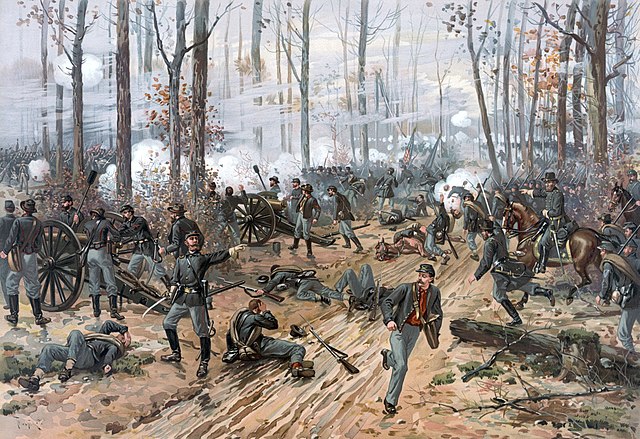
Ironclads changed naval warfare, Shiloh shocked the nation with its losses, and Antietam gave Lincoln the victory he needed to announce emancipation.


1863
The turning point
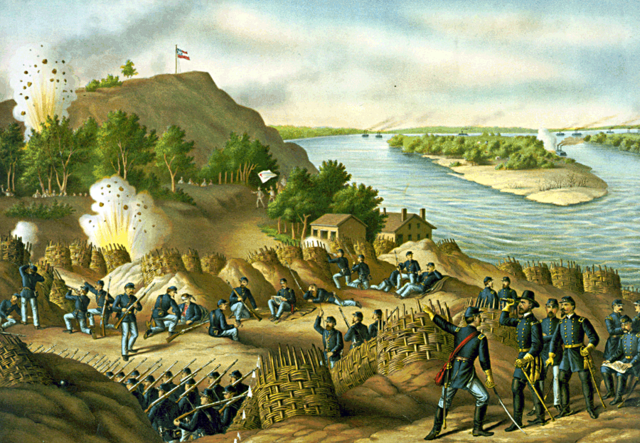
Lee won his greatest victory in May. Then, in the first week of July, the Union won in both the East and the West, and the Confederacy never recovered.


1864 – 1865
The end game
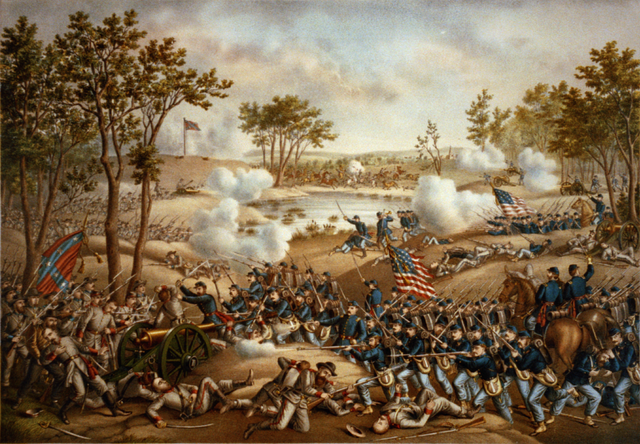
Grant took command of all Union armies and kept up the pressure on every front at once. Sherman cut through Georgia while Grant pinned Lee in Virginia.


Fighting for freedom
The 54th Massachusetts at Fort Wagner
On July 18, 1863, the 54th Massachusetts, one of the first Black regiments raised in the North, led the assault on Fort Wagner outside Charleston. The attack failed and nearly half the regiment fell, including its colonel, Robert Gould Shaw. Sergeant William Carney saved the flag and later received the Medal of Honor.
Their courage helped convince the North to enlist Black soldiers in large numbers. By war’s end about 180,000 had served in the U.S. Colored Troops.
Key people
Leaders on both sides
The presidents, generals and voices who shaped the war. For the full story of each side’s leadership, see our Civil War Leaders page.


Timeline
From secession to surrender
The war’s key moments, with Reconstruction’s first steps.
“That this nation, under God, shall have a new birth of freedom, and that government of the people, by the people, for the people, shall not perish from the earth.”
Abraham Lincoln
Gettysburg Address, November 19, 1863
See the whole era
Expansion and Civil War
Our era page tells the bigger story: westward expansion, the long fight over slavery, the war itself, and Reconstruction.
Go deeper
Books and sources
- Battle Cry of Freedom, by James M. McPherson (1988)
- The Civil War: A Narrative, by Shelby Foote (1958–1974)
- The Killer Angels, by Michael Shaara (1974), a novel of Gettysburg
- Grant, by Ron Chernow (2017)
- More recommended books